

Appendix C: Case Studies and Checklists
Countywide Design Guidelines
Appendix C: Case Studies and Checklists
Section titled “Countywide Design Guidelines Appendix C: Case Studies and Checklists”This chapter uses case study projects to demonstrate how the Design Guidelines can make projects more responsive to their context, result in site planning that connects new development to the surrounding neighborhood, and helps to improve the design of buildings.
This chapter includes four case studies:
- A-1 Infill Mixed-use
- A-2 Shopping Center Renovation
- A-3 Office Development
- A-4 Fast Food Drive-Through Site
Meeting Community Design Objectives
The case studies anticipate the types of projects that will become increasingly important investments in Sacramento County’s communities. They reflect four important design principles:
- Projects have to be better connected to adjacent neighborhoods and to each other.
- Reinvestment in existing commercial districts, in terms of renovation and redevelopment of older centers, needs to reflect the same design and site planning expectations as new projects.
- Thoughtful design and site planning of franchise tenants can meet both community design and business objectives.
- Good site planning can lead to more social and environmentally friendly places.
Case Study Organization
Section titled “Case Study Organization”The case studies are organized to reflect how projects will be evaluated in the design review process. They reference the sections of the Guidelines that pertain to the type of design issues being addressed.
SITE CONTEXT:
There is a brief overview of key features of the site surroundings and context.
SITE PLAN FEATURES:
Site planning features are summarized. These include how the site is connected to the community, its contribution to community and project design objectives, and how the project creates social and pedestrian-friendly places.
ARCHITECTURAL FEATURES:
This includes massing and architectural concepts that support community design and project image objectives.
Case Study A-1: Mixed-Use Infill
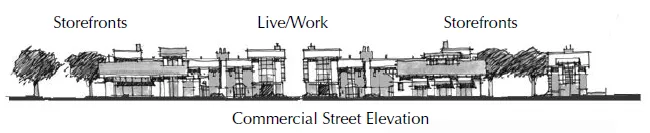
Section titled “Case Study A-1: Mixed-Use Infill”This case study illustrates how the design guidelines would apply to a 3.9 acre infill site. The case study demonstrates how commercial and residential uses can be co-located resulting in a social and pedestrian friendly place and neighborhood destination.
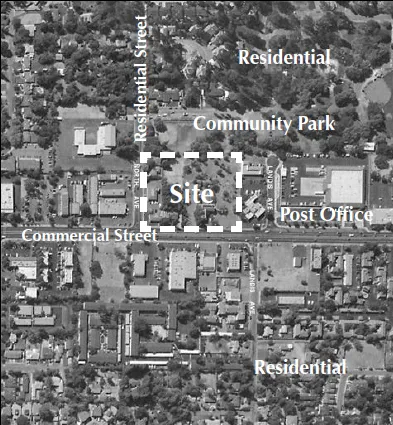
CONTEXT: The site is located on the corner of a commercial corridor and residential neighborhood street next to a community park.
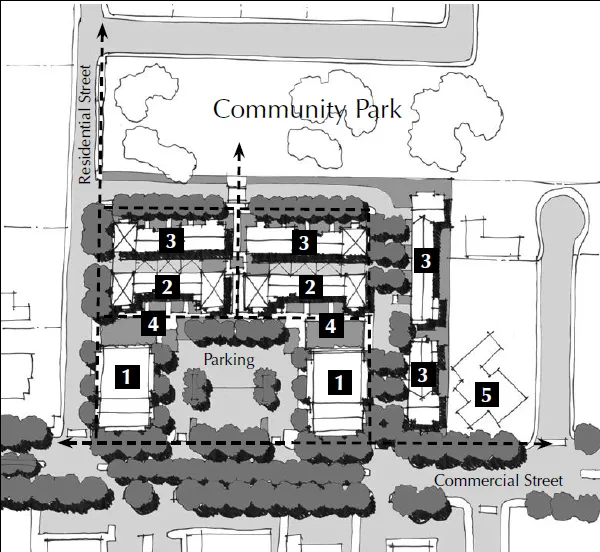
SITE PLAN FEATURES: The site plan provides walking edges on both the commercial and residential street. Commercial storefront buildings share parking and driveways. Live-work units are adjacent to the commercial uses and the project’s common open space. Placing the housing at the back of the site provides “eyes-on-the-park”, making it safer and a visual amenity for residents.
ARCHITECTURAL FEATURES: The building massing uses variations in 2 and 3-story height and roof shape to frame passageways and street edges. Architectural use of balcony, porch and bay window elements add variety and scale to the townhouse buildings. The scale and transparency of storefronts adds to the street’s pedestrian safety, access, comfort and interest.
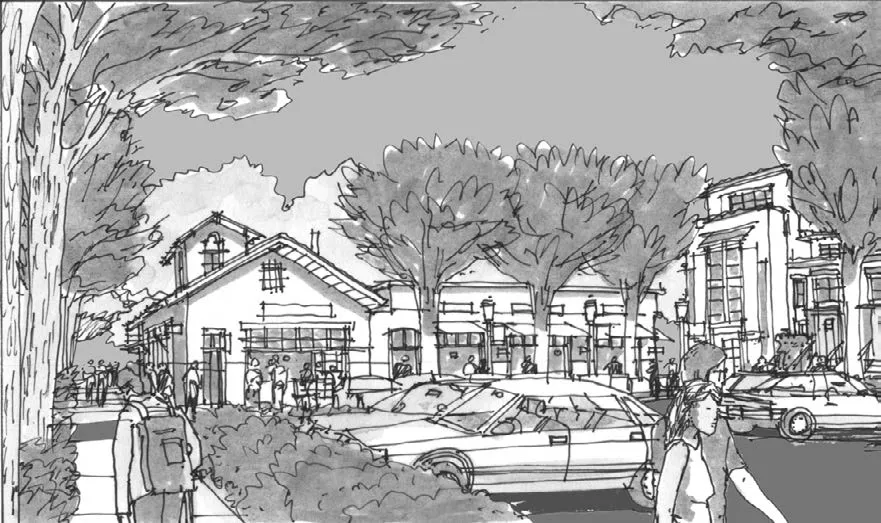
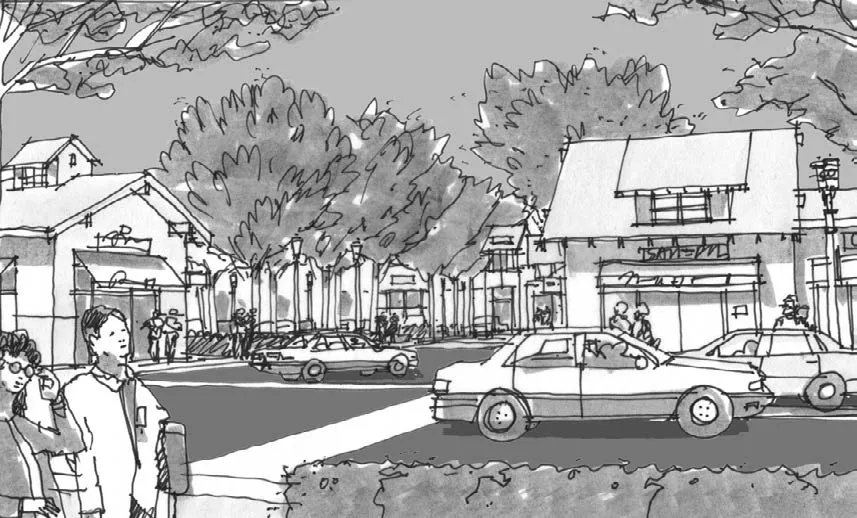
This is a view from the sidewalk of a storefront building. Live-work townhouses and common open space can be seen to the right.
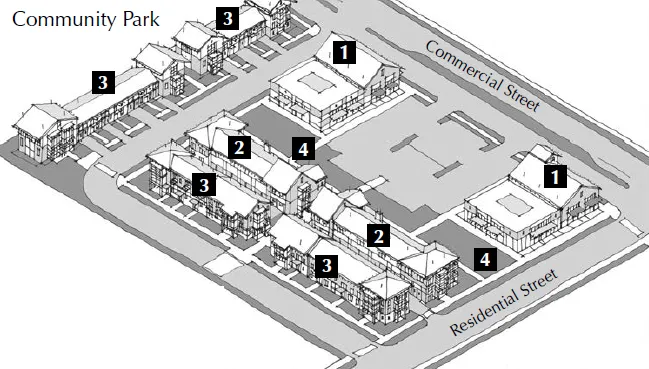
The case study massing diagram shows what the project would look like facing the community park. The park would be an amenity for the development. The townhouses would provide “eyes-on-the-park” security.
- Commercial Storefronts
- Live-Work
- Townhouses
- Open Space
DEVELOPMENT PROGRAM
Site Area 3.9 acres
Residential (2.6 acres)
18 Townhouses
10 Live-work Units
Commercial (1.3 acres)
17,000 SF
68 parking spaces
SITE PLAN
- Commercial Storefronts
- Live-Work
- Townhouses
- Open Space
- Existing Commercial Office
Primary Walking Route shown as dashed lines below.
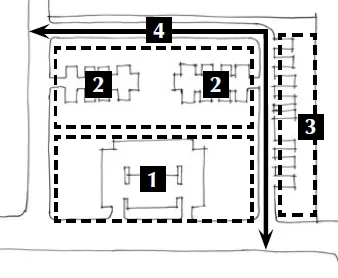
PARKING DIAGRAM
- Commercial Parking
- Residential Parking Courts
- Residential Driveways
- On-street Visitor Parking
Case Study A-2: Shopping Center Renovation
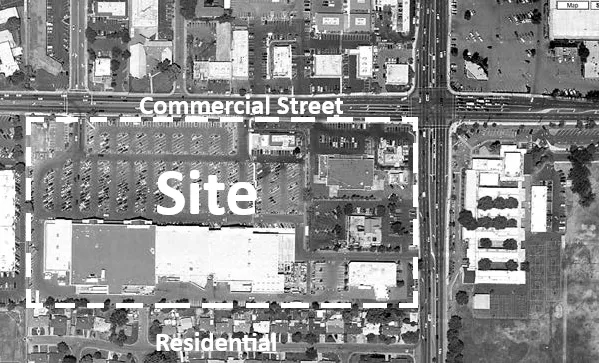
Section titled “Case Study A-2: Shopping Center Renovation”This case study illustrates how the design guidelines would apply to renovation of an existing 12-acre shopping center. The case study demonstrates how redevelopment of aging commercial pad buildings and renovation of anchor stores can improve the image and viability of older shopping centers.
CONTEXT: The site is located on the corner of two commercial corridors and is adjacent to a residential neighborhood.
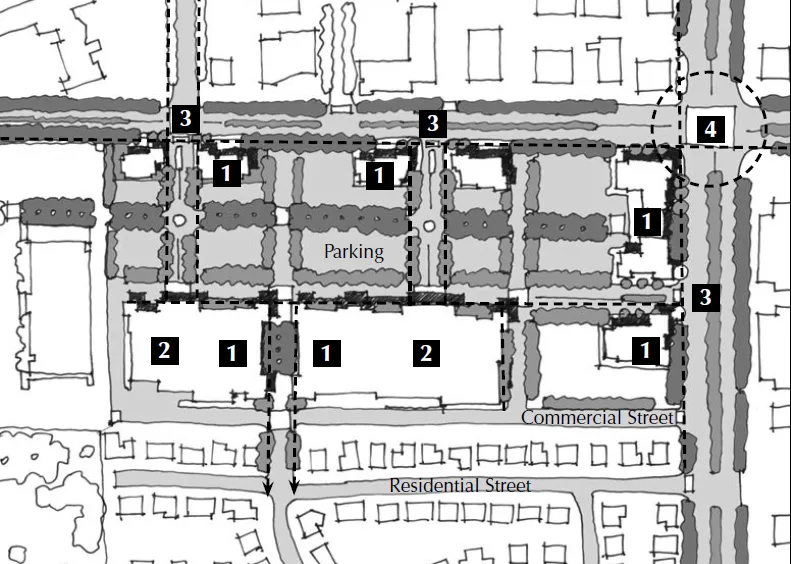
SITE PLAN FEATURES: The site plan provides walking edges along the commercial streets and connects buildings with tree-lined sidewalks and driveways. Site entries are reinforced with the design and orientation of buildings and landscaping. Parking areas are defined by landscaping and walkways.
ARCHITECTURAL FEATURES: The building massing supports overall urban design concepts for the district and the project including commercial street gateways, site entries and edges. Each building provides a walking edge that connects to an overall system of storefronts. Lighting and signage concepts support the overall identity and design themes for the redevelopment of the center.
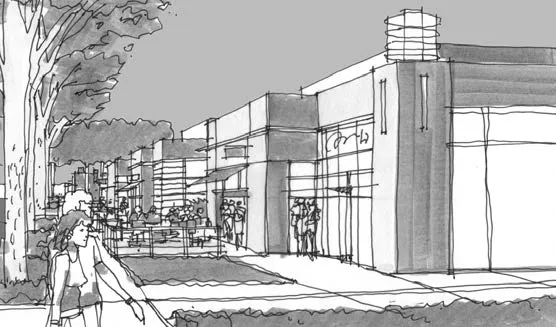
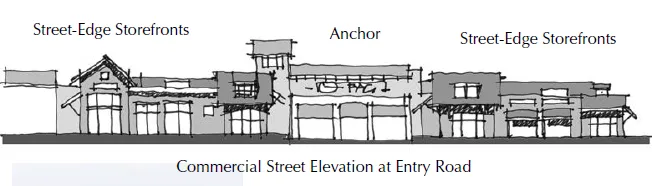
This is a view from the sidewalk across the street from the shopping center’s main entry. Storefront buildings frame the entry drive.
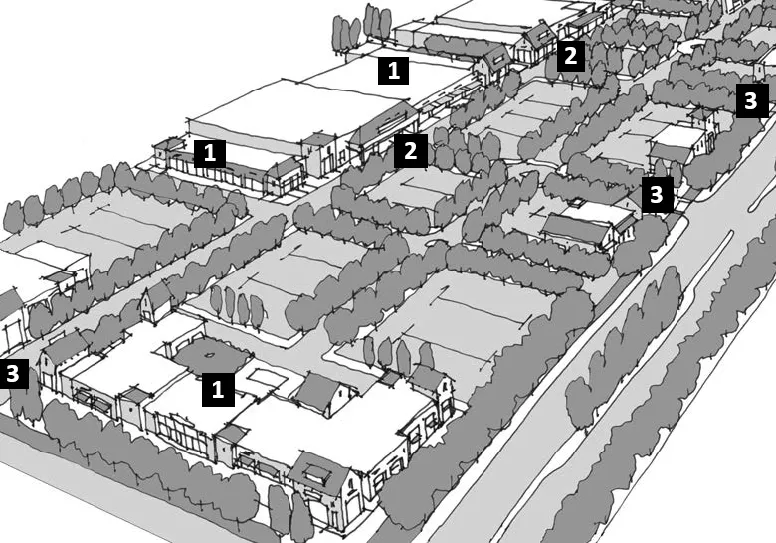
The case study massing diagram shows what the project would look like with street-oriented pad buildings, landscaped driveways, and expressive massing.
- Commercial Storefronts
- Anchor Stores
- Site Entries
DEVELOPMENT PROGRAM
Site Area 12.0 acres
Commercial (FAR 0.25)
130,700 SF
522 parking spaces (4/1,000)
SITE PLAN
- Storefronts
- Anchor Stores
- Site Entries
- Commercial District Gateway
Primary Walking Route shown as dashed lines below.
Case Study A-3: Office Development
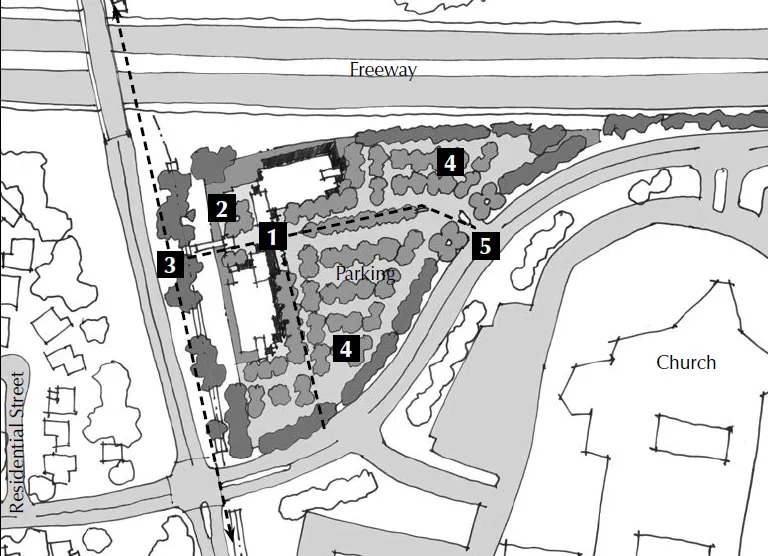
Section titled “Case Study A-3: Office Development”This case study illustrates how the design guidelines would apply to a 7.3 acre office site. The case study demonstrates how commercial office projects can create public spaces, connect to the community and respond to different edge conditions.
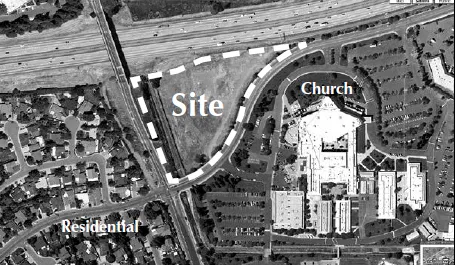
CONTEXT: The site is located in an area with commercial, residential and institutional uses. The site also has freeway visibility.
SITE PLAN FEATURES: The site plan groups building lobbies around a plaza space. The plaza includes amenities for employees, such as outdoor seating areas and public art. The plaza also connects to a trail along a canal linking it to the surrounding community. Offices have views of the trail and landscape surrounding the buildings.
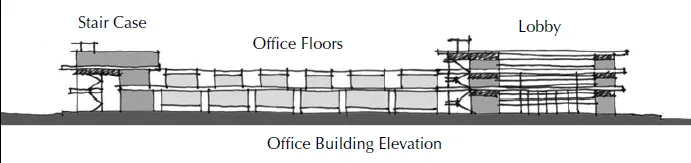
ARCHITECTURAL FEATURES: The two-story building design demonstrates how a tilt-up panel system can be made more interesting by creating variation in the system panels and adding greater emphasis on the design of lobbies and stairs. The three-story lobbies are transparent and include projected sun shades. Pulling the stairs outside the office building provides another design opportunity.
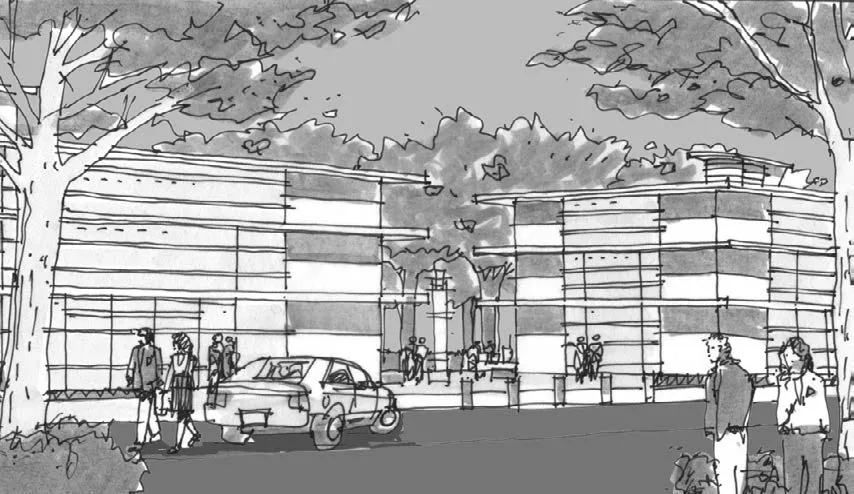
This is a view from the parking lot of the lobbies and plaza space. The plaza’s public art, seating areas and trail-edge landscaping are seen beyond.
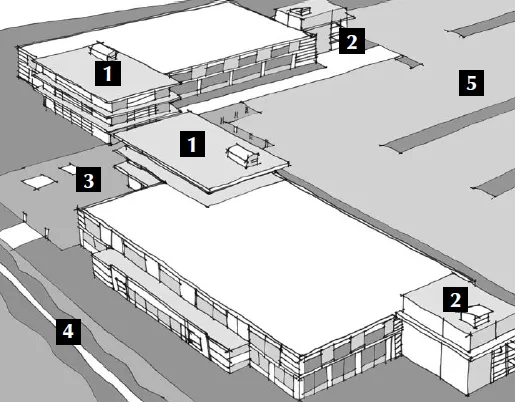
The case study massing diagram shows how the lobbies frame an outdoor public space that is connected to the waterway trail.
- Lobbies
- Stairwell
- Plaza and Public Art
- Waterway Trail
- Parking Lots
DEVELOPMENT PROGRAM
Site Area 7.3 acres
Commercial Office (0.25 FAR)
80,000 SF
320 parking spaces
SITE PLAN
- Lobbies
- Plaza and Public Art
- Waterway Trail
- Parking Lots
- Site Entry
Primary Walking Route shown as dashed lines below.
Case Study A-4: Fast Food Drive-Through
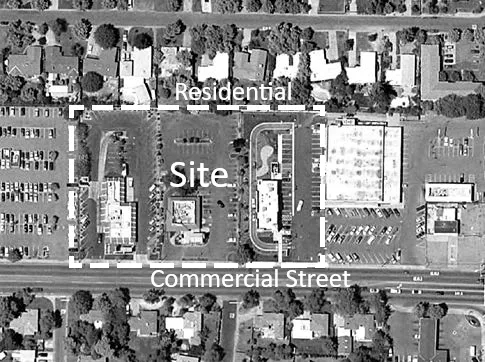
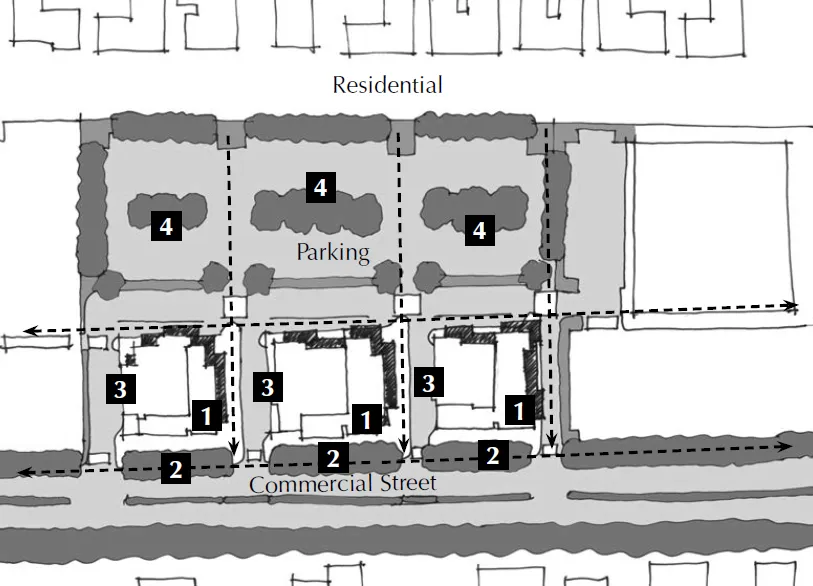
Section titled “Case Study A-4: Fast Food Drive-Through”This case study illustrates how the design guidelines would apply to a 1.8-acre fast food site with three pads. The case study demonstrates the benefits of shared parking and connected walkways. The result is a small social and friendly dining district.
CONTEXT: The site is located near a major commercial intersection along a commercial street. Residential uses are located next to the site.
SITE PLAN FEATURES: The site plan provides walking edges along the front of the restaurant pads and outdoor seating areas. Parking is connected with a shared driveway. Drive-up windows are located on the side of each building. Building entries are located where they can be seen and accessed from the sidewalk and parking areas. Walkways connect to adjacent sites.
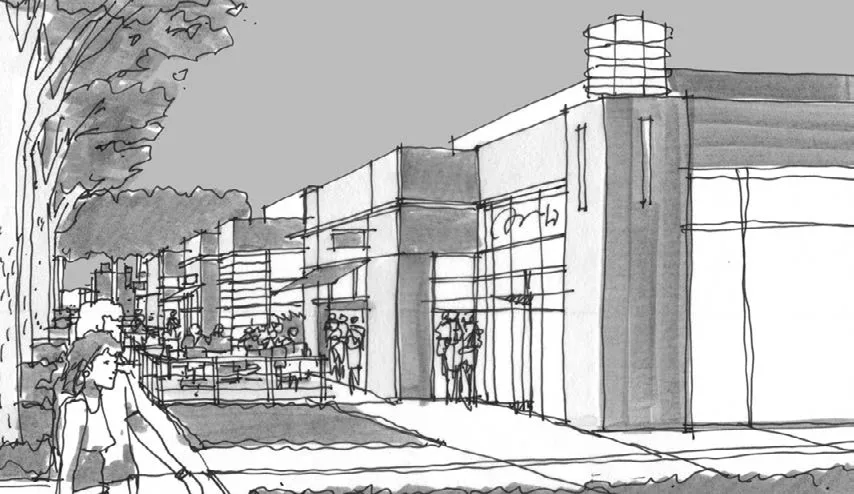
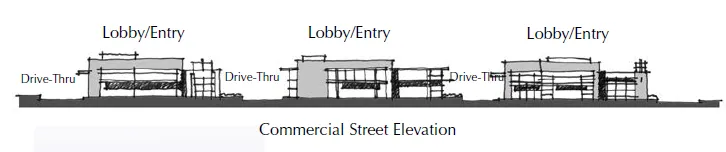
ARCHITECTURAL FEATURES: The building massing wraps the food preparation and service areas with transparent public lobbies and dining. The dining areas flow out onto outdoor seating areas along the sidewalk. Lobbies, dining elements and lighting make the cluster of businesses an attractive evening destination.
This is a view from the sidewalk of the outdoor seating areas and lobbies. A planting strip and canopy street trees provide shade.
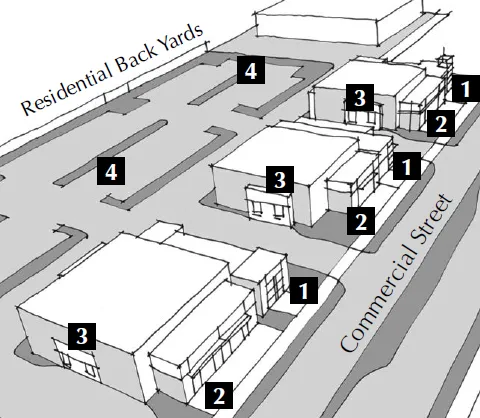
The case study massing diagram shows three fast food pads with drive-up windows. The buildings’ lobbies face the street and include outdoor eating areas along the sidewalk. Shared parking is in the rear of the site.
- Lobbies
- Outdoor Seating
- Drive-up Windows
- Shared Parking
DEVELOPMENT PROGRAM
Site Area 1.8 acres
Fast Food Pads (3 pads at 4,000 SF)
12,000 SF
120 parking spaces
SITE PLAN
- Lobbies
- Outdoor Seating
- Drive-through Windows
- Shared Parking
Primary Walking Route shown as dashed lines below.
The checklist below is intended to be a summary of the issues addressed by the principles. It is not meant to be a regulatory device or a substitute for the language and examples found in the principles themselves. Rather, it is a tool for evaluating the success of a given project in meeting the intent of the design principles.
TABLE C-1: SAMPLE DESIGN REVIEW CHECKLIST
| CRITERIA | YES | NO | N/A | COMMENTS |
|---|---|---|---|---|
| SITE DESIGN | ||||
| Does site planning and design address the potential impacts on existing and planned adjacent uses? | ||||
| Does the project design address traffic, parking, circulation and safety issues, and security? | ||||
| CIRCULATION | ||||
| Is the visual prominence of vehicles minimized through siting and screening views from adjacent roadways and uses? | ||||
| Are parking facilities designed to be compatible with building design? | ||||
| Does the siting and design of driveways and entryways minimize the impact of automobile parking and driveways on the pedestrian environment, adjacent properties and bicycle safety? | ||||
| Is direct, adequate, and safe pedestrian ingress and egress provided to, from and within the site? | ||||
| COMMON AND PRIVATE OPEN SPACE | ||||
| Does the project provide opportunities for usable, attractive, and integrated open space? | ||||
| Do proposed planted areas enhance the appearance of structures, define site functions, and screen undesirable views? | ||||
| Are open space areas linked among adjacent developments, where opportunities allow? | ||||
| LIGHTING AND SECURITY | ||||
| Is project lighting at an appropriate scale and compatible in design to the main structure? | ||||
| Does the lighting of the project respect the adjacent residential development neighborhood through attention to scale, views, and excess lighting? | ||||
| SERVICES AND UTILITIES | ||||
| Are amenities and accessory structures centrally located and easily accessible by residents? | ||||
| Are service elements and infrastructure such as trash dumpsters, loading docks and mechanical equipment appropriately screened and/or located away from street views? | ||||
| FENCING | ||||
| Is the design of proposed fencing and walls compatible with the overall design of the project? | ||||
| Does fencing located behind setback areas increase the sense of isolation from the rest of the community? | ||||
| SCALE / MASSING | ||||
| Is the project compatible with its surroundings with regard to building scale, mass, setbacks, and articulation? | ||||
| BUILDING DESIGN | ||||
| Is the project compatible with the scale and character of the adjacent residential neighborhood? | ||||
| Does the project design complement the scale and character of adjacent properties? | ||||
| Does the project respect and visually improve the predominant characteristics of height, massing, setbacks, and materials of the existing developments in the project area? | ||||
| Does the project incorporate variety and distinctiveness in design? | ||||
| ENERGY CONSERVATION | ||||
| Does the project incorporate site planning and building design features that help reduce energy conservation? |