

Locke SPA
Sacramento County Zoning Code
Locke Special Planning Area Ordinance
Section titled “Sacramento County Zoning Code Locke Special Planning Area Ordinance”“Third Edition”
Adopted January 12, 2005
Amended October 4, 2016
79-SPA-3
Adopted by 2004-ZOB-0320
Amended by SZC-2016-0019 / PLNP2013-00092First Edition: Adopted 1979
Second Edition: Joint Walnut Grove & Locke SPA adopted December 3, 1997 (1995-ZOB-0250)
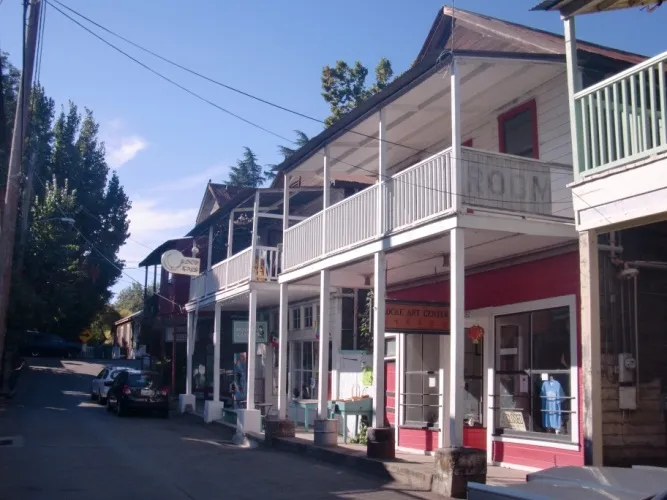
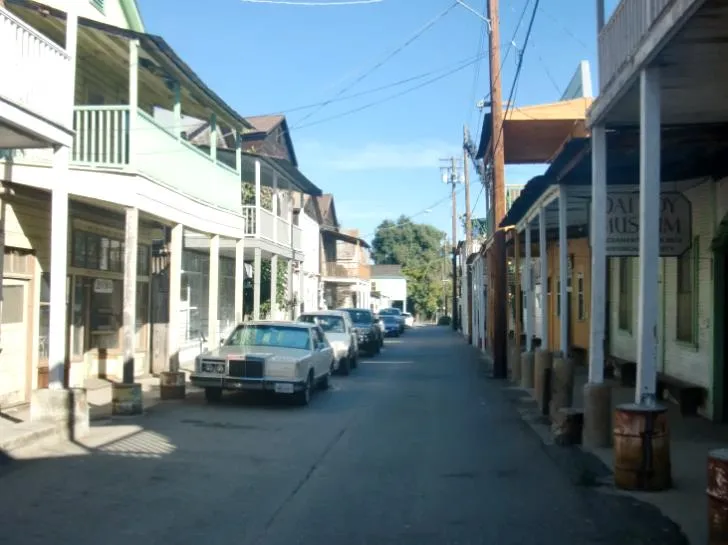
INTRODUCTION AND INTENT
Section titled “INTRODUCTION AND INTENT”504.400. INTENT:
Section titled “504.400. INTENT:”It is the intent of the Board of Supervisors in adopting this Special Planning Area (SPA) Ordinance; to recognize the existing land uses; to encourage the rehabilitation of existing structures; and construction of new structures will be consistent with the area and minimize disruption to the lifestyle of the residents.
This SPA Ordinance recognizes the unique design and environment of Locke and promotes the retention of the viable commercial center in the Historical Preservation Area as well as preservation of the Chinese-American cultural aspects for the community. The SPA requires the review of projects measure against these unique standards in conjunction with the Locke Design Guidelines and Secretary of Interior Standards for the Treatment of Historic Properties. The area west of River Road in the Boathouse Commercial Area and areas south of the Historical Preservation Area shall not be subject to the Locke Design Guidelines, although rehabilitation and development activities shall be sensitive to the cultural/historical nature of the area.
It is expected through the project review processes outlined in Section 504-404, that new buildings or structures will not alter or affect the cultural or historical value of the town.
504-401. PROCESS GUIDELINES FOR APPLICANTS:
Section titled “504-401. PROCESS GUIDELINES FOR APPLICANTS:”Applicants should refer to the following sections to attain information for their projects (Note: These process guidelines are not applicable to all projects):
- To determine if proposed use is allowed in project area -- See Sections 504-409 Prohibited Uses, 504-410 Permitted Uses.
- To determine review process for project -- See Section 504-405 Review Procedures for Permitted Uses Not Requiring a Use Permit.
- To determine development standards for residential project -- See Sections 504-411 DEVELOPMENT STANDARDS, 504-412 RESIDENTIAL DENSITY, 504-413 LANDSCAPING
- To determine development standards for non-residential projects -- See Sections 504-411 DEVELOPMENT STANDARDS, 504-413 LANDSCAPING, 504-414 PARKING, 504-415 SIGNS
504.402. DEFINITIONS:
Section titled “504.402. DEFINITIONS:”Except as provided herein, the definitions in Chapter 7 of the Sacramento County Zoning Code shall apply.
- CEQA. California Environmental Quality Act.
- DCMAC. Delta Citizens Municipal Advisory Council.
- LMA. Locke Management Association.
- SRDHS. Sacramento River Delta Historical Society.
- Accessory Building or Structure. A detached subordinate building or structure located on the same premises as the main building or buildings, the use of which is incidental to that of the main building or to the use of the land.
- Breweries. An establishment where malt beverages are manufactured on the premises. Breweries are classified as any use that manufactures more than 15,000 barrels of beverage (all beverages combined) annually. A brewery may have a tap room as part of the principal use as long as the floor area utilized for the tap room is less than or equal to 25 percent of the total floor area of the facility.
- Comments, Statements and/or opinions by the Primary Review Body or the Secondary Review Body about a particular proposed project. These could include statements/opinions about the appearance of a proposed project, impacts to the surrounding neighborhood, and appropriateness for the community. Suggested ways to improve a project could also be included in a review body's comments. A vote or a quorum is not required to provide project comments.
- Dangerous Building. For the purpose of the Ordinance, a dangerous building shall be as defined in Chapter 16.22 of the Sacramento County Code.
- Historical Preservation Area. The areas or buildings which are on the National Register of Historic Places and/or the California Register of Historic Resources, including, but not limited to, those districts and/or structures shown on Exhibit 504-419.
- Interior Remodeling. Any work on the interior of the buildings such as new walls, and upgrading of electrical, mechanical, and plumbing.
- Manufactured Home. A residential dwelling unit manufactured pursuant to the National Manufactured Housing Construction Safety Standards Act of 1974 operative June 15, 1976. Manufactured homes are required to 1) be placed on a permanent foundation, 2) meet the building width requirements of Zoning Code Section 5.4.2.B, and 3) meet the architectural standards of Zoning Code Section 5.4.2.H.
- Mixed-Use Building. Building with residential uses and non-residential uses (office, retail, institutional, etc.).
- Mobile Home. A structure, transportable in one or more sections, which, in the traveling mode, is eight body feet or more in width or forty body feet in length, or, when erected on site, is three hundred twenty or more square feet and which is built on a permanent chassis and designed to be used as a dwelling with or without a foundation system when connected to utilities, and includes the plumbing, heating, air conditioning, and electrical systems contained therein.
- New Construction. New building or structure not existing on-site on the date of adoption of this amended Ordinance.
- Primary Review Body. A project review body that reviews a project through a formal meeting with the applicant present and provides written recommendations and/or comments to the Planning Director (The DCMAC always provides written recommendations). The Primary Review Body receives written recommendations and/or comments from the Secondary Review Body.
- Recommendations. Advisory statements by the Primary Review Body or the Secondary Review Body to approve or deny a project. Recommended conditions could also be included. A vote and a quorum are required to provide project recommendations.
- Remodeling. Change, addition or modification of the size, style and/or construction of a structure. The goal is to maintain or improve a structure's value.
- Repair. Reconstruction or restoration of an existing structure for the purposes of preserving or retaining the characteristics or operation of the structure.
- Residential Dwelling Units. Units developed for residential purposes including and limited to apartments, rooming or boarding houses, townhouses, condominiums, halfplexes, duplexes and single-family dwellings.
- Secondary Review Body. Project review body where formal meeting with the applicant present is not required to review projects. Provides written recommendations and/or comments to the Primary Review Body.
- Specialty and Craft Brewery. A small-scale brewery that produces a maximum of 15,000 barrels of malt beverages annually. May also be known as a "micro-brewery". The brewery may include a tap room as part of the principal use as long as the floor area utilized for the tap room is less than or equal to 25 percent of the total floor area of the facility.
- Tasting Room -- Off Site (Primary Use). A business open to the public and primarily used for the retail marketing, sales, education, and sampling of a brewery's or winery's products (single source or multiple source) that is off site from a brewery or winery. Beer or wine tasting does not include quantities greater than a tasting-sized pour (1 to 2 ounces). Tastings may include food and beer or wine pairings as an accessory use where the food is ancillary to the wine tasting, food is not prepared onsite, and approval is received from Sacramento County Environmental Management for the facility. Food pairings may not involve menu options or meal service so that the beer or wine tasting room functions as a restaurant.
- Tasting Room -- Off Site (Accessory Use). A business open to the public and primarily used for the retail marketing, sales, education, and sampling of a brewery's or winery's produces (single source or multiple source) that is offsite from a brewery or winery and is an accessory use to a primary use such as a restaurant or retail store. Beer or wine tasting does not include quantities greater than a tasting-sized pour (1 to 2 ounces). The tasting area cannot exceed more than 33 percent of the combined area of the primary use and the tasting area.
- Vacation Rental. A property with a single-family home, duplex or guest house intended for permanent occupancy that is occupied by any person other than the primary owner for transient use; or is otherwise occupied or utilized on a transient basis. Vacation rental does not include a bed and breakfast inn, or occasional home exchanges that are not otherwise subject to Transient Occupancy Taxes.
- Winery. A bonded winery facility consisting of the building or buildings used to convert fruit juices into wine, and to age, bottle, store, distribute, and sell. A winery shall include any or all of the following activities and facilities; crushing, fermenting, bottling, blending, bulk and bottle storage, aging, shipping, receiving, tasting room, laboratory equipment, maintenance facilities, conference room space, sales and administrative offices. A bonded winery is entitled to all privileges afforded to ABC Type 02 winegrowers, unless specifically restricted by this ordinance.
- Large Winery. A winery with more than 15,000 cases annual production or a tasting room facility of more than 1,500 square feet.
- Small Winery. A winery with up to 15,000 cases annual production and a maximum size tasting room facility of 1,500 square feet.
504-403. EXHIBITS
Section titled “504-403. EXHIBITS”- Locke Special Planning Area Map — Section 504-419
- Locke Project Review Processes — Section 504-420
- Locke Design Guidelines — Section 504-421
ADMINISTRATION
Section titled “ADMINISTRATION”504-404. PROJECT REVIEW PROCESS:
Section titled “504-404. PROJECT REVIEW PROCESS:”For construction and uses, the following review processes apply within the SPA.
(a) Building Permit Review Process (Planning Director):
Section titled “(a) Building Permit Review Process (Planning Director):”- Building permits of projects subject to this process are reviewed for compliance with the Zoning Code and this SPA. No further review beyond a building permit is required when all standards and use requirements of the Zoning Code and this SPA are met.
(b) Plan Check Review
Section titled “(b) Plan Check Review”Note: It is recommended that the applicant have his/her plans initially reviewed by the LMA before submittal of building permit application. This may prevent problems later in the building permit process.
-
The Planning Director shall review the project for compliance with this SPA, the County Zoning Code and the Secretary of Interior Standards for the Treatment of Historic Properties (if project is within the Historical Preservation Area). For projects within the Historical Preservation Area, the application package should include the following (in addition to items required for building permit application):
- Provide electronic and hard copies of application. Two (2) Arch D (24" x 36") hard copies of the building permit application shall be submitted to the County. An electronic copy of the package in PDF format must also be submitted, via email or on a CD.
- Context photographs. The application shall include a drawing sheet with full-scale or enlarged photographs to provide an overview of the subject property and adjacent buildings and common areas.
- Photographs of existing conditions. Clear, full-scale or enlarged photographs of all building facades shall be included. If the existing conditions of the elevations are not clear in the photographs, drawings must be provided.
- Elevations of the proposed project. Drawings that show all of the building facades of the new building, existing building with new addition, or remodel shall be included.
- Plot plan with property lines. Show property lines on site plan to clearly show their relationship to the proposed project. This is required even if the building footprint is not changing.
-
The Building Permit application shall be referred to the LMA by the Planning Director. If the project is in the Historical Preservation Area, then the Building Permit application shall also be referred by the Planning Director to the SRDHS. The LMA will be the Primary Review Body while the SRDHS will be the Secondary Review Body. The SRDHS shall forward its recommendations and/or comments to the LMA within 30 days of the referral date.
-
The LMA shall forward its recommendations and/or comments to the Planning Director within 60 days of the referral date. If SRDHS review is not required, then the LMA shall forward its recommendations and/or comments to the Planning Director within 45 days of the referral date.
-
If the project requires Design Review, a formal application for a Design Review (available at the Sacramento County Planning and Environmental Review Division) is required, in addition to a building permit. The Design Review Administrator will review the design of the project and suggest changes if necessary or recommend approval of the project as reviewed.
-
The Planning Director shall approve the building permit for the Planning and Environmental Review Division within 10 days after:
- The Planning Director receives recommendations and/or comments from the Primary and Secondary Review Bodies; and
- The Design Review Administrator recommends approval of the project (if Design Review is required); and
- The project is in compliance with all applicable zoning codes.
The action of the Planning Director may be appealed to the Board of Zoning Appeals pursuant to Section 6.1.3.D of the Zoning Code.
-
The Building Permits and Inspection Division (BPI) issues building permit after BPI review of building permit plans is completed, required corrections are made, and approvals are attained from relevant agencies.
(c) Use Permits.
Section titled “(c) Use Permits.”Use Permits shall be required for those uses as indicated in the Use Tables in the Zoning Code, or as specified in this SPA. The Use Permit process shall be in accordance with Section 6.4.3 of the Zoning Code. In addition to those requirements, the application review distribution shall include DCMAC, the LMA and the SRDHS (if the project is within the Historical Preservation Area), and the intent of this SPA shall be considered. The DCMAC will be the Primary Review Body and the LMA and SRDHS will be the Secondary Review Bodies. The LMA and SRDHS shall forward their recommendations and/or comments to DCMAC through the Planning Director within 30 days of referral.
(d) Rezones.
Section titled “(d) Rezones.”Land Use categories may be changed by rezone as provided for in Section 6.2.1 of the Zoning Code. In addition to those requirements, the application review distribution shall include DCMAC, the LMA and the SRDHS (if the project is within the Historical Preservation Area), and the intent of this SPA shall be considered. The DCMAC will be the Primary Review Body and the LMA and SRDHS will be the Secondary Review Bodies. The LMA and SRDHS shall forward their recommendations and/or comments to DCMAC through the Planning Director within 30 days of referral.
(e) Variances.
Section titled “(e) Variances.”Variances from the standards in the Zoning Code or this SPA may be considered through a variance process as provided for in Section 6.5.1 of the Zoning Code. The application review distribution shall include DCMAC, the LMA and the SRDHS (if the project is within the Historical Preservation Area), and the intent of this SPA shall be considered. The DCMAC will be the Primary Review Body and the LMA and SRDHS will be the Secondary Review Bodies. The LMA and SRDHS shall forward their recommendations and/or comments to DCMAC through the Planning Director within 30 days of referral.
(f) Special Development Permits.
Section titled “(f) Special Development Permits.”Projects within the SPA that are designated to achieve the purposes set forth in Section 6.4.6 of the Zoning Code may be considered through the Special Development Permit process. In addition to those requirements, the application review distribution shall include DCMAC, the LMA and the SRDHS (if the project is within the Historical Preservation Area), and the intent of this SPA shall be considered. The DCMAC will be the Primary Review Body and the LMA and SRDHS will be the Secondary Review Bodies. The LMA and SRDHS shall forward their recommendations and/or comments to DCMAC through the Planning Director within 30 days of referral.
(g) Uses Not Otherwise Provided For.
Section titled “(g) Uses Not Otherwise Provided For.”Uses not provided for in this SPA may be considered by the Planning Director as set forth in Section 6.4.5 of the Zoning Code.
504-405. TABLE 1 - REVIEW PROCEDURES FOR PERMITTED USES NOT REQUIRING A USE PERMIT
Section titled “504-405. TABLE 1 - REVIEW PROCEDURES FOR PERMITTED USES NOT REQUIRING A USE PERMIT”This table has been split into multiple tables to comply with accessibility requirements. The following three tables shall all be referred to as a part of Table 1.
| Project in All Areas | Building Permit Review (Planning Director) | Plan Check Review (Needs Local Review) |
|---|---|---|
| Interior Remodeling or Exterior Repair | X | |
| New Signs [1] | X | |
| Existing Signs (Repairing or Replacing) [2] | X | |
| Parking Lots Not Associated With an Application [3] | X |
| Project in Historical Preservation Area | Building Permit Review (Planning Director) | Plan Check Review (Needs Local Review) |
|---|---|---|
| Non-Residential or Mixed Use Buildings: New Construction, Exterior Remodeling and Additions [3][4] | X | |
| Single-Family Residential Dwelling or Duplex (10 Units/Acre or less on Existing Lots): Exterior Remodeling and Additions, New Construction [4][5] | X | |
| Multifamily Dwellings: New Construction [3][6] | Planning Entitlement – Design Review or Use Permit | Planning Entitlement – Design Review or Use Permit |
| Multifamily Dwellings: Exterior Remodeling and Additions [3][4] | X | |
| New Accessory Structure Construction – Visible From Roadway (Street, Alley) | X | |
| New Accessory Structure Construction – Not Visible from Roadway (Street, Alley) | X |
| Project Outside Historical Preservation Area | Building Permit Review (Planning Director) | Plan Check Review (Needs Local Review) |
|---|---|---|
| Non-Residential or Mixed Use Buildings: New Construction [3] | X | |
| Non-Residential or Mixed Use Buildings: Exterior Remodeling and Additions [3] | X | |
| Single-Family Residential Dwelling or Duplex (10 Units/Acre or Less on Existing Lots): New Construction, Exterior Remodeling and Additions [5] | X | |
| New Accessory Structure Construction | X |
[1] Signs that meet the standards in 504-415. Signs that do not meet the standards in 504-415, monument signs, directory signs and off-site signs may be considered through a Use Permit request reviewed by the DCMAC, LMA and SRDHS (if project is within the Historical Preservation Area) and heard by the Zoning Administrator.
[2] If repaired sign or sign replacing old sign is different in appearance or size from original sign, Plan Check Review will be required.
[3] Design Review is required. Design Review is required for all new multifamily projects with 150 units or less in the Commercial-Residential sub-area.
[4] Exterior remodeling includes balcony; post; roof/siding > 10%; Changes to Windows, Door Sizes.
[5] Special Development Permit for new single-family or duplex projects exceeding 10 units per acre.
[6] All new multifamily projects requiring Design Review or Use Permits shall be reviewed by the Primary Review Body (DCMAC) and the Secondary Review Bodies — LMA, SRDHS (if project is within the Historical Preservation Area).
504-406. FINDINGS:
Section titled “504-406. FINDINGS:”For a granting authority to approve a project subject to any of the PROJECT REVIEW PROCESSES set forth within, the follow findings shall be made:
- The intent and standards of development of the SPA have been met.
- The design of the project is compatible with the surrounding character, cultural, and historical aspects.
If these findings cannot be made, the project shall be denied. The hearing authority on the appeal of such a denial, shall list the special and extenuating circumstances that make it difficult to conform to the findings before granting an appeal.
504-407. DEMOLITION AND DANGEROUS BUILDINGS:
Section titled “504-407. DEMOLITION AND DANGEROUS BUILDINGS:”Any Demolition permits for structures proposed to be completely removed from a site that is located within the Historic Preservation Area shall be subject to approval by the Planning Director. The Planning Director shall refer the proposal within 10 days to DCMAC, LMA and the Building Permits and Inspections Division for a coordinated review and recommendations.
The DCMAC shall consider the request within 30 days after receipt of the demolition application. Representatives of the LMA and the Building Permits and Inspections Division of the Department of Community Development shall be invited by DCMAC.
Within 10 days after receipt of the DCMAC’s recommendation, the Planning Director shall initiate CEQA review or deny the requested Demolition Permit. The demolition permit may be denied when it is found that the Chief Building Inspector has determined that the building is not in danger of collapsing or when the Planning Director, after consultation with the Chief Building Inspector, LMA and DCMAC, determines that feasible alternatives to demolition are available. Feasible alternatives may include but are limited to: securing, stabilizing, supporting or otherwise preventing the building from collapsing. The Planning Director’s determination is final unless appealed to the Board of Zoning Appeals pursuant to Section 6.1.3 of the Zoning Code.
When a building is determined to be a DANGEROUS BUILDING by the Planning Director, it may be removed immediately in accordance with the procedures set forth in Chapter 16.22 of the County Code.
After obtaining approval from the Planning Director, but prior to the issuance of a demolition permit, the application must provide documentation of the structure for the historical record. At minimum, the documentation must include clear photographs of all sides of the structure, details of unique or representative construction features, and any history of the structure known to, or
reasonably obtainable by the applicant. No demolition permit shall be issued until this information is received. Historical materials such as doorknobs, hinges, light fixtures, tubs and the like should be salvaged for re-use, preferable on the same site. If the Owner does not wish to salvage such items, a reasonable opportunity to salvage should be offered to local or other organizations, for the benefit of historic preservation.
If the building is demolished and a new replacement structure is proposed, the new structure will be subject to the Plan Check Review process and Design Review. The new structure shall be compatible with the architectural style, and materials of the buildings common to the area.
LAND USES
Section titled “LAND USES”504-408. EXISTING LAND USES AND BUILDINGS:
Section titled “504-408. EXISTING LAND USES AND BUILDINGS:”Each use and principal building in existence on the effective date of the original Ordinance (March 10, 1983) is deemed to be a conforming use and a conforming building. However, if such use is discontinued for a period of time exceeding twelve (12) months, it may be reestablished as provided in the Use Tables as a permitted use or by a use permit.
If the use is not permitted in the use category, but is listed elsewhere in the Zoning Code or this SPA, it may be considered a re-establishment through a request for a Use Permit to be heard by the Zoning Administrator. Uses not listed in the Zoning Code or this SPA shall be subject to the process set forth in Section 6.4.5 of the Zoning Code.
(a) Existing Lots.
Section titled “(a) Existing Lots.”Existing lots as of the date of the original Ordinance (March 10, 1983) are deemed to be conforming in lot size and shape and shall retain building rights for any use permitted by this SPA.
504-409. PROHIBITED USES:
Section titled “504-409. PROHIBITED USES:”Mobile Homes, Manufactured Homes (in Historical Preservation Area), Psychiatric Facility, Sanitarium, Social Rehabilitation Center, Massage Parlor, Tattoo Shop, Live Theater-Adult, Motion Picture Theater-Adult, and Bookstore-Adult, Bar/Tavern (stand-alone), Card Room, Liquor Store (stand-alone).
504-410. TABLE 2 - PERMITTED USES:
Section titled “504-410. TABLE 2 - PERMITTED USES:”Unless prohibited in Section 504-409 above, allowed land uses in the Sub-Areas shown on map in Section 504-419, shall be determined by using the following table.
P = Permitted Primary Use
DPR = Development Plan Review
CZ = Conditional Use Permit by the Zoning Administrator
VRP = Vacation Rental Permit
| Uses | Residential (Sub-Area 2) | Commercial-Residential (Sub-Area 3) | Boathouse Commercial (Sub-Area 4) | Industrial (Sub-Area 5) | Agriculture Open Space (Sub-Area 1) [AOS] |
|---|---|---|---|---|---|
| All RD-10 Uses | P [1] | P [1][2] | P [1] | ||
| All GC Uses | P [1][2] | P [1] | |||
| All MP Uses | P [1] | ||||
| All M-1 Uses | P [1] | ||||
| Boat Sales, Rent, Parts, Building, Storage, Launching, Minor and Major Repair | P | ||||
| Commercial Boat Dock, Marina and Resort | DPR | ||||
| Fuel Docks [with all other marina related ancillary facilities] | P | ||||
| Self-Storage Building, Cabinet Shop and Recreational Vehicle Storage] | P | ||||
| Petroleum Storage | P [3] | ||||
| Fertilizer and Agricultural Chemicals [storage, sales, service and blending] | P [3] | ||||
| Tourism-Related Uses | |||||
| - Bed and Breakfast Inn | CZ | P | |||
| - Vacation Rental: Single- Family or Duplex [One or Both Units] Only | VRP | VRP | |||
| - Small Wineries/Specialty and Craft Breweries | P [4][5] | P [5] | P [5] | ||
| - Large Wineries/Breweries | P [6] | ||||
| - Tasting Rooms – Off Site [Primary Use] | P [7][8][9] | P [7][8][9] | |||
| - Tasting Rooms – Off Site [Accessory Use] | P[7][8][9] [10] | P[7][8][9] [10] |
[AOS] Permitted Uses:
- Community Gardens
- Nature and Wildlife Appreciation Center, other than a zoo
- Passive Recreational Pursuits
- Incidental Agricultural Uses [11]
- On APN: 146-0110-022: Trucking and Limited Manufacturing (including the fabrication of fiberglass products)
[1] By right or with Use Permit. See Zoning Code Section 3.2.5.
[2] Only commercial uses are allowed at the street level frontage of the buildings that have an entrance onto Main Street. These buildings may have residential uses in the back of the building behind the required commercial use, or on the 2^nd^ floor.
[3] Permitted provided the entire operation, including the parking and storage of vehicles used in connection with the operation, is conducted within a completely enclosed building or screened from view within a fenced-in area.
[4] Permitted if the entire operation is conducted within a completely enclosed building or screened from view behind a fence or wall as set forth in Section 5.2.5 in the Zoning Code. For small wineries/specialty craft breweries, processing activities shall be conducted within a completely enclosed building and storage activities shall either be within a completely enclosed building or screened from view behind a fence or wall as set forth in Section 5.2.5 in the Zoning Code.
[5] Comply with all provisions set forth in Section 3.4.8 in the Zoning Code.
[6] Comply with all provisions set forth in Section 3.4.9 in the Zoning Code.
[7] The tasting room facility must be affiliated with a minimum of one brewery/winery in order to meet the requirements of the Alcoholic Beverage Control (ABC) Type 2 Winegrower license or Type 23 Microbrewery license.
[8] The retail sales area within the beer or wine tasting room shall not exceed thirty percent (30%) of the tasting room structure or the area designated for tasting within a multipurpose building.
[9] There are no restrictions on the size and frequency of events provided that:
- Outdoor activities are limited to Sunday through Thursday 8:00 a.m. to 7:00 p.m.; and Friday, Saturday, and holidays 8:00 a.m. to 11:00 p.m. Indoor activities are permitted without restrictions as to day and time.
- All events and the use of outdoor amplified sound are subject to the Sacramento County Noise Ordinance.
[10] The tasting area cannot exceed more than 33 percent of the combined area of the primary use and the tasting area.
[11] Pens, hutches, etc. are not allowed closer than 300 feet from a dwelling unit, except in those cases where the pen, hutch, etc., pre-existed the original SPA ordinance, or violates the setback by subsequent residential development.
DEVELOPMENT STANDARDS AND DESIGN GUIDELINES
Section titled “DEVELOPMENT STANDARDS AND DESIGN GUIDELINES”504-411. DEVELOPMENT STANDARDS
Section titled “504-411. DEVELOPMENT STANDARDS”(a) Setbacks:
Section titled “(a) Setbacks:”-
New structures and/or additions within the Historical Preservation Area must be consistent with setbacks of the existing structures in the area. Additionally, new buildings should be designed with the following in mind.
- New buildings should be located against the sidewalk to create a strong edge along storefronts and streetscape.
- Building facades should run parallel to the street rather than at an angle.
- Buildings should be designed with first floor display windows to encourage window-shopping.
-
New structures and/or additions outside the Historical Preservation Areas shall meet the standard setbacks, required for the use in the Zoning Code, unless there are existing setbacks in the immediate area.
(b) Height:
Section titled “(b) Height:”-
The height of structures shall not exceed the height of existing structures adjacent and in the vicinity.
-
In areas where there is no existing height established, the standards in the Zoning Code for the proposed use shall apply.
-
Greater height may be considered through a Special Development Permit process.
(c) Lot Size:
Section titled “(c) Lot Size:”Lot area, width and depth shall be determined by Section 504-418 of this SPA.
504-412. RESIDENTIAL DENSITY
Section titled “504-412. RESIDENTIAL DENSITY”(a) Historical Preservation Area.
Section titled “(a) Historical Preservation Area.”Existing and new buildings within the Historical Preservation Area shall not exceed two units per 22 feet of building frontage on one street. Building frontage shall be considered the narrowest dimension when the building fronts on more than one street. When a Use Permit is required to reestablish an existing use pursuant to Section 504-408, a greater density than two units per 22 feet of building frontage may be considered based on the original density existing on March 10, 1983, subject to a review of the impacts that density may have under present conditions. An increase in density for other circumstances may be considered through a Special Development Permit.
(b) Undeveloped Areas Outside The Historical Preservation Area.
Section titled “(b) Undeveloped Areas Outside The Historical Preservation Area.”The density in undeveloped areas outside the Historical Preservation Area shall not exceed ten units per acre. Up to 15 units per acre may be considered through a Special Development Permit.
(c) Existing Lots.
Section titled “(c) Existing Lots.”All existing lots may have one single-family residence, one two-family residence, or two single-family residences as a permitted use notwithstanding the density requirements set forth herein.
504-413. LANDSCAPING
Section titled “504-413. LANDSCAPING”Specific landscaping requirements are not described in this Section. However, the review authority may require landscaping in areas where on-site and off-site parking is provided and where buildings are setback from the sidewalk. For all areas, especially the Historic Preservation Area, the requirements may be accomplished by the following:
- The landscaping requirement for new buildings may be accomplished by the provision of street trees, window boxes, hanging baskets, sidewalk planters or a combination of the items listed.
- Areas which may be landscaped include slopes too steep for construction, side yards, back yards, or other open areas.
- Conditions of design review or use permit may require planting of these areas to retard erosion or to provide further visual amenities. If street trees are provided by the project proponent, they may be planted directly into the ground or in appropriate tubs. In all cases, landscaping required shall be designed to enhance the overall appearance of the area.
- Drought-resistant landscaping is encouraged.
504-414. PARKING
Section titled “504-414. PARKING”Property owners and commercial users of property are encouraged to form an association, assessment district, or community area with the purpose of acquisition, construction and maintenance of parking facilities.
- Off-street parking shall be provided, using standards of the Zoning Code as a basic guide for each use; however, lesser standards may be applied if deemed by the Planning and Environmental Review Division to be adequate for the proposed use considering the existing uses and the parking demand of the proposed use, the availability of vacant land for off-site and on-site parking, availability of on-street parking, parking agreements and any other solutions the applicant may propose. Parking may be provided at locations other than the applicant's project site, with evidence of recorded and irrevocable agreements and easements.
- Development plans for parking facilities, not associated with an application requiring other review, shall be submitted to the Planning and Environmental Division for Plan Check Review and Design Review relative to design, internal circulation, landscaping and parking standards in the Zoning Code, Section 5.9 "Off-Street Parking". Varied surfaces such as turf block, terrazzo, and planting areas will be encouraged around trees and within parking areas.
- Parking facilities for other means of transportation are also encouraged.
- The establishment of new uses within the boathouse building will be conditional upon sufficient parking being provided either in the area between the building and the levee road, or in an off-site location acceptable to the approving authority.
- Parking within the residential area shall be for residences only. The construction of any new residential buildings shall be required to provide either on-site or off-site parking at a rate of two vehicles per dwelling unit.
- Parking within the commercial/residential area shall be required as follows:
- No new on-site parking is required for existing permitted uses.
- For conditional uses, provide off-site parking per Zoning Code Section 5.9 "Off-Street Parking".
504-415. SIGNS
Section titled “504-415. SIGNS”Signs are necessary to the vitality and success of Locke. The selection of the design and placement deserves careful attention.
- Signs are directed primarily toward pedestrians and not vehicular traffic. Signs should be constructed of wood, metal or other historically appropriate combination of materials. Metals such as aluminum or stainless steel are not appropriate. No A-framed freestanding, internally illuminated, backlit canopies, flags, fluorescent, reflective surfaces, or pole signs are permitted.
- Existing permitted signs on or before the effective date of the second revision of this SPA ordinance (January 2005) shall be considered conforming and may be repaired or replaced after Building Permit Review if the size and design of the sign is not changing. Otherwise the repaired or new sign shall be subject to the Plan Check Review process. This also applies to all signs that were permitted after the effective date of the second revision of this SPA Ordinance.
- All new signs, displays and logos are permitted subject to Plan Check Review according to the following guidelines:
- Encourage graphic design that attracts business and contributes to the quality of the historic commercial environment.
- Permanent signs for dwelling units or businesses in the residential area are to be unobtrusive. A home occupation or other businesses approved in the residential area shall utilize signage oriented to patrons seeking that specific business, not toward impulse or drive by customers.
- Total area of all advertising devices shall not exceed the following:
- For the Historic Preservation Area -- Twenty (20) square feet per building
- For the Boathouse Commercial area -- Nine Hundred (900) square feet
- For the Industrial areas -- Two (2) square feet per building frontage
- Only one side of the sign is considered in determining the allowable sign area. Buildings that have frontage on two streets, other than corner buildings, may use the allowable sign area on both streets.
- Each business whose entry doors are located in the building frontage is permitted one wall or window sign. The length of the wall sign cannot exceed 75% of the shop's frontage. Any window signage cannot cover more than 25% of the window or six (6) square feet, whichever is greater. This window sign is in addition to the building sign.
- The business name or logo may be applied to a small pedestrian scaled sign placed to the underside of a canopy over the sidewalk space but shall not exceed six square feet in size with a minimum of eight foot clearance from the sidewalk to the addition to and permitted wall or window sign. Business without canopy may utilize projecting sign of the same size and clearance. (One option to increase under canopy sign size is to exchange a reduction in size of the wall or window sign.)
- There shall not be flashing, moving, or animated illumination. Lighting of signs shall be located not to produce a glare on adjacent properties. The source of the light shall not be visible from adjacent property, or the public street.
- Signs shall be placed flat against the building, or projected at right angles from the building and under a canopy, and shall not project above the roof line of the building.
- Signs meeting the above standards shall be reviewed through the Plan Check Review Process.
- Signs that do not meet the above standards, monument signs, directory signs and off-site signs may be considered through a Use Permit request heard by the Zoning Administrator.
504-416. DESIGN CRITERIA:
Section titled “504-416. DESIGN CRITERIA:”This Section does not prescribe style or scheme for development of the town of Locke. Rather, it attempts to regulate rehabilitation activities which are sensitive to the cultural/historical nature of the area, which will relate to the existing construction and development of the town, and which will promote the existing feeling within the town area. Different parts of the Section specify regulations which should preserve the existing amenities of the town and are of benefit to the entire community. However, there are other elements involved in design which will set the real atmosphere of an area. These augmentative features listed below will be considered in review of development plans by the LMA, DCMAC, SRDHS, Design Review Administrator, the Planning Director, Planning Commission, and Board of Supervisors.
- Architectural motif and style
- Height, bulk, mass, shape and proportion of structures and their various sub-elements such as roof pitches, porches, windows and doors
- Color and building materials
- Relationship to adjacent structures and to overall community identity
- Street furniture, including benches, light fixtures, trash receptacles, and other furnishings customarily located between the business establishment and the street right-of-way
- Paving and sidewalk materials
- Painting will generally conform to the colors historically used in Locke, including natural wood, ivory, off-white, light brown and tan. Other colors are permissible if documented by historic evidence. Generally, only building fronts will be painted.
- This Design Criteria apply specifically to the Old Town Historical Preservation areas; however, any new development should be sensitive to the historical architectural style of the area. All development within the SPA will be reviewed based on the design criteria and the design of any structure should be compatible with the overall character of the area to the extent practical.
504-417. LOCKE DESIGN GUIDELINES
Section titled “504-417. LOCKE DESIGN GUIDELINES”Notwithstanding the Design Criteria in Section 504-421, the Locke Design Guidelines shall be applicable to Areas 2 and 3, and the area east of River Road in the Boathouse Commercial Area (Area 4), as shown on the Locke Special Planning Area Map (Section 504-419).
PARCEL MAPS AND SUBDIVISIONS
Section titled “PARCEL MAPS AND SUBDIVISIONS”504-418. PARCEL MAPS AND SUBDIVISIONS
Section titled “504-418. PARCEL MAPS AND SUBDIVISIONS”- Existing Developed Areas. Parcels created for existing development or new parcels created from existing parcels that are less than one acre and located within a developed area are exempt from Zoning Code requirements such as lot area, frontage, setbacks, parking and density, and the design standards of Title 22, Chapter 22.110 of the County Code. Newly created parcels on vacant land within the developed areas shall be similar in size and shape to the existing parcels in the area. Construction on these parcels shall be in conformance with the standards set forth in Section 504.411 (a) and (b).
- Undeveloped Areas. Parcels created on undeveloped land are subject to all the standards of the SPA and the relevant standards of the Zoning Code and the requirements of Title 22 of the County Code unless otherwise authorized by a Special Development Permit.
Section 504-419: Locke Special Planning Area Map
Section titled “Section 504-419: Locke Special Planning Area Map”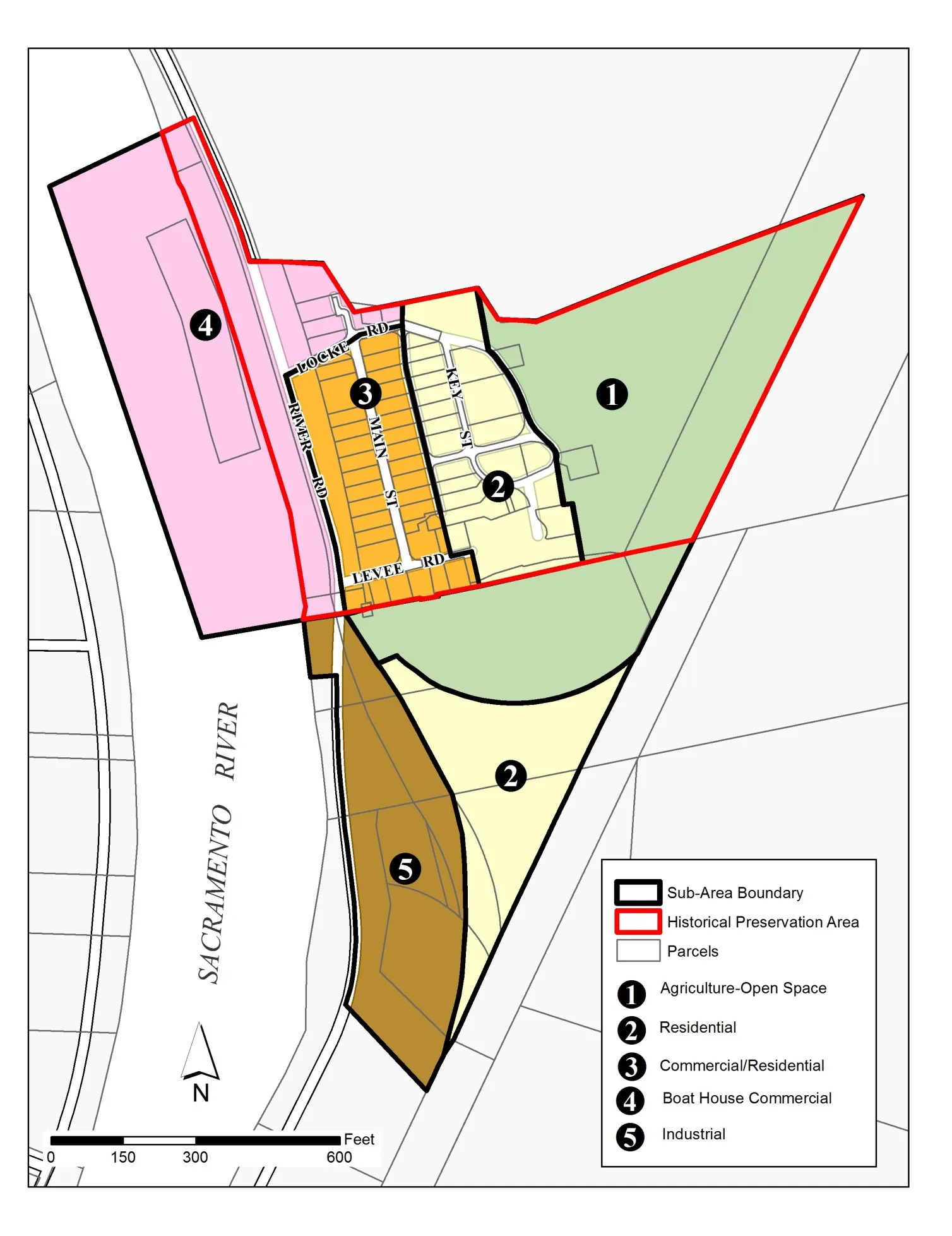
504-420. LOCKE PROJECT REVIEW PROCESSES CHART A
Section titled “504-420. LOCKE PROJECT REVIEW PROCESSES CHART A”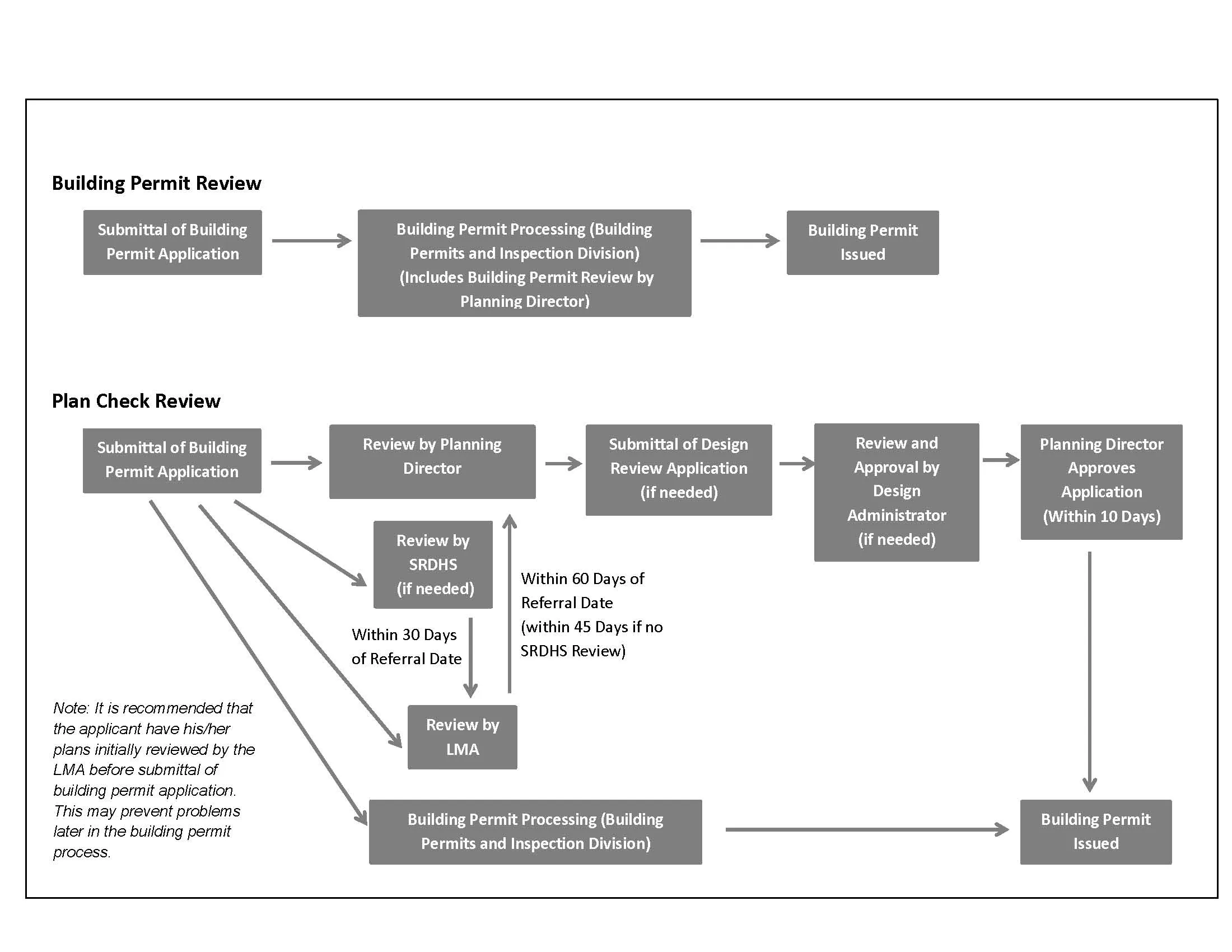
504-420. LOCKE PROJECT REVIEW PROCESSES CHART B
Section titled “504-420. LOCKE PROJECT REVIEW PROCESSES CHART B”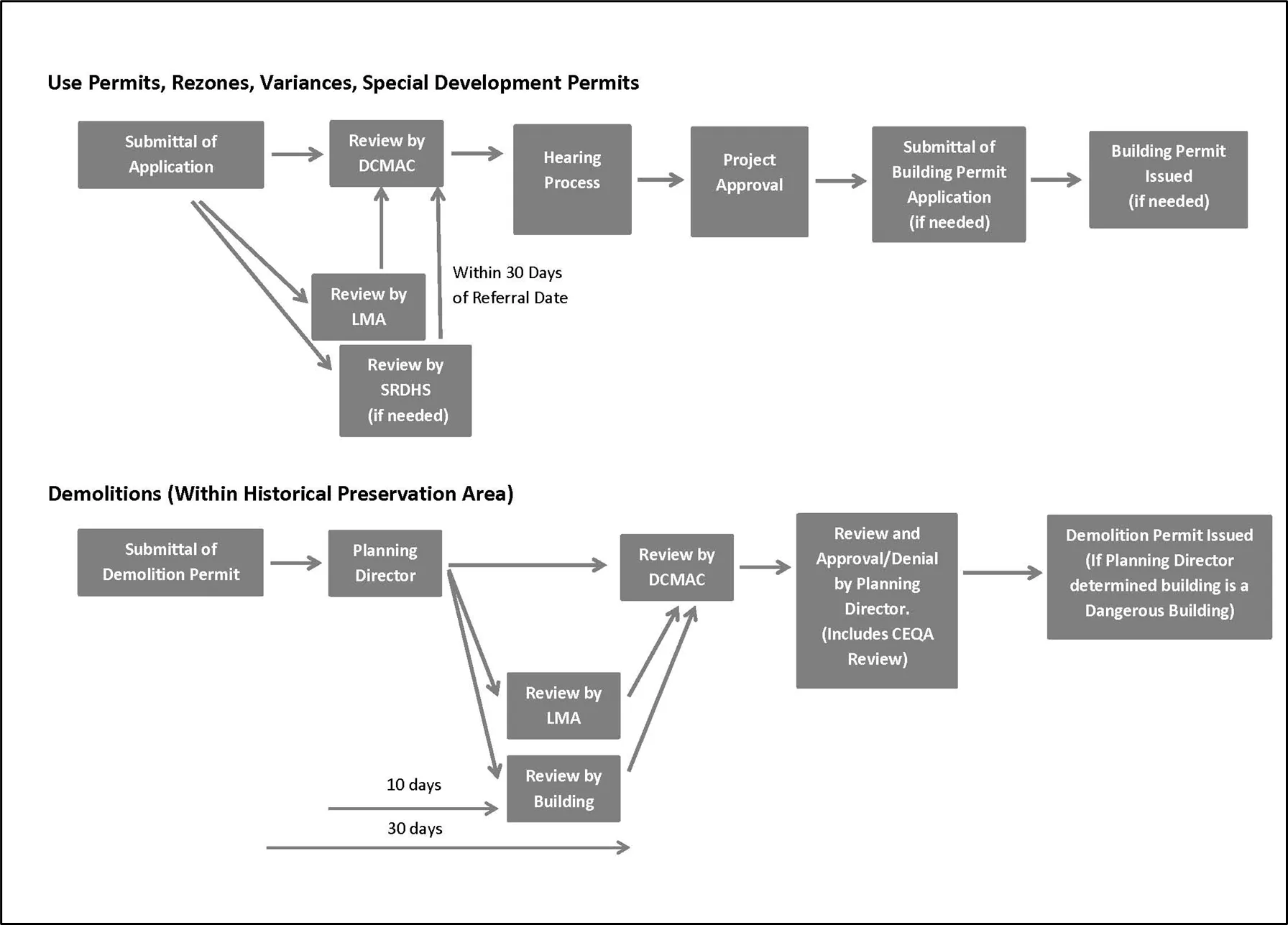
504-421. TOWN OF LOCKE DESIGN GUIDELINES
Section titled “504-421. TOWN OF LOCKE DESIGN GUIDELINES”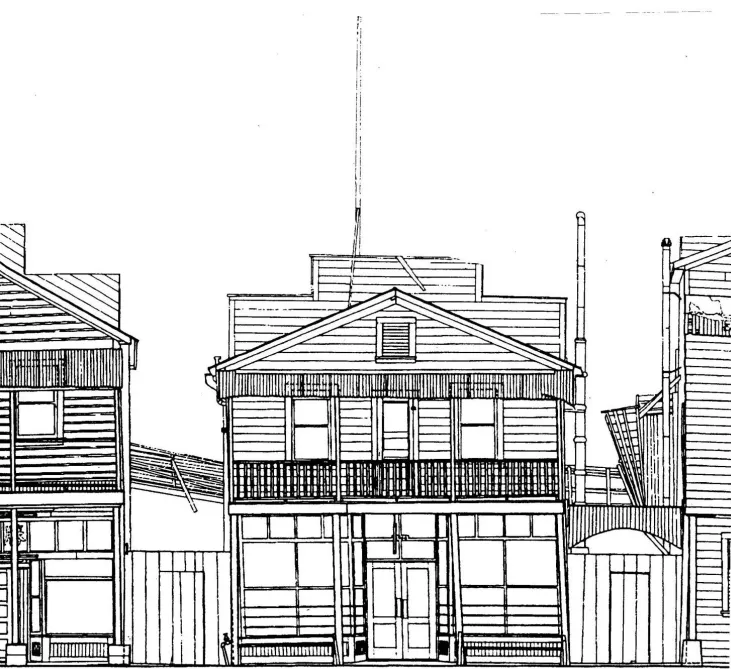
INTRODUCTION
Section titled “INTRODUCTION”The intent of these design guidelines is to promote the goals stated; to provide clarification to the residents, property owners, and businesses to encourage cooperation in attaining these goals; and to create a simple, fair, and effective system of enforcement of the regulations by the local and federal government to preserve the Historical Preservation Area. The following architectural design guidelines are intended to establish building character and design criteria for all new buildings, renovated buildings, and remodels regardless of level and intensity.
These guidelines shall be used in conjunction with the Locke Special Planning Area (SPA) document; the Secretary of Interior Standards for the Treatment of Historic Properties; the State Historical Building Code; and are intended to provide property owners, merchants, and their designers with basic design criteria. The purposes of the guidelines are to enable the following:
- Provide the property owner, builder, or designer with a set of architectural design parameters to be used as a guide in the design of all proposed buildings. These design guidelines are not intended to replace or be used in lieu of applicable state and local building codes and site development standards.
- Create a street character that is consistent with the historic, cultural, and architectural character established and that will result in a pleasing and pedestrian friendly street scene.
Users of the document will consist of the following groups:
- Property owners will utilize these design guidelines in conjunction with the zoning code and building codes to develop designs for commercial structures in the area.
- Design professionals working with property owners will utilize these design guidelines for the creation of new commercial structures, remodeling, or retrofitting in the Historical Preservation Area.
- County Planning staff, when meeting with property owners and design professionals, will utilize these design guidelines when working with public review boards
BACKGROUND
Section titled “BACKGROUND”In 2002, The Locke Citizen’s Advisory Committee [CAC] adopted a preferred approach regarding improvements and repairs to buildings in their town. This policy is described as “stabilization with minor rehabilitation”.
Since the 1970s, Locke has been listed federally as a National Historic Landmark. Because of this unique status, and the fact that it falls within the current Walnut Grove /Locke Special Planning Area (SPA), Locke is subject to building restrictions and additional oversight. Additionally, as a National Historic Landmark, building rehabilitation work within the town should be guided by the Secretary of the Interior’s Standards and Guidelines for the Treatment of Historic Buildings.
Additionally, as a National Historic Landmark, building rehabilitation work within the town should be guided by the Secretary of the Interior’s Standards and Guidelines for the Treatment of Historic Buildings.
GOALS AND POLICY OF THE DESIGN GUIDELINES
Section titled “GOALS AND POLICY OF THE DESIGN GUIDELINES”These guidelines provide basic design recommendations for all buildings promoting design creativity, variation while insuring consistency in building scale and proportion, and pedestrian orientation for all properties located in Locke.
By adopting these guidelines, the Board of Supervisors intend to provide guidance for the implementation of the following goals and that each goal be applied by the County of Sacramento Planning and Building Departments, the Locke Management Association, and any other official or staff member considering a development application for any property within the Historic Preservation Area.
Goal 1:
Section titled “Goal 1:”Community Identity and Residential Quality of Life: To preserve and enhance the small-town atmosphere of the commercial and residential Historical Preservation Area.
Goal 2:
Section titled “Goal 2:”Economic Development: To encourage an active business climate this promotes development of a diverse range of businesses compatible within the 1920’s timeframe.
Goal 3:
Section titled “Goal 3:”New Development: To ensure that new residential and commercial development is consistent with and enhances the historic character of the Historical Preservation Area.
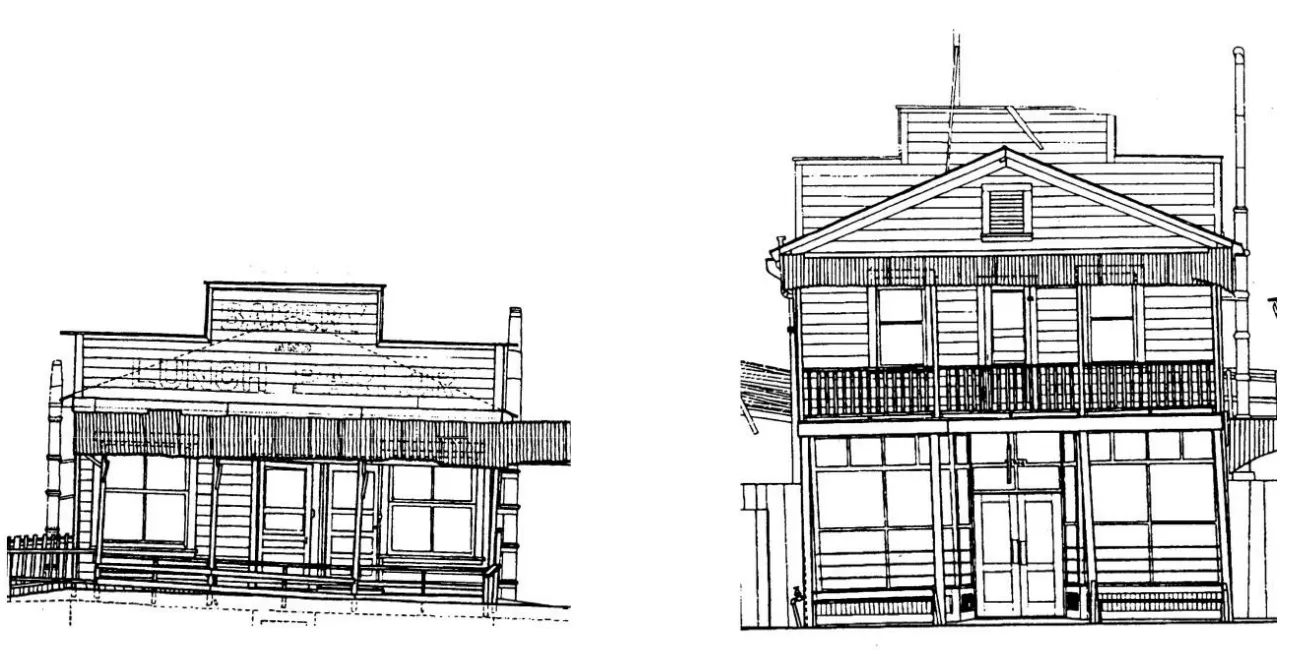
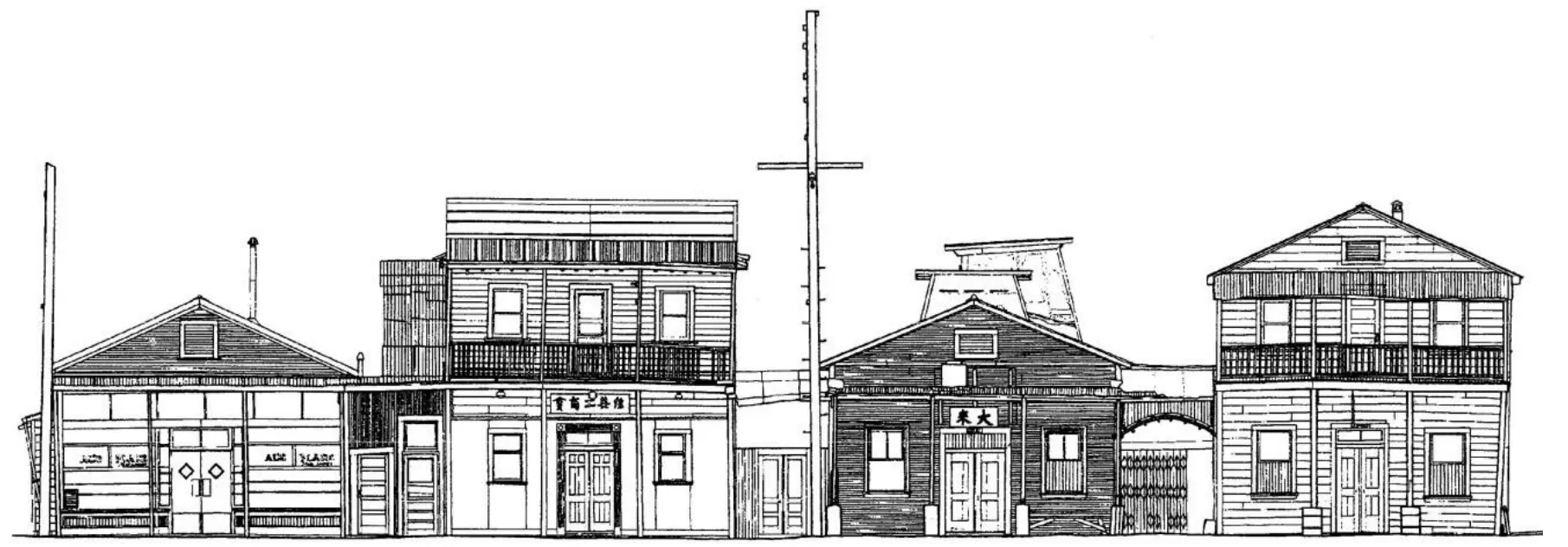
The buildings illustrated above are representative of the character of small scale commercial structures in the Town of Locke
ARCHITECTURAL DESIGN CRITERIA
Section titled “ARCHITECTURAL DESIGN CRITERIA”The primary objective is to insure the guidelines allow for flexibility, innovation, and creativity in the design of new buildings. Yet, at the same time, maintain overall architectural character that currently exist. In support of this objective, these guidelines rely heavily on historic building styles to influence the type and style of architecture that will be constructed in the future.
This section of the document will provide specific design direction for a number of architectural issues. It is important, however, that facade enhancements observe the support the goals, as the success of a street environment depends upon the total sum of all buildings rather than one specific design or location.
The follow design criteria can help create an architectural character compatible with the existing early 1900’s style, yet maintain flexibility allowing individuality and creative solutions.
REHABILITATION OR REMODEL
Section titled “REHABILITATION OR REMODEL”In contrast to repair, remodeling requires approval from the LDPC. “Repair” means the reconstruction, restoration of an existing structure for the purposes of preserving or retaining the characteristics or operation of the structure. Returning a building to its original 1910-20’s appearance.
“Remodeling” means change, addition or modification of the size, style and/or construction of a structure. The goal is to maintain or improve a structure’s value. As a general rule, remodeling the front (street front) is subject to review but not the rear or sides.
All historical buildings should be preserved and, to the extent possible, restored to highlight their traditional materials and architecture.
Preserve Original: Where original building elements remain (e.g., walls, storefronts, porches, etc.) their appearance should not be altered. Such building elements should be restored and preserved.
Retain and Restore Original Materials: As much original material and detail should be retained in the restoration as possible. Wood steps and sills, window
Door frames, glazing, trim, cornices and other elements that contribute to the character of the storefront should be preserved.
Deteriorated architectural features shall be repaired rather than replaces whenever possible. In the event replacement is necessary, the new material shall match the existing.
NON-BUILDING PERMIT IMPROVEMENTS
Section titled “NON-BUILDING PERMIT IMPROVEMENTS”There are a number of minor rehabilitation or remodeling activities that do not require obtaining a Building Permit, and would therefore proceed according to the judgment and desires of the individual owner. Individual owners need to be aware of the implications of a number of small changes or upgrades upon both the value of their property as new property owners, as well as the potential cumulative effects upon the character of the town. With the establishment of the Locke Management Association (LMA), a review of this category of rehabilitation activity would be conducted for its appropriateness and approval.
These activities not requiring a Sacramento County Building Permit should be reviewed and approved by the Locke Management Association Board of Directors (LMA) or its Design Review and Preservation Committee (LDPC), and be in accordance with the Locke Covenants, Conditions & Restrictions (CC&Rs), which incorporate the Secretary of the Interior’s Standards for the Treatment of Historic Buildings.
Some of these activities are noted in the following recommendations:
Paint:
Section titled “Paint:”Paint colors, while reversible can strongly enhance or detract from the character of the building. Unusual colors that were never represented in Locke over time should be avoided, unless evidence can be produced otherwise. Neighboring buildings and the historic character should be considered when color choices are made. Ivory, off-white, light brown and tan. Generally, only fronts were painted. Paint sides
Repairs to siding and decorative features:
Section titled “Repairs to siding and decorative features:”Decorative features or small portions of buildings that have become incomplete or deteriorated should be repaired with the same material, and be in keeping with the original design and method of construction. The repair of siding should use materials and sizes like the existing original materials. The replacement of deteriorated portions of a board and batten-surfaced building with horizontal siding could detract from the image and character of the building.
Roofs:
Section titled “Roofs:”Roof repairs up to 10 per cent of the roof area may be executed without a permit but should utilize existing types of materials compatible with the character of the town.
Windows:
Section titled “Windows:”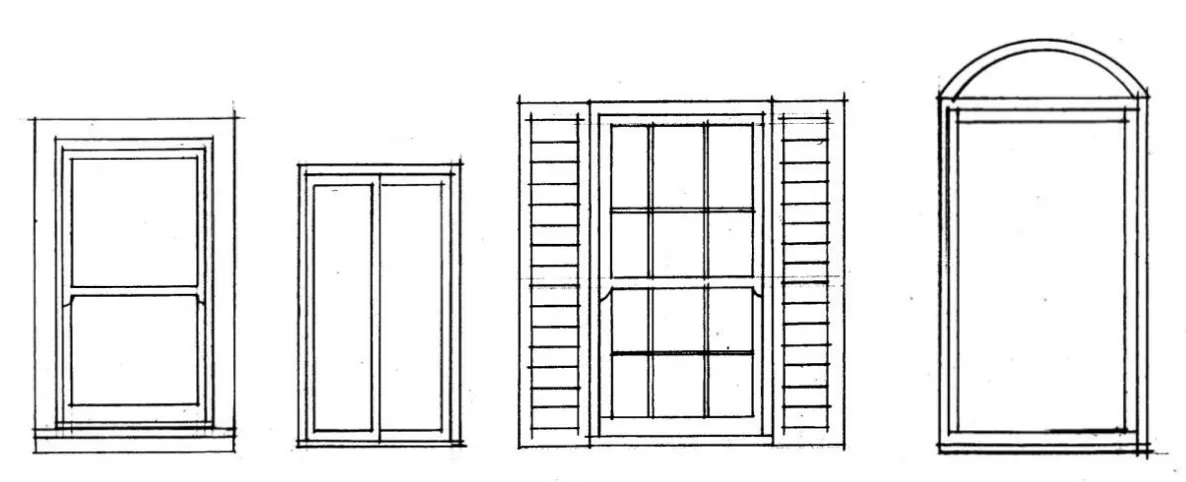
The classic wood framed double hung sash window illustrated on the left is consistent with the character of Locke The use of shutters, sliding windows, and arched tops are not original and should be avoided
Windows may be replaced or experience minor modifications without a Building Permit only within the existing frames.
Window modifications or replacement with different materials than the original ones can strongly affect the character and quality of an older building.
Avoid replacing original windows with inappropriate contemporary products, particularly aluminum sash sliding windows which can affect the egress requirements of the Sacramento County Building Department. There are many sources of suitable new windows that follow the character and use the same materials as the original. Be aware of the existing original pattern of window openings and their size, scale and proportions of the frame and glass, width of wood strips dividing the glass panes (muntins), type of wood, glass and frame, and appropriate design for its building style.
Doors:
Section titled “Doors:”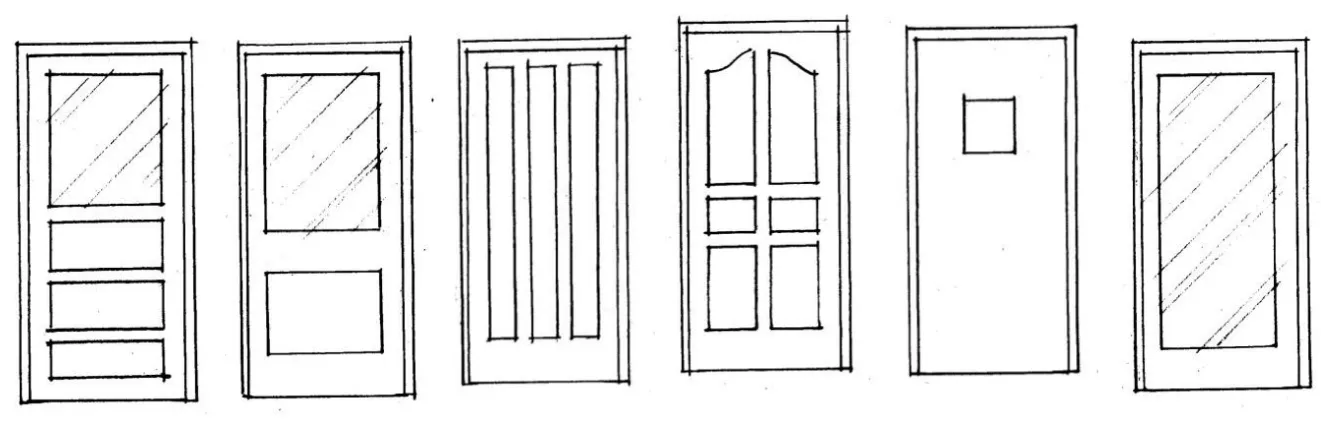
The two doors on the left are appropriate to buildings in Locke and its historical character.
Doors may be replaced or experience minor modifications without a Building Permit only within the existing frames.
The material and design of replacement doors can affect the building image and character. Generally the doors should reflect the same era and materials as the building, with similar numbers of panels and panel shapes or windows as those utilized on the original building.
Contemporary metal doors with metal frames and solid plain wood doors could detract from the appearance of the buildings. Doors appropriate to the original style and image of the building are recommended.
Historic Doors are discussed in Section 8-603.2 of the 2001 California State Building Code. [Chapter 34, Division 2, of the California State Building Code, Part 2, Volume 1.]
Hardware:
Section titled “Hardware:”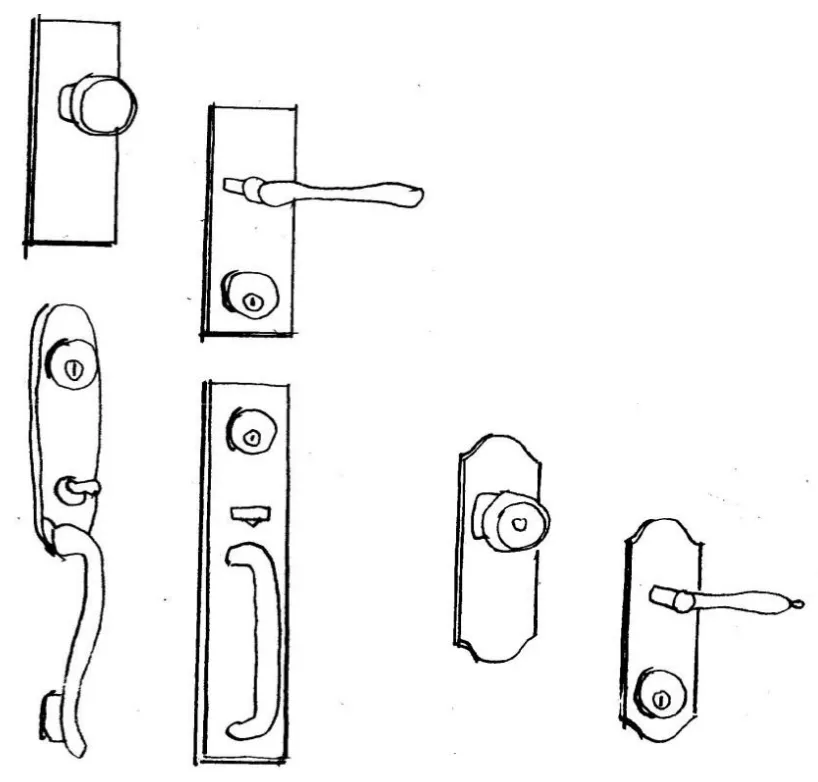
Door hardware like those depicted here would be acceptable choices for Locke.
Replacement of exterior hardware with that of an incompatible design could detract from the image and era of historic buildings. Hardware that has the same general character of the original is recommended. A possible alternative would be plain contemporary hardware.
The original hardware used in both commercial buildings and houses was largely residential in scale and simple in type. Therefore, the use of heavy ornate hardware on the small scale commercial buildings in Locke would be inappropriate.
Hardware for commercial buildings may fall within the regulations of the Americans with Disabilities Act [ADA]; this would require a horizontal latch handle at the entrance to a commercial building. However, if the entry door remains open during business hours, the latch handle style would not be required. Existing round doorknobs can also be retrofitted with horizontal latch handles.
BUILDING PERMIT IMPROVEMENTS
Section titled “BUILDING PERMIT IMPROVEMENTS”Projects involving more than minor repair in kind will require a Building Permit.
Rehabilitation Activities that require a Building Permit, and review by Sacramento County Building Department in accord with existing Special Planning Area regulations
Building Additions:
Section titled “Building Additions:”Additions to any building including balconies, support posts, and balustrades.
Replacement of Roofs:
Section titled “Replacement of Roofs:”Roof replacement involving more than 10 percent of the roof area.
Signage:
Section titled “Signage:”Installation of signs will require approval of the County for their appropriateness to the image and character of the town.
Lighting:
Section titled “Lighting:”The installation of exterior light fixtures on the building. The image and era of both the individual building and others on the streetscape should be considered in the selection, and new fixtures should be compatible in design and materials.
Resurfacing of a Building:
Section titled “Resurfacing of a Building:”Resurfacing an existing building with an inappropriate and non-original material such as stucco over wood, or aluminum, plastic, or composition siding would substantially and negatively affect the character of the building as well as the streetscape, and is not in compliance with the guidelines.
Sidewalk Canopies:
Section titled “Sidewalk Canopies:”Primarily intended to protect shopper and window displays from the sunlight, and they also provide protection form the inclement weather.
Retain and restore original design: Canopies or other types of walkway coverings shall be retained or shall be replaced with new materials consistent with the original design.
The most appropriate type of covering is wood shingles.
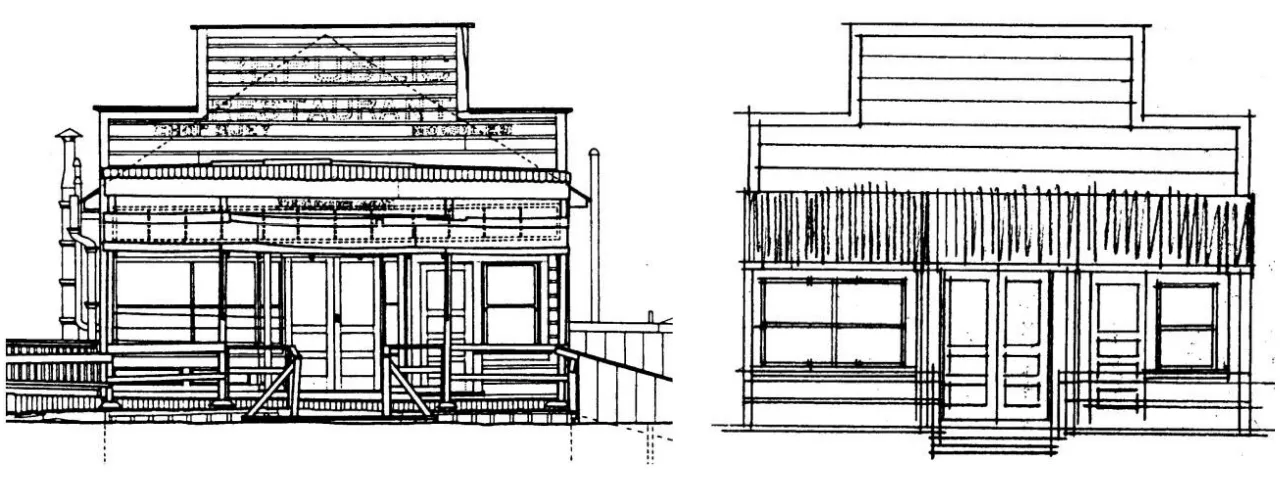
Remodeling Building Openings:
Section titled “Remodeling Building Openings:”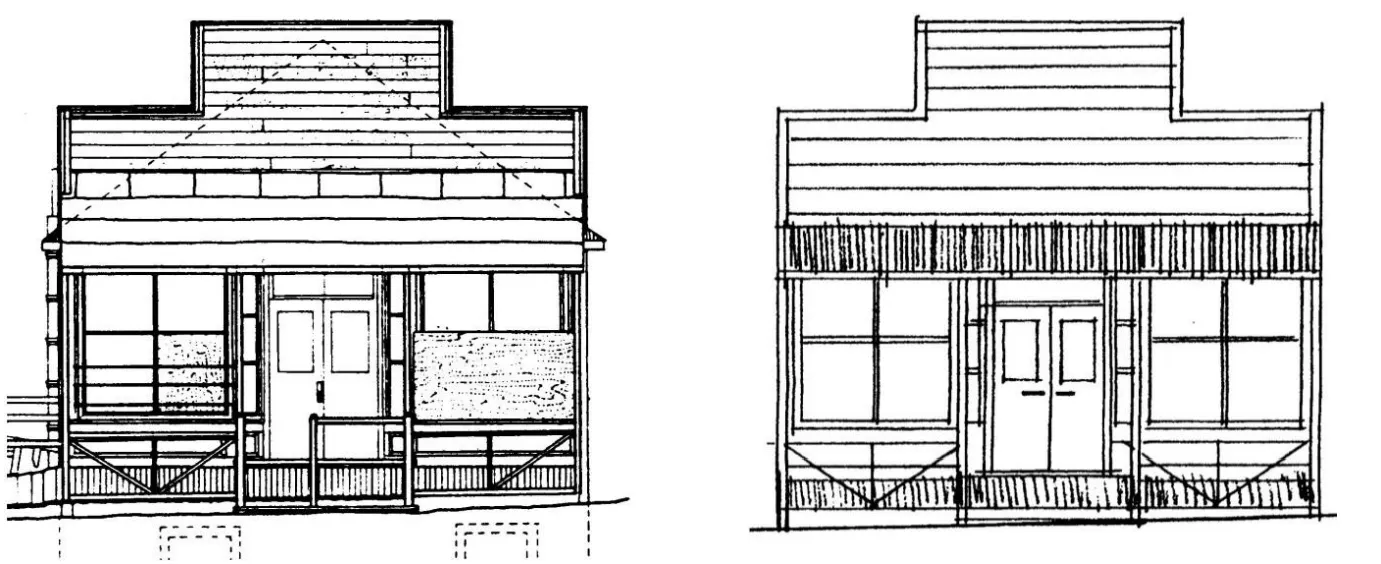
The illustration on the left shows how a building may presently look in Locke and the illustration on right shows how, with a few repairs, it may better reflect its original design and historic character.
Ensure that the street level windows are large and transparent, which allows for displays which draw interest of the passerby.
Glass in windows, doors, and transoms shall be clear except where documented evidence indicates the original use of colored glass. No dark-tinted or reflective glass shall be allowed.
To the extent possible given technological constraints, dual pane windows should be utilized for energy efficiency. However, historic authenticity takes precedence over energy efficiency in replacement of windows.
With the exceptions of transoms, windows with multiple small panes are not appropriate to buildings constructed in the 1920s.
Window Sills and Base Panel:
Section titled “Window Sills and Base Panel:”The storefront provides a decorative base panel in the wall below the storefront windows. Appropriate materials for the base panel are durable commercial grade materials such as glazed ceramic tile or wood panels with moldings.
Height: Sills should be 20 to 36 inches above the level of the adjacent sidewalk.
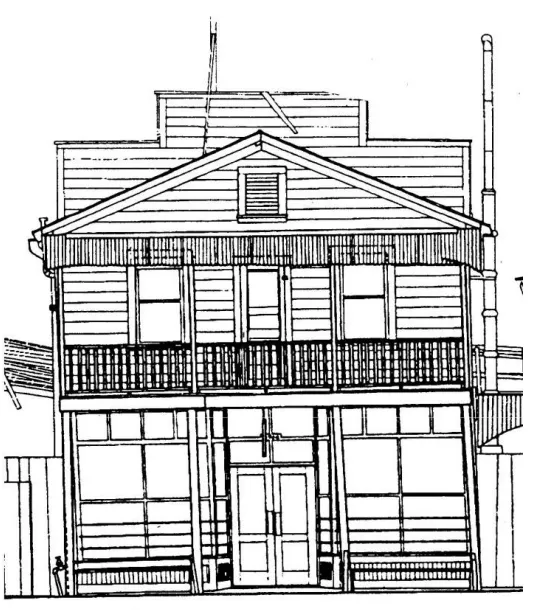
Window Sash and Trim:
Section titled “Window Sash and Trim:”The storefront sash consists of thin vertical division bars which break up the glass. Wood muntins are used to combine two or more large sheets of glass to make larger composite windows, surrounded by substantial wood trim. This creates a visual frame for activity and displays behind the storefront.
The use of an accent color different from the body color is desirable.
Upper Floor Windows:
Section titled “Upper Floor Windows:”Reinforce the historical pattern or prototype for commercial buildings which commonly had individual double hung windows spaced along the exterior wall at the upper floors. In contrast to the typically open and continuous storefront glazing below.
Removal of existing door or window frames and changing the size or proportion of the existing openings will require a Building Permit. Repair or replacement of windows within the existing frames and in character with the original sash and window pane sizes will not require a Permit, but will be reviewed by the Locke Design and Preservation Committee.
Balcony Balustrades:
Section titled “Balcony Balustrades:”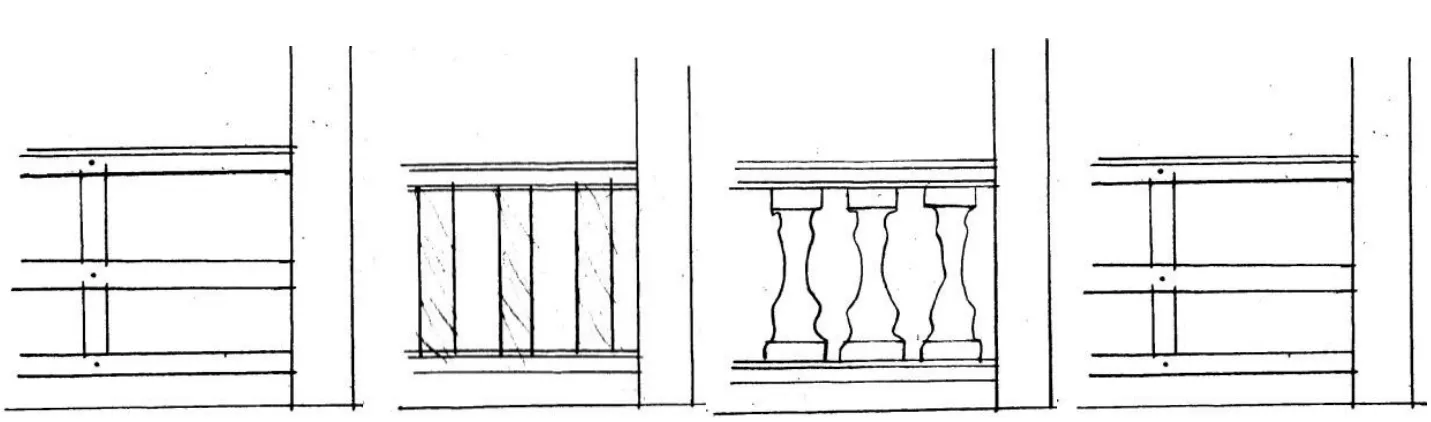
The second and forth examples are in keeping with the character of Locke.
Replacement of balcony balustrades will require a Building Permit. The State Historic Building Code may be used to avoid elevating the railings the full height required by the Uniform Building Code, which would create a proportion that may detract from the original character of the building. However, life safety is a factor.
Individual balusters or posts should be compatible in design, shape and proportion with those of an original design. It is recommended that any original balustrades be repaired or replaced to match the original. Installing balustrades that differ from the original scale and image would detract from the appearance of the streetscape, as well as the individual building.
The addition of balconies where none ever existed is generally not recommended.
Posts:
Section titled “Posts:”Installation or replacement of posts supporting the second floor balconies and first floor canopies will require a Building Permit. Supports should be made stable and either is simple in design so as not to detract from the buildings, or executed in keeping with an earlier known design.
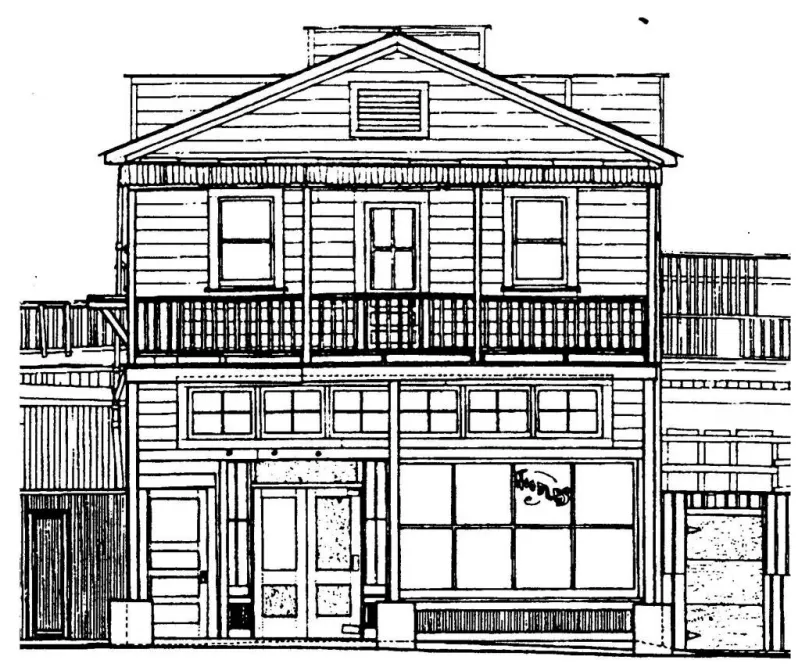
This building above reflects the true character of the town of Locke.
Upper Floor Entries:
Section titled “Upper Floor Entries:”Street entrances: Entries to upper floors should access directly from the main street frontage. These doorways shall be integrated into the overall composition of the building facade and be compatible with the design of the store.
Commercial quality doors compatible with historic character are acceptable. Doors with glazed panels are preferred.
Common Areas:
Section titled “Common Areas:”The design and maintenance of common areas such as sidewalks, stairways and the community garden will be addressed by the Locke Management Association. Features like planters and potted plants are at the discretion of the owner, with consideration of the image of the town.
Form and Massing:
Section titled “Form and Massing:”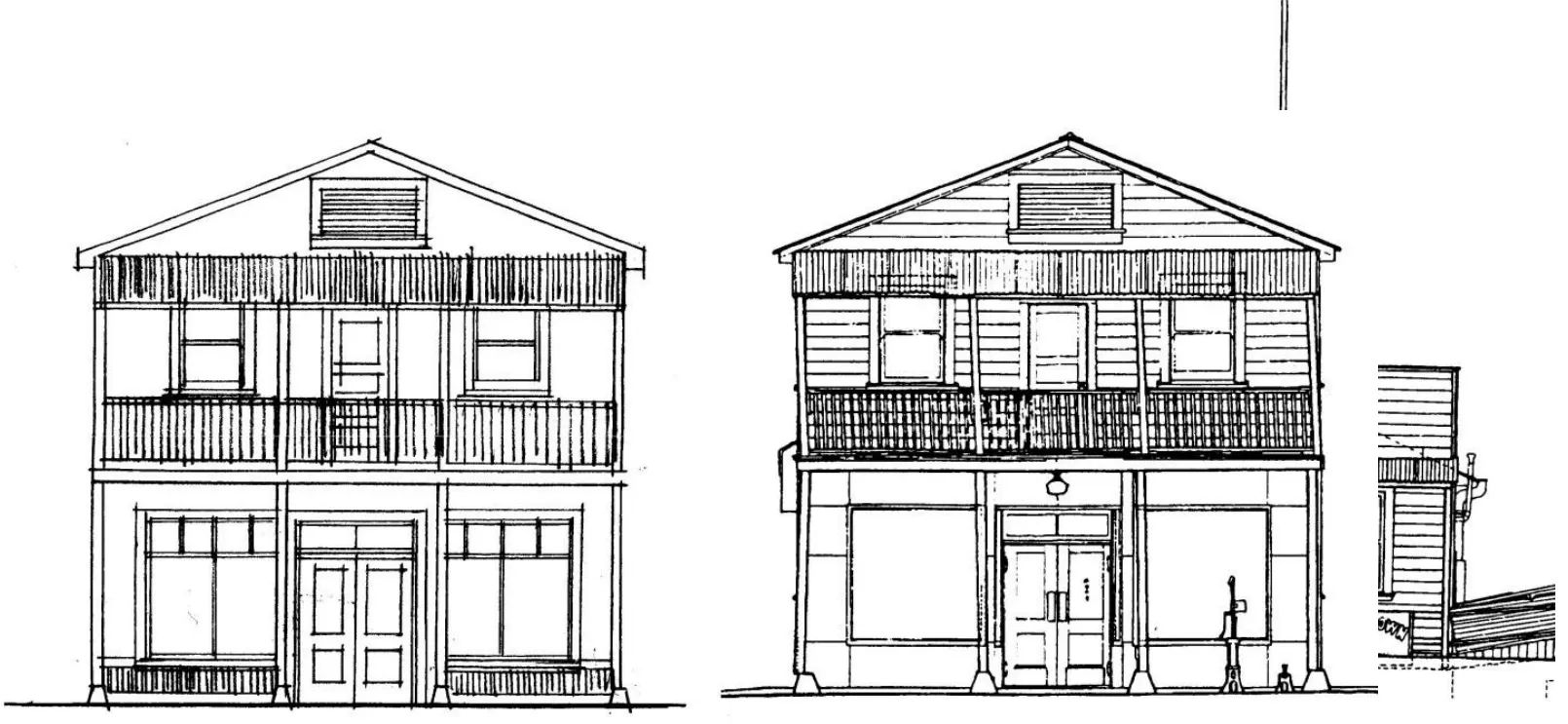
The buildings illustrated above also represent the character of small scale commercial buildings in Locke
Consistent in the form and massing of buildings will help establish continuity with the street scene. The size of new structures should be compatible with adjacent buildings.
To provide convenient pedestrian circulation and architectural interest, buildings should incorporate features such as walk through arcades.
Building elements should create a rhythm of bays generally between 20 to 30 feet wide. This will help minimize the impacts of large structures reinforcing continuity along the street scene
Height of new structures shall not exceed the height of the existing structure adjacent and in the vicinity.
In areas where there is no existing height established, the standards in the Zoning Code for the proposed use shall apply.
Roof Forms
Section titled “Roof Forms”Design and treatment of roofs help articulate architectural style and create visually interesting street scene. Roof design should be compatible with the architectural character of the early 1900s.
Parapet wall designs should be used on flat roofs to conceal roof mounted mechanical equipment.
Simple, low pitched gable, mansard, and shed roofs may also be used to add interest to the roof line.
Parapet walls, whether simple or ornate, should always include a cap detail.
Details
Section titled “Details”Integrating architectural details in the study area will help beautify historic buildings as well as add variety and richness to renovated and new buildings. Some existing structures could be greatly enhanced by simply adding carefully designed architectural details such as wainscot treatment/ bulkhead at the building base, multi-paned storefront windows and parapet detailing.
Arcades provide pedestrian scale to the street and are practical and attractive architectural element. The use of canopies is encouraged; this creates a more comfortable space for the pedestrians while providing protection from the sun and rain.
The original proportions of walls openings should be retained.
RESOURCES
Section titled “RESOURCES”County Planning and Environmental Review Division
Department of Community Development
827 7th Street, Room 225, Sacramento, CA 95814 (916) 874-6141
County Building Permits and Inspection Division
Department of Community Development
827 7th Street, Suite 102, Sacramento, CA 95814 (916) 875-5296
Board of Supervisors, Office of Don Nottoli, District 5
700 H Street, Suite 2450, Sacramento, CA 95814 (916) 874-5465
Sacramento Housing and Redevelopment Agency
801 12th Street, Sacramento, CA 95814 (916) 444-9210
State Office of Historic Preservation, State Department of Parks and Recreation
1725 23rd Street, Suite 100 Sacramento, CA 95816 (916) 445-7000
Division of State Architect (Building Safety)
1102 Q Street, Suite 5200, Sacramento, CA 95811 (916) 445-8730
Acknowledgements
Section titled “Acknowledgements”The information in these Guidelines pamphlet was prepared for the County of Sacramento and use by the people of Locke in their new property-owner roles, by Paula Boghosian, Preservation Consultant, and Darryl Chinn, Architect, of the Seann Rooney Consultant team preparing the Locke Management Association.
Graphics are derived from the Historic American Building Survey drawings prepared for the Library of Congress in 1979, and the publication Rehab Right, prepared for the Oakland Planning Department in 1978.
Many thanks for assistance with this project to Pat Braziel, Supervisor Don Nottoli’s Office; Sheryl Lenzie, Sacramento County Planning Department; Tom Trimberger, Barbara White, Sacramento County Public Works/Building Inspection Division; Tom Winter, State Historical Building Safety Board; and Tim Brandt, Office of Historic Preservation.
STATE HISTORIC BUILDING CODE
Section titled “STATE HISTORIC BUILDING CODE”As a result of the listing of the town as a National Historical Landmark, the buildings of Locke are eligible for use of the State Historical Building Code (SHBC) which provides safe alternatives to the standard Uniform Building Code in order to preserve the integrity of historic buildings.
The SHBC code mandates that reasonable alternatives be sought and adopted where historic fabric or historic perceptions are threatened by the requirements of standard code. Enforcement rests with local jurisdictions subject to appeal as outlined in SHBC Title 24, Part 8.
The intent of the State Historical Building Code (SHBC) is to protect California’s architectural heritage by recognizing the unique construction problems inherent in historic buildings and offering an alternative code to deal with these problems. The SHBC provides alternative building regulations for the rehabilitation, preservation restoration or relocation of structures designated as historic buildings. SHBC regulations are intended to facilitate restoration or accommodate change of occupancy so as to preserve a historic structure’s original or restored architectural elements and features. While the code provides for a cost-effective approach to preservation, it also provides for occupant safety, encourages energy conservation and facilitates access for people with disabilities.
In 1975, the State of California adopted into law Senate Bill 927, which created the authority for the SHBC and for an advisory board to prepare regulations to implement the code. The SHBC is unique among state regulations. The authority of this document required that state agencies responsible for building construction regulations work in harmony with representatives of other design and construction disciplines. After years of careful deliberation, the comprehensive SHBC regulations were adopted in August and October, 1979.
Since Senate Bill 2321 in 1984, local enforcing authorities, such as building officials and fire enforcement officers, are to us the SHBC, with the existing code, when dealing with historic structures. Under the SHBC officials are provided the latitude necessary to exercise the judgment required to retain the viability of historic resources.
For State Historical Building Safety Code information on the web: www.dsa.dgs.ca.gov/StateHistoricalBuildingSafetyBoard/default.htm.
The above link as of January 2026 is https://ohp.parks.ca.gov/?page_id=21410.
SECRETARY OF THE INTERIOR’S STANDARDS FOR REHABILITATION
Section titled “SECRETARY OF THE INTERIOR’S STANDARDS FOR REHABILITATION”According to the requirements of the Special Planning Area presently governing Locke, any rehabilitation work on buildings in Locke that require a building permit must comply with the Secretary of the Interior’s Standards for Rehabilitation. Additionally, the established Covenants, Conditions & Regulations regarding the Locke non-profit organization include the requirement that any rehabilitation work must comply with the Secretary of the Interior’s Standards for Rehabilitation. Rehabilitation projects must also meet the following Standards to qualify as “certified rehabilitations” eligible for the 20 percent tax credit. The Standards are applied to projects in a reasonable manner, taking into consideration economic and technical feasibility.
-
A property shall be used for its historic purpose or be placed in a new use that requires minimal change to the defining characteristics of the building and its site and environment.
-
The historic character of a property shall be retained and preserved. The removal of historic materials or alteration of features and spaces that characterize a property shall be avoided.
-
Each property shall be recognized as a physical record of its time, place, and use. Changes that create a false sense of historical development, such as adding conjectural features or architectural elements from other buildings, shall not be undertaken.
-
Most properties change over time: those changes that have acquired historic significance in their own right shall be retained and preserved
-
Deteriorated historic features shall be repaired rather than replaced. Where the severity of deterioration requires replacement of a distinctive feature, the new feature shall match the old in design, color, texture, and other visual qualities, and where possible, materials. Replacement of missing features shall be substantiated by documentary, physical, or pictorial evidence.
-
Chemical or physical treatments, such as sandblasting, that cause damage to historic materials shall not be used. The surface cleaning of structures, if appropriate, shall be undertaken using the gentlest means possible.
-
Significant archeological resources affected by a project shall be protected and preserved. If such resources must be disturbed, mitigation measures shall be undertaken.
-
New additions, exterior alterations, or related new construction shall not destroy historic materials that characterize the property. The new work shall be differentiated from the old and shall be compatible with the massing, size, scale, and architectural features to protect the historic integrity of the property and its environment.
-
New additions and adjacent or related new construction shall be undertaken in such a manner that if removed in the future, the essential form and integrity of the historic property and its environment would be impaired.
PRESERVATION INCENTIVES
Section titled “PRESERVATION INCENTIVES”Rehabilitation Tax Credit Program:
Section titled “Rehabilitation Tax Credit Program:”The 20% tax credit equals 20 percent of the amount spent in a certified rehabilitation of a certified historic structure. The tax credit can reduce an owner’s taxes by 20% of the amount he spends. All buildings in the town of Locke are certified historic structures, due to the town’s designation as a National Historic Landmark.
A “certified rehabilitation” is a rehabilitation of a certified historic structure that is approved by the National Park Service as being consistent with the historic character of the property and the district in which it is located. The project must not damage, destroy, or cover materials or features, whether interior or exterior, that helps define the building’s historic character. Rehabilitation projects must conform to the “Secretary of the Interior’s Standards for Rehabilitation.” The project is approved or certified only if the overall rehabilitation project meets the Standards.
Mills Act:
Section titled “Mills Act:”This program, if adopted by the County, would provide for a diminished Sacramento County property tax with respect to certified historic structures, in exchange for an agreement by a property owner that he or she will retain the historic character of their building.
See Preservation Incentives publication of the Office of Historic Preservation for various other preservation benefits.
TECHNICAL ASSISTANCE
Section titled “TECHNICAL ASSISTANCE”The National Park Service publishes pamphlets that provide technical information regarding the treatment of various kinds of appropriate repair of historic buildings. These are published as “Preservation Briefs.” The following are just some examples of the technical information that may be appropriate to building owners in the town of Locke, and that are available from the State Office of Historic Preservation and the National Park Service (See addresses or websites under “Resources.”)
-
Roofing for Historic Buildings
-
Conserving Energy in Historic Building
-
The Repair of Historic Wooden Windows
-
Paint Problems on Historic Woodwork
-
Rehabilitating Historic Storefronts
-
The Use of Substitute Materials on Historic Building Exteriors
-
Holding the Line: Controlling Unwanted Moisture in Historic Buildings
Please be aware that rehabilitation activities within the town of Locke are eligible for the application of the State Historic Building Code, and need not necessarily follow exactly the Uniform Building Code for new construction. Contact the Executive Officer of the Historic Building Safety Board, and the State Office of Historic Preservation, (See “Resources” for contact information)
SACRAMENTO RESEARCH FACILITIES
Section titled “SACRAMENTO RESEARCH FACILITIES”-
CENTER FOR SARAMENTO HISTORY —
551 Sequoia Pacific Boulevard (appointment only 808-7072)- City Assessment Rolls and Map Books-
- City Building and Plumbing Permits
- City Council Records (Ordinances, Proceedings, Minutes Books and indexes
- City Library Newspaper Indexes (Bee & Union 1900-1993)
- County Articles of Incorporation Registers
- County Assessment Rolls and Map Books
- County Board of Supervisor’s Minutes and Indexes
- County Corporation Files and indexes
- County Court Naturalization Case Files and Records
- County Ordinances
- County Recorder Deed Books and Indexes
- County Recorder Homestead Index
- County Recorder Maps and Indexes
- County Recorder Marriage Certificates Index
- County Recorder Mortgage Books and Indexes
- County Recorder Register of Divorces Index
- County Recorder Separate Property of Married Women and Sole Traders Indexes and Records
- County Voters Registers
- County Wills Recorder
- District and Superior Court Naturalization Records (and Declarations to be Naturalized) and Index
- Photographic Collections
- Probate Court Register of Estates
- Superior Court Naturalization Records (and Declarations to be Naturalized) and Index
- Superior Court Probate Case Files, Records, and Indexes
-
SACRAMENTO CENTRAL PUBLIC LIBRARY and SACRAMENTO ROOM — 828 I Street
- City and County Directories
- Photograph Files
- Sacramento City and County Histories
- Various documents and files related to Sacramento regional history
- Newspaper Indexes- Microfilm of Sacramento Newspapers 1850-present
-
CALIFORNIA STATE LIBRARY/CALIFORNIA ROOM — 914 Capitol Mall/900 N Street
- Biographical files
- California newspapers
- Manuscript, photograph and diary collection
- Periodical index
- Sanborn Insurance maps
- U.S. census
-
CALIFORNIA STATE ARCHIVES — 1020 O Street
- Manuscript federal census registers
- State government and agency records
- The Earl Warren Papers
-
SACRAMENTO CITY HALL — 915 I Street
- City Council Minute Books and Records
- Sacramento County Board of Supervisor’s Minutes
-
SACRAMENTO CITY COMMUNITY DEVELOPMENT DEPARTMENT — 300 Richards Boulevard, 3rd Floor
- Building permits
- City Engineer’s maps, plans, drawings and indexes
-
COUNTY CLERK/RECORDER’S OFFICE - 600 8th Street or 8239 E. Stockton Boulevard,
Suite A- Civil and criminal files and indexes
- Coroner inquest files
- Probate files and indexes
- Land sale records and indexes
- Survey and subdivision maps
- Vital statistics and registers indexes
- Genealogical registers, indexes and research sources
-
LIBRARY, CALIFORNIA STATE UNIVERSITY, SACRAMENTO - 6000 J Street
- Federal census schedules for Sacramento County
- Sacramento Newspapers
- City Directories
-
BUREAU OF LAND MANAGEMENT - Federal Office Building, 2800 Cottage Way, Suite W1834
- Mining records for unpatented federal land claims -
- Original surveyors’ plats/notes for California federally surveyed land
- Public land records of California
-
SACRAMENTO FAMILY SEARCH LIBRARY, CHURCH OF JESUS CHRIST OF LATTER- DAY SAINTS — 2745 Eastern Avenue
- Genealogical registers, census indexes and research sources, such as books, city directories, and vital statistics from throughout the USA.
- Access for microfilm from the Main Library at Salt Lake City
WEBSITES… for More Information
Section titled “WEBSITES… for More Information”State Office of Historic Preservation. The site contains links to programs and information provided by the State of California
National Park Service; Links to the Past. The site contains various links to preservation incentives, issues, codes, laws, agencies, grants, information, provided by the federal government.
https://www.nps.gov/history/preserve-places.htm
Secretary of the Interior’s Standards for the Treatment of Historic Properties with Guidelines for Preservation, Rehabilitation, Restoration, and Reconstruction of Historic Buildings
https://www.nps.gov/tps/standards.htm
Division of State Architect. The site contains information about the State Historical Building Code and its utilization.
http://www.dgs.ca.gov/dsa/AboutUs/shbsb.aspx
Old House Journal:
Have a question about your old house? Need some advice? Old House Journal Online shares rehab problems and solutions.
http://www.oldhousejournal.com/
National Trust for Historic Preservation. The National Trust for Historic Preservation is a privately funded non-profit organization that provides leadership, education and advocacy to save America’s diverse historic places and revitalize our communities. https://savingplaces.org/
These websites are just suggestions to assist the exploration of additional preservation information and perspectives.