

Chapter 6: Administration
Sacramento County Zoning Code
Chapter 6: Administration
Section titled “Sacramento County Zoning Code Chapter 6: Administration”Amended January 10, 2025
6.1. GENERAL PROVISIONS
Section titled “6.1. GENERAL PROVISIONS”6.1.1. Purpose and Overview
Section titled “6.1.1. Purpose and Overview”This Chapter describes the review and enforcement of the Code and its regulations and the administration and regulation of different types of applications for development in Sacramento County, organized by the following Sections:
-
Section 6.2 Zoning Amendments
-
Section 6.3 Design and Site Plan Review
-
Section 6.4 Special Permits
-
Section 6.5 Other Applications
-
Section 6.6 Enforcement
-
Section 6.7 Fair Oaks Boulevard Corridor Plan
Sections 6.2-6.5 shall be referenced in conjunction with the Zoning Code User Guide (User Guide), which has been prepared to facilitate navigation of this Code and the County’s Design Guidelines and to clarify the processes for obtaining planning entitlements and approval for development activity in Sacramento County.
6.1.2. Advisory, Decision, and Appeal Bodies
Section titled “6.1.2. Advisory, Decision, and Appeal Bodies”Advisory, Decision, and Appeal Bodies are referenced throughout this Code. In addition to this Section and other Sections of this Code, Title 2 of the SCC provides information on the composition, responsibilities, and rules of conduct for planning decision bodies and Title 22 provides additional information on subdivisions. A table summary of the major review and decision-making responsibility bodies for planning entitlement applications is provided for reference in the User Guide.
[DELETED 10-09-2020]
6.1.3. Appeals
Section titled “6.1.3. Appeals”Any person dissatisfied with an act or determination of the Planning Commission, the Subdivision Review Committee, Zoning Administrator, Chief Building Inspector, Design Review Administrator, Planning Director, or the Secretary of the Planning Commission, relating to the provision of this Code may appeal such act or determination as provided in this Section, provided that when any determination made by the aforementioned is given in the form of a recommendation or report addressed to the Board of Supervisors, or such other commission, board or officer, no appeal may be taken; but any interested party, unless otherwise provided in this Code, shall be entitled to appear at the time of consideration of such recommendation or report and to be heard thereon.
6.1.3.A. Notice of Appeal
Section titled “6.1.3.A. Notice of Appeal”Appeals of determination or actions of the officers or agencies mentioned in this Section may be taken by filing written notice thereof with the Secretary of the Planning Commission not later than 10 calendar days after the day on which the act or determination appealed from was made. A filing fee set by resolution of the Board of Supervisors shall accompany the Notice of Appeal. In computing the time within which the Notice of Appeal shall be filed, the day on which the act of determination was made shall include the next working day. The 10-day period for filing the notice of appeal shall not be waived.
No filing fee shall be required if the appeal is filed by a Community Planning Advisory Council (CPAC), and if there is a community-wide interest in the appeal. The appeal shall be filed within the timeframe specified by this Chapter; however, a CPAC may preauthorize an appeal at the time of the original action. The appeal form must specify the community-wide interest. Community-wide interest means that the project could potentially adversely affect properties beyond the immediate neighborhood (properties within 500 feet), in terms of traffic, noise, aesthetics, drainage, or other impacts. In addition, the project would set a precedent for a use of land that has policy implications for the larger community.
6.1.3.B. Effect of Filing Notice
Section titled “6.1.3.B. Effect of Filing Notice”The filing of the notice of appeal shall have the effect of staying the issuance of any permit, Variance, or mobile home certificate of compatibility until such time as the matter is disposed of on appeal, and all records relating to the decision or act appealed shall be transmitted to the Secretary of the Planning Commission.
6.1.3.C. Contents of Notice
Section titled “6.1.3.C. Contents of Notice”The Notice of Appeal shall state the act or determination which is being appealed, the identity of the applicant and his or her interest in the matter, and shall set forth in a concise statement the reasons which, in the opinion of the appellant, render the decision made unjustified or inappropriate.
6.1.3.D. Board of Zoning Appeals
Section titled “6.1.3.D. Board of Zoning Appeals”-
Jurisdiction. The Board of Zoning Appeals shall hear and decide all appeals from the actions of the Zoning Administrator, Chief Building Inspector, Planning Director, or Secretary of the Planning Commission relating to the provisions of this Code. However, the appeal shall be heard by the Board of Supervisors if it is filed on the basis of any of the following.
- The action appealed may have a significant effect upon the environment, or
- An Environmental Impact Report has not been prepared or is deficient in any manner; or
- A decision of the decision-makers named in this Section relates in any manner to an adult bookstore, adult motion picture theater, adult live theater, or an adult video tape store.
-
Hearings. Upon receipt of a Notice of Appeal of a decision or act to be heard by the Board of Zoning Appeals, the Secretary of the Planning Commission shall set the same for hearing not later than the next regularly scheduled meeting following 30 days after the date the Notice of Appeal was received.
-
Action. The Board of Zoning Appeals may review the entire proceeding or proceedings relating to the act or decision being appealed, and in the process of such review may rehear the matter de novo and make any order it deems just and equitable, including the granting of any permit. Notwithstanding any provisions to the contrary in this Code, if a vote of the members of the Board of Zoning Appeals results in a 2-2 tie vote, the matter is denied. All actions of the Board of Zoning Appeals shall be final for all purposes.
6.1.3.E. Planning Commission Appeals
Section titled “6.1.3.E. Planning Commission Appeals”The Planning Commission shall hear and decide all appeals from the actions of the Subdivision Review Committee and Design Review Administrator relating to the provisions of this Code. Notwithstanding any provisions to the contrary in this Code, if a vote of the members of the Planning Commission results in a 2-2 tie vote, the matter shall be referred to the Board of Supervisors, without a recommendation, for public hearing.
6.1.3.F. Board of Supervisors
Section titled “6.1.3.F. Board of Supervisors”-
Appeals. The Board of Supervisors shall hear all appeals from the actions of the Planning Commission. Upon receipt of a notice of appeal of a decision of either Planning Commission, the Secretary shall transmit to the Clerk of the Board of Supervisors all records relating to the appeal. The Clerk of the Board of Supervisors shall set a date for a public hearing before the Board of Supervisors, not later than 30 days following the date the Notice of Appeal was received.
Notice of the hearing shall be given as provided in the User Guide, provided however, where the matter being appealed is a recommendation by the Planning Commission against the adoption of an amendment of this Code to change property from one zoning district to another the only notice given shall be the notice required by CA GOV §65854 unless additional notice is directed by the Board of Supervisors.
In addition to any other matters set forth in the notice, the notice of the hearing shall contain the following statement:
“The decision of the Board of Supervisors shall be final for all purposes unless a court review thereof is commenced within 30 days after such a decision becomes final.” -
Action. The Board of Supervisors shall review the entire proceeding held before the Planning Commission and may make any order it deems just and equitable, including the grant of any permit.
6.1.3.G. Limitation of Actions
Section titled “6.1.3.G. Limitation of Actions”Any court action or proceeding to attack, review, set aside, void, or annul any decision, proceeding, act or determination by the Board of Zoning Appeals or by the Board of Supervisors concerning any matter provided for in this Code, or to determine the reasonableness, legality or validity of any condition attached thereto, shall not be maintained unless such action or proceeding is commenced within 30 days after the date such decision became final.
6.1.4. Fees
Section titled “6.1.4. Fees”6.1.4.A. Purpose
Section titled “6.1.4.A. Purpose”For the purpose of defraying the expense involved with the filing of any application or petition, the Board of Supervisors shall establish by resolution a schedule of fees, charges, and expenses and a collection procedure for Amendments to this Code, Variances, conditional use and other permits, Exceptions, Appeals, requests for hearings, notices, and other matters relating to this Code. The schedule may be amended by subsequent resolution.
No fee shall be charged for a hearing of a decision of the Planning Commission if the vote of the Commissioners results in a tie (2-2) vote; nor shall any fee be charged persons whose properties are included in Resolutions of Intention adopted by the Planning Commission or the Board of Supervisors initiating a procedure to amend this Code.
6.1.4.B. Payment
Section titled “6.1.4.B. Payment”No action shall be on any application or petition until all applicable fees, charges and expenses have been paid in full.
6.1.4.C. Refund
Section titled “6.1.4.C. Refund”Fees are not refundable, except when all of the following conditions exist:
-
Expenditures have not been made by the County with regard to the petition.
-
Investigation has not been made as a result of the application or petition.
-
The application or petition has not been set for public hearing.
A partial refund of fees is possible when unspent fees remain. The determination of the Planning Director shall be final in all questions relating to refunds.
6.1.4.D. Waiver of Fees
Section titled “6.1.4.D. Waiver of Fees”[AMENDED 12-01-2017]
The Deputy County Executive Officer is authorized to approve a waiver of any fee, change or expense to any applicant for a permit or entitlement pursuant to this Code, if written findings are made establishing that an error was made by a County employee that caused the need for the application to be filed. If such findings cannot be made, the request for a fee waiver shall be forwarded to the Board of Supervisors for consideration. The Board of Supervisors should consider whether there was a staff error or other special circumstance that justifies the waiver.
6.1.4.E. Determination of Land Use Type Table for Fees
Section titled “6.1.4.E. Determination of Land Use Type Table for Fees”-
The land use zoning districts listed in Table 6.1 shall be included within the corresponding land use type listed in the Table and such land use types shall be used for all purposes, specified pursuant to Chapter 16.87 of the SCC, including establishing, paying, and collecting roadway fees and transit fees.
Special Planning Area Land Use Zone (SPA) and Combining Land Use Zoning Districts shall be included within the land use types in this Section as designated by the Planning Director, who shall determine which land use zoning district or zoning districts authorize the uses and densities which correspond most directly to the uses and densities allowed in the areas within the SPA or Combining Zoning Districts.Table 6.1 Land Use Types Corresponding to Zoning Districts
Section titled “Table 6.1 Land Use Types Corresponding to Zoning Districts”Land Use Type Zoning District Single-family Residential AR-10 through RD-7 and RM-2 Multiple Family Residential RD-10 through RD-40 Commercial and Mixed-Use GC, LC, AC, TC, SC, CO, NMC, CMC, CMZ Business and Professional Office BP Industrial M-1, M-2 Industrial/Office Park MP Uses allowed by Conditional Use Permit in any of the zoning districts described in this subdivision shall be included within the land use types in Table 6.1 as designated by the Planning Director, instead of being included on the basis of the underlying land use zoning district in effect on the parcel of property. The Planning Director shall determine which land use zoning district or zoning districts authorize the uses and densities which correspond most directly to the uses and densities allowed by the Conditional Use Permit.
-
In any land use zoning district specified in subdivision (a), no building permit shall be issued (and no improvement plans for a mobile home park shall be approved) until the roadway fees and transit fees are paid as required by Chapter 16.87 of the SCC.
6.1.5. Lapse of Permits Generally
Section titled “6.1.5. Lapse of Permits Generally”6.1.5.A.
Section titled “6.1.5.A.”[AMENDED 06-07-2018]
Notwithstanding any other provision of this Code, an entitlement, permit, approval, or non-discretionary Design Review determination issued pursuant to this Chapter, if not used for the purpose for which it was granted, shall lapse and become void three years following the date on which the permit became effective, unless by conditions of the approval, a greater time is allowed, or upon the expiration date of a valid building permit application made after granting of the entitlement, permit, approval, or non-discretionary Design Review determination, provided the Planning Director has authorized issuance of that building permit; whichever date is last to occur.
6.1.5.B.
Section titled “6.1.5.B.”Notwithstanding any other provision of this Code, any entitlement or other approval which would expire pursuant to this Code shall be extended as follows:
- Any entitlement or other approval which was approved concurrently with and pertains to any approved tentative subdivision or parcel map the expiration date of which was automatically extended by the provisions of CA GOV §66452.21-66452.24, or by the provisions of any other similar Section that may from time to time be added to the CA GOV, shall be extended automatically for the same period as that provided by said Section for the approved tentative subdivision or parcel map to which it pertains.
6.1.5.C.
Section titled “6.1.5.C.”Any entitlement or other approval which would otherwise expire between March 5, 2020 and December 30, 2021, shall automatically be extended to December 31, 2021.
[AMENDED 07-16-2020]
6.2. ZONING AMENDMENTS
Section titled “6.2. ZONING AMENDMENTS”6.2.1. Zoning Amendments
Section titled “6.2.1. Zoning Amendments”This Section addresses Zoning Code text amendments and rezoning of the Comprehensive Land Use Plan.
6.2.1.A. Purpose and Applicability
Section titled “6.2.1.A. Purpose and Applicability”-
Code Text Amendment. The Board of Supervisors may amend the text of this Code, including the adoption, modification, or replacement of appendices to the Code such as Community Zoning Plans, pursuant to this Section. The purpose of text amendments is to address changed conditions or changes in public policy, and to advance the general welfare of the County.
-
Rezoning. The boundaries of any zoning district may be changed, or the zoning classification of any parcel of land may be changed, pursuant to this Section. The purpose is not to relieve particular hardships, nor to confer special privileges or rights on any person, but only to make adjustments to the Official Zoning Map that are necessary in light of changed conditions or changes in public policy, or that are necessary to advance the general welfare of the County.
6.2.1.B. Initiation
Section titled “6.2.1.B. Initiation”[AMENDED 06-07-2018]
Code Amendments and Rezones may be initiated by any of the following processes:
-
The petition of one or more owners, or their authorized agents, of property which is the subject of the proposed amendment;
-
Resolution of Intention by the Board of Supervisors or by the Planning Commission;
- A resolution of intention from the Planning Commission is required for minor amendments to the Code (including Design Guidelines, SPAs and NPAs) to address needed clarifications, streamlining or to be consistent with state or federal law.
- A resolution of intention from the Board of Supervisors is required for amendments that are substantive, may be controversial, require substantial outreach, or require a substantial amount of time or funding.
-
The petition of any person, group, or agency, when authorized by the Planning Commission to file the petition. Authorization to file shall be considered in a public hearing. Authorization shall not be deemed to be an approval, favorable recommendation, or predisposition of the proposed amendment. Upon approval of authorization to file, the secretary may accept the petition, provided that it is complete according to the required form and content as stated in the User’s Guide and that it complies with the requirements of this Chapter.
6.2.1.C. Application Procedures
Section titled “6.2.1.C. Application Procedures”Detailed procedures for the application, review, and decisions on Code Text Amendments and Rezones of the Comprehensive Land Use Plan, including public hearing and noticing requirements are addressed in the User Guide.
6.2.1.D. Decision Authority and Approval Criteria for Code Text Amendments
Section titled “6.2.1.D. Decision Authority and Approval Criteria for Code Text Amendments”The Planning Commission shall hold a public hearing on any proposed amendment or rezoning and make a recommendation for approval, approval with conditions, or denial of an application. The Board of Supervisors shall hold a public hearing to approve, approve with conditions, or deny applications for a Code Text Amendment. Recommendations and decisions on Code Text Amendments shall be based on whether the proposed amendment meets all of the following criteria:
-
The proposed amendment will promote the public health, safety, and general welfare;
-
The proposed amendment is consistent with the General Plan and the stated purposes of this Code; and
-
The proposed amendment is necessary or desirable because of changing conditions, new planning concepts, or other social or economic conditions.
6.2.1.E. Decision Authority and Approval Criteria for Rezones
Section titled “6.2.1.E. Decision Authority and Approval Criteria for Rezones”If the Planning Commission recommends denial of the application, the Rezoning application shall be denied without further hearing. If the Planning Commission recommends approval, with or without conditions or modifications, then the Board of Supervisor shall hear and decide the application for Rezoning, according to the procedures in the User Guide and the criteria that follows.
Recommendations and decisions on Rezones shall be based on whether the proposed rezoning meets all of the following criteria:
-
The proposed zoning designation is consistent with the intent of land use designations and policy statements in the General Plan;
-
Uses allowed under the proposed zoning designation are compatible with adjacent uses;
-
The rezoning is consistent with the stated purpose of the proposed zoning district;
-
Facilities and service (including roads and transportation, water, gas, electricity, sheriff and fire protection, and sewage and waste disposal, as applicable) will be available to serve the subject property while maintaining adequate levels of service to existing development;
-
The rezoning is not likely to result in significant adverse impacts upon the natural environment, or such impacts will be substantially mitigated; and
-
The rezoning is not likely to result in significant adverse impacts upon the other property in the vicinity of the subject tract.
6.2.1.F. Effective Date of Decision
Section titled “6.2.1.F. Effective Date of Decision”Action by the Board of Supervisor on a Rezoning shall become effective 30 days from the date that the Chair of the Board of Supervisors signs the approval document, unless a court review is commenced with the 30-day period.
6.2.1.G. Conditions for Rezoning
Section titled “6.2.1.G. Conditions for Rezoning”Conditions imposed shall run with the land and shall not be removed by a change in ownership nor automatically removed by a subsequent rezoning of the property. Conditions may be removed only by the Board of Supervisors after recommendation by the Planning Commission.
6.2.1.H. Abandonment of Proceeding
Section titled “6.2.1.H. Abandonment of Proceeding”The Planning Commission may decide to abandon any proceeding which the Commission has initiated.
6.2.1.I. Withdrawal of Petition
Section titled “6.2.1.I. Withdrawal of Petition”The Planning Commission or the Board of Supervisors may, prior to action by the Planning Commission or Board of Supervisors, permit the withdrawal of any petition or part thereof, filed pursuant to this Code.
6.2.1.J. Renewal of Petition for Rezone
Section titled “6.2.1.J. Renewal of Petition for Rezone”If a rezoning application is denied, another petition for the same zoning district classification shall not be accepted by the Planning Director within one year of the denial, unless specific approval for such filing is given by the Planning Commission or the Board of Supervisors.
6.2.2. Development Agreement
Section titled “6.2.2. Development Agreement”6.2.2.A. Applicability
Section titled “6.2.2.A. Applicability”The Board of Supervisors may enter into a Development Agreement, pursuant to the authority of CA GOV §65864 through 65869.5 and this Section. The provisions of this Section govern the rules relating to Development Agreements.
6.2.2.B. Initiation
Section titled “6.2.2.B. Initiation”A Development Agreement may be initiated by any of the following processes:
-
An application by one or more qualified applicants;
- A qualified applicant is a person who has legal or equitable interest in the real property, including authorized agent, which is the subject of the Development Agreement. The Secretary of the Planning Commission or the Planning Director may require an applicant to submit proof of interest in the real property and of the authority of the agent to act for the applicant. The Planning Director or the Secretary may obtain the opinion of the County Counsel as to the sufficiency of the applicant’s interest in the real property to enter into the agreement. The County Counsel may require an applicant or agent to submit a title report or other evidence to verify the applicant’s legal or equitable interest in the subject property.
-
Resolution of Intention by the Board of Supervisors;
-
Resolution of Intention by the Planning Commission when adopted contemporaneously with a Resolution of Intention to adopt or amend a General Plan or Community Plan as provided in Title 21 of the SCC.
6.2.2.C. Form of Agreement
Section titled “6.2.2.C. Form of Agreement”-
An applicant may submit a proposed form of agreement.
-
The County Counsel shall approve the proposed form of Development Agreement which may be adopted by resolution of the Board of Supervisors. The proposed agreement shall contain all of the elements required by CA GOV §65865.2, and may include any other provisions permitted by law.
6.2.2.D. Application Procedures
Section titled “6.2.2.D. Application Procedures”[AMENDED 12-01-2017]
Detailed procedures for the application, review, and approval of Development Agreements, including public hearing and noticing requirements are outlined in Requirements for the preparation of Public Facilities Financing Plans, Fiscal Impact Analysis, Urban Services Plans, and Development Agreements prepared by the Sacramento County Planning and Environmental Review.
6.2.2.E. Review of Application
Section titled “6.2.2.E. Review of Application”-
The Planning Director shall review the application and shall accept it for filing if it is complete and accurate.
-
The Planning Director shall forward a copy of an agreement form proposed by an applicant to the County Counsel for review.
-
A Development Agreement, if it qualifies as a project under the California Environmental Quality Act and implementing regulations, shall be subject to environmental review.
-
The Director shall transmit the application for a public hearing when all of the necessary reports and recommendations are complete.
6.2.2.F. Decision Authority and Approval Criteria for Development Agreements
Section titled “6.2.2.F. Decision Authority and Approval Criteria for Development Agreements”If the Board approves the Development Agreement, it shall adopt an amendment to the Code and direct the Chair of the Board to execute the Agreement after the effective date of the amendment. The Development Agreement shall be identified as a separate Section of this Code and included with the list of such Sections in Appendix A of this Code.
Recommendations and decisions on a Development Agreement shall be based on whether the proposed amendment meets all of the following criteria:
-
Is consistent with the objectives, policies, general land use, and programs specified in the General Plan and any applicable Specific Plan;
-
Is consistent with the goals and objectives of general land uses specified in any applicable community plan;
-
In conformity with public convenience, general welfare, and good land use practices;
-
Will not be detrimental to the health, safety, and general welfare of persons residing in the immediate area nor be detrimental or injurious to property or persons in the general neighborhood or to the general welfare of residents of the County as a whole;
-
Will not adversely affect the orderly development of property or the preservation of property values; and
-
Is consistent with the provision of CA GOV §65864 through §65869.5.
6.2.2.G. Conditions
Section titled “6.2.2.G. Conditions”In addition to any generally applicable conditions, the Development Agreement shall provide that the rules, regulations, and official policies governing the permitted uses of land, density, design, improvement, construction standards and specifications, improvement and construction standards, or any one of these, shall be those rules, regulations and official policies in force at the date of execution of the agreement.
6.2.2.H. Amendment or Cancellation
Section titled “6.2.2.H. Amendment or Cancellation”-
Either party may propose an amendment to or cancelation in whole or in part of any Development Agreement. Any amendment or cancellation shall be by mutual consent of the parties.
-
Except as otherwise provided in this Section, the procedure proposing and adopting an amendment to or the canceling in whole or in part of the Development Agreement shall be the same as the procedure for entering into an agreement in the first instance. However, if the County initiates a proposed amendment to or a cancellation in whole or in part of the agreement, County shall first give written notice to the party executing the agreement of its intention to initiate such proceedings not less than 30 days in advance of the giving of public notice of the hearing to consider an amendment or cancellation.
-
Any amendment to the Development Agreement which does not relate to the duration of the agreement, permitted uses of the property, density or intensity of use, height or size of proposed buildings, provisions for reservation or dedication of land, or to any conditions, terms, restrictions and requirements relating to subsequent discretionary actions related to design, improvement, construction standards and specifications, improvement and construction standards or any other condition or covenant relating to the use of the property shall not require a noticed public hearing before the parties may execute an amendment to the agreement.
6.2.2.I. Recordation and Filing
Section titled “6.2.2.I. Recordation and Filing”Within 10 days after the effective date of a Development Agreement, or any modification or the cancellation thereof, the Clerk of the Board shall have the agreement, the modification, or cancellation notice recorded with the County Recorder. The Clerk of the Board shall be the official custodian of the agreement file. The file shall include an executed copy of the agreement and the originals of all exhibits, reports of periodic review, amendments, and cancellations to the agreement.
6.2.2.J. Periodic Review
Section titled “6.2.2.J. Periodic Review”The Clerk of the Board of Supervisors shall schedule a periodic review of the Development Agreement in accordance with the term of the agreement. This review shall occur at least once every 12 months from the effective date the agreement. Alternatively, the Board may refer the matter of the periodic review to the Planning Commission.
-
The Board, or person charged in the agreement, shall conduct a public review hearing at which time the property owner must demonstrate good faith compliance with the terms of the agreement. The burden of proof on this issue is upon the property owner.
-
The Board, or any person charged with review, shall determine, upon the basis of substantial evidence, whether or not the property owner has, for the period under review, complied in good faith with the terms and conditions of the agreement.
-
If the Board, or person charged with review, finds and determines, on the basis of substantial evidence, that the property owner has complied in good faith with the terms and conditions of the agreement during the period under review, no further action is required.
-
If the Board, or person charged with the review, determines, on the basis of substantial evidence, that the property owner has not complied in good faith with the terms and conditions of the agreement during the period under review, the Board, on its own motion, or upon the application of the party charged with the review, may initiate proceedings to modify or terminate the agreement.
-
The procedure herein for periodic review is an administrative hearing and shall be conducted according to the procedures in the User Guide.
6.2.2.K. Modification or Termination
Section titled “6.2.2.K. Modification or Termination”-
If, upon a finding pursuant to Section 6.2.2.J.4, the Board of Supervisors determines that modification of the agreement is appropriate or that the agreement should be terminated, the Board shall give notice to the other party of its intention to do so. Such notice shall provide:
- The time and place of the public hearing;
- A statement as to whether the Board proposes to terminate or to modify the agreement;
- Such other information which the Board considers appropriate to inform the other party of the nature of the proceeding.
-
A public hearing for termination or for modification shall be conducted on the proposed modification or termination. At the conclusion of the hearing, the Board may refer the matter to the Planning Commission which heard the application for further proceedings or for a report and recommendation. Upon receipt of any such report or recommendation, the Board will take final action on the modification or termination. As part of that final determination, the Board may impose conditions which it considers necessary and appropriate to protect the interest of the County. The decision of the Board shall be final and any court action or proceeding to attack, review, set aside, void or annul any decision of the determination by the Board shall be commenced within 30 days as set forth in Section 6.1.3.F.
6.3. DESIGN AND SITE PLAN REVIEW
Section titled “6.3. DESIGN AND SITE PLAN REVIEW”6.3.1. Development Plan Review
Section titled “6.3.1. Development Plan Review”6.3.1.A. General
Section titled “6.3.1.A. General”Where a Development Plan Review is required by provisions of this Code or by the action of the Board of Supervisors, Planning Commission, Zoning Administrator, Planning Director, or Board of Zoning Appeals, the procedures in this Section shall apply. The review shall not be used to change existing Code regulations or conditions of approval by granting authorities, nor may the reviewing authority impose conditions of approval unrelated to elements reviewed pursuant to this Section.
6.3.1.B. Department Regulations
Section titled “6.3.1.B. Department Regulations”The Planning Director is authorized to issue regulations to implement the requirements of this Section. Copies of the regulations shall be made available to the public for a reasonable charge. Copies shall also be available at the Planning Department Office and the Office of the Secretary of the Planning Commission.
6.3.1.C. Waiver
Section titled “6.3.1.C. Waiver”[AMENDED 12-01-2017] [AMENDED 09-09-2022] [AMENDED 07-11-2024]
The Planning Director may waive the requirement for Development Plan Review, and instead require Design Review, as provided in Section 6.3.2 of this Code, subject to approval by the same hearing authority required by other provisions of this Code or by the action of the Board of Supervisors, Planning Commission, Zoning Administrator, Planning Director, or Board of Zoning Appeals.
6.3.1.D. Revisions
Section titled “6.3.1.D. Revisions”A revision to an approved development plan shall be accomplished in the same manner as the initial approval thereof.
6.3.2. Design Review
Section titled “6.3.2. Design Review”6.3.2.A. General
Section titled “6.3.2.A. General”[AMENDED 04-07-2016][AMENDED 12-01-2017][AMENDED 06-07-2018] [AMENDED 07-11-2024]
The Design Review Program is a program in which discretionary and non-discretionary projects are reviewed to determine a project’s compliance with the Countywide Design Guidelines.
-
Discretionary Projects: Any commercial, industrial, residential, mixed-use, institutional, or public works project, regardless of zoning district, requiring discretionary entitlement(s) or approval(s) is subject to Design Review. Please see exceptions in Section 6.3.2.A.3.
-
Non-Discretionary Projects: Non-discretionary projects are those projects not requiring discretionary entitlements or approvals including Building Permits and Sign Permits, staff level Development Plan Approvals and other non-discretionary projects reviewed by the Planning Commission and Board of Supervisors, and Improvement Plans involving the construction or reconstruction of parking lots and new use of land for commercial and industrial purposes.
Any commercial, industrial, residential, mixed-use, institutional, or public works projects regardless of zoning district, requiring non-discretionary approval(s) is subject to Design Review. Please see exceptions in Section 6.3.2.A.3. -
Exceptions: The following projects do not require Design Review.
- New single-family residential and lot division requests as described in Table 6.2.
- Projects requiring only a Minor Use Permit, Rezone, Community Plan Amendment, or General Plan Amendment.
- Wall Signs and modifications to existing signs provided that the sign conforms to current standards for the zoning district in which it is located.
- Non-discretionary projects proposing only interior improvements.
- Non-discretionary projects proposing only mechanical equipment replacement where mechanical equipment is appropriately screened and no other site or landscape improvements are required pursuant the Code.
- Non-discretionary projects involving improvements required to be in compliance with the American Disabilities Act except where such improvements will have a significant impact on the site and landscape configuration and/or the building facades.
- All Accessory I solar facilities. [ADDED 07-16-2020]
- Accessory II solar facilities when placed on the roof of an existing permitted building. [ADDED 07-16-2020]
- All electric vehicle charging stations, as defined in CA GOV §65850.7. [ADDED 07-11-2024]
- All hydrogen fueling stations, as defined and in compliance with CA GOV §65850.7. This provision shall expire on January 1, 2030 unless further extended by CA State statute. [ADDED 07-11-2024]
Design Review is required for Single-family residential projects and lot division requests as described in Table 6.2.
Table 6.2 Design Review for Single-Family Residential Projects or Lot Division Requests
Section titled “Table 6.2 Design Review for Single-Family Residential Projects or Lot Division Requests”Key:
B: Design Review required prior to building permit submittal.
M: Design Review required with map approval.
COA: Design Review required only if condition of approval. Review is triggered prior to building permit submittal.
NR: Design Review is not required.
| Residential Development and Lot Division Scenarios [1] | Site Design and/or Plot Plan | Building and Landscape Design |
|---|---|---|
| Residential subdivisions 20 lots or more, zoned RD-10 or greater. | M | M |
| Residential subdivisions 20 lots or more, zoned RD-7 or less. | M | B |
| Residential subdivisions less than 20 lots, custom lot subdivisions, and all other lot divisions not within a single-family residential zoning district. | M | COA [2] |
| New homes on existing lots, remodels, additions, or Accessory Dwelling Units (ADU) | NR | COA |
[1] If proposed residential development or other lot division request is in coordination with a rezone, the requirements for Design Review will be determined based on the proposed zoning designation.
[2] Building and landscape design proposed after a lot division within a non-single-family residential zoning district is approved, pursuant to Section 6.3.2.A, requires a Design Review regardless of Conditions of Approval.
6.3.2.B. Level of Review
Section titled “6.3.2.B. Level of Review”[ADDED 06-07-2018]
- Discretionary Design Review. The level of review for discretionary design review is as listed below. If a project does not match criteria as listed below see Section 6.3.2.B.3.
- Tentative Parcel/ Subdivision Maps (when only entitlement)
- Incidental: residential tentative parcel map (site only)
- Minor: subdivision maps (site only)
- Major: maps which require or request review of site, buildings, and landscape according to Table 6.2 and all tentative parcel maps not within a residential zoning district.
- All other entitlements and discretionary approvals including a Conditional Use Permit, Variance, Development Plan Review, Special Development Permit, County facility or public works project not already subject to the Pedestrian Master Plan, or a Tentative Parcel/ Subdivision Map requiring additional entitlements.
- Incidental: awnings decks, sheds, freestanding signs.
- Minor: façade improvements, minor additions to existing buildings, one single family home, and parking lots.
- Major: new construction of commercial, industrial, institutional, mixed-use, single-family homes two units or more and multi-family residential development OR projects involving more than one improvement outlined under ‘minor’ above.
- For cases where no physical site improvements are proposed, see Section 6.3.2.C.1.
- Tentative Parcel/ Subdivision Maps (when only entitlement)
- Non-discretionary Design Review. The level of review for non-discretionary design review is as listed below. If a project does not match criteria as listed below see Section 6.3.2.B.3.
- Incidental: awnings, decks, sheds, freestanding signs.
- Minor: Façade improvements, minor additions to existing buildings, one single-family home, and parking lots.
- Major: New construction of commercial, industrial, institutional, mixed-use, single-family homes two units or more and multi-family residential development. OR projects involving more than one improvement outlined under ‘minor’ above.
- Major + PRC. The Project Review Committee (PRC) shall conduct an initial review for all nondiscretionary projects, permitted by right in the zoning district, that meet the below thresholds. PRC shall serve in an advisory and technical guidance capacity to the approving authority.
- Nondiscretionary commercial projects greater than 10,000 square feet.
- Nondiscretionary industrial projects greater than 10,000 square feet.
- Nondiscretionary mixed-use projects greater than 10,000 square feet.
- Nondiscretionary multiple-family projects over four dwelling units.
- Major + PRC. The Project Review Committee (PRC) shall conduct an initial review for all nondiscretionary projects, permitted by right in the zoning district, that meet the below thresholds. PRC shall serve in an advisory and technical guidance capacity to the approving authority.
- When the required level of review is unclear based on the criteria of this Code, the Planning Director or designee may determine the appropriate level of review (either incidental, minor, or major) based on the scope of the project and the anticipated time and resources required to complete the review.
6.3.2.C. Waiver
Section titled “6.3.2.C. Waiver”[ADDED 06-07-2018]
-
The Planning Director or designee may waive the requirement for a Design Review for discretionary and non-discretionary projects. In order to make this determination, one of the following findings must be made:
- The existing structure and project site are consistent with applicable use standards and development standards and the Code does not require additional site improvements and none are proposed.
- The proposed improvements do not include exterior improvements. Interior improvements do not require a Design Review and the existing structure and project site are consistent with applicable use standards and development standards and the Code does not require additional site improvements and none are proposed.
- The proposed project is out of public view and does not conflict with applicable use standards, development standards.
-
For discretionary projects where the Design Review is at an incidental or minor level of review, the Planning Director or designee may determine that the appropriate authority to conduct design review is the Design Review Administrator (DRA).
6.3.2.D. Purpose
Section titled “6.3.2.D. Purpose”The purpose of Design Review is to:
-
Create a sense of place in Sacramento County’s new growth areas, mixed-use, commercial, business, multifamily, and single-family residential districts;
-
Create a mix of uses and activities that create a healthy, social, livable, sustainable and economic environment for the diverse communities and commercial corridors in Sacramento County;
-
Create mixed-use, commercial, business, multifamily, and single-family residential districts that are designed to promote the health, safety and convenience of the pedestrian and provide active design and transportation choices that include multiple modes (walking, bicycling and transit);
-
Support the goals of the General Plan;
-
Preserve and enhance environmental quality;
-
Promote high quality design and active communities; and
-
Promote compatibility and increased connectivity between new development and surrounding development.
6.3.2.E. Appropriate Authority to Conduct Design Review
Section titled “6.3.2.E. Appropriate Authority to Conduct Design Review”[AMENDED 04-07-2016][AMENDED 06-07-2018]
-
Design Review Administrator
For nondiscretionary projects where the Planning Director is the approving authority, the DRA shall conduct Design Review and make a determination regarding compliance with the County-wide Design Guidelines under the direction of the Planning Director. The DRA may request review by the Design Review Advisory Committee (DRAC) for their review and recommendation prior to making a determination of compliance at his or her discretion. -
Design Review Advisory Committee
For discretionary projects, the Design Review Advisory Committee (DRAC) shall conduct design review and make findings and recommendations to the approving authority regarding compliance with the County-wide Design Guidelines. The DRAC shall not have any final authority over projects and shall serve in an advisory and technical guidance capacity to the approving authority. The Planning Director shall adopt administrative procedures for conduct of meetings of the DRAC and the referral and review process. The DRAC shall consist of the following three members: three individuals with a professional background in architecture, landscape architecture, or urban design, appointed by the Planning Director. At least one of the design professionals shall have significant and demonstrated experience in the design of retail commercial development. Each member of the DRAC shall be appointed to serve a three-year term. -
Planning Commission and the Board of Supervisors
The Board of Supervisors, Planning Commission, Zoning Administrator, and Subdivision Review Committee shall conduct design review and make a determination of compliance with the County-wide Design Guidelines for projects where the Board of Supervisors, Planning Commission, Zoning Administrator, or the Subdivision Review Committee is the designated approving authority, either for discretionary or non-discretionary projects.
6.3.2.F. Findings and Recommendations
Section titled “6.3.2.F. Findings and Recommendations”[AMENDED 04-07-2016]
-
Substantially complies with the County-wide Design Guidelines;
-
Would substantially comply with the County-wide Design Guidelines if modified with recommended modifications; or
-
Does not comply with the County-wide Design Guidelines and should, as consequence, not be approved.
6.3.2.G. Conflicts with Other Provisions of this Code or the SCC
Section titled “6.3.2.G. Conflicts with Other Provisions of this Code or the SCC”[AMENDED 04- 07-2016]
To the extent that any other provision of this Code or the SCC conflicts with any provision of this Section or the County-wide Design Guidelines, the provisions of this Section or the County-wide Design Guidelines shall prevail. No separate entitlement shall be required for any aspect of the project which is not consistent with this Code or the SCC but is consistent with this Section, or the County-wide Design Guidelines. In the case of a single-family project that is consistent with provisions of this Section or the County-wide Design Guidelines, a Special Development Permit may be requested to provide greater flexibility from and alternatives to other provisions of this Code or the SCC.
6.3.2.H. Appeals
Section titled “6.3.2.H. Appeals”-
Nondiscretionary Projects. Any appeal of the Planning Director for which Design Review was conducted pursuant to this Section shall be heard by the Board of Zoning Appeals, notwithstanding Section 6.1.3 of this Code.
-
Discretionary Projects. Appeals shall be pursuant to Section 6.1.3 of this Code.
6.4. SPECIAL PERMITS
Section titled “6.4. SPECIAL PERMITS”6.4.1. Special Permits Generally
Section titled “6.4.1. Special Permits Generally”6.4.1.A. Application and Procedures
Section titled “6.4.1.A. Application and Procedures”[AMENDED 12-01-2017]
Application for special permits such as a Conditional Use Permit or Special Development Permit shall be made by the property owner or his agent or lessee to Planning and Environmental Review on a form prescribed by the Planning Director or his/her agent. The application shall follow the requirements and procedures set forth in the User Guide.
6.4.1.B. Hearing and Notice
Section titled “6.4.1.B. Hearing and Notice”-
Public hearing and noticing requirements before the Zoning Administrator, Planning Commission, Board of Zoning Appeals, and Board of Supervisors shall follow the procedures outlined in the User Guide for the following types of requests:
- Conditional Use Permits.
- Special Development Permits.
- Appeals of actions on any special permit filed, pursuant to this Section.
- Revocation of any special permit filed, pursuant to this Section.
-
When an application is for a Conditional Use Permit for a condominium conversion and the subject property is occupied by residential units, the occupants or tenants of such units shall be included in the list of property owners furnished by the applicant.
-
Noticing requirements for Minor Use Permits shall follow the procedures outlined in the User Guide.
6.4.1.C. Board of Supervisors and Planning Commission Hearing Authority
Section titled “6.4.1.C. Board of Supervisors and Planning Commission Hearing Authority”Whenever there is an application that will be heard by the Board of Supervisors or the Planning Commission, that hearing authority shall have the ability to consider all aspects of the application, including, but not limited to, the granting of Variances, Conditional Use Permits, Tentative Maps, setback reductions, or other types of administrative hearing matters.
6.4.1.D. Notice of Grant
Section titled “6.4.1.D. Notice of Grant”Upon the grant of a Variance, Conditional Use Permit, or Special Development Permit the Secretary of the Planning Commission shall prepare and deliver to the applicant a written statement thereof stating the fact of the grant and any conditions attached thereto. A copy shall be delivered also to the Chief Building Inspector and the other concerned County officials. No decision of the appropriate authority shall become final upon such grant, nor shall a permit or license of any kind be issued by any County office, until the time in which an appeal may be filed has elapsed without an appeal having been filed.
6.4.1.E. Withdrawal of Application
Section titled “6.4.1.E. Withdrawal of Application”The appropriate authority may permit the withdrawal of an application for a special permit filed pursuant to this Section.
6.4.1.F. New Applications
Section titled “6.4.1.F. New Applications”The Planning Director, except upon the approval of the Planning Commission or the Board of Supervisors, shall not accept any application for a Variance, Conditional Use Permit, or Special Development Permit for a period of one year following the denial or revocation of any such permit for the same premises.
6.4.1.G. Revocation and Modification
Section titled “6.4.1.G. Revocation and Modification”-
Proceedings. Upon referral by the Planning Director, or if directed by the Board of Supervisors, the Planning Commission shall hold a public hearing for modifying or revoking any Variance, Special Development Permit, Certificate of Nonconforming Use, Minor Use Permit, Conditional Use Permit, or any other special permit which has been granted pursuant to the provisions of this Section or any ordinance superseded by this Section.
-
Decision of Commission. After a public hearing, the Commission may revoke or modify a Variance, Special Development Permit, Certificate of Nonconforming Use, Conditional Use Permit, or any other special permit which has been granted pursuant to the provisions of this Section or any ordinance superseded by this Section on one or more of the following grounds:
- That such approval was obtained by fraud or misrepresentation; or
- That any person making use of or relying upon the special permit is violating or has violated any conditions thereof, or that the use for which the special permit was granted is being, or has been exercised contrary to the terms or conditions of such approval, or that the use for which the approval was granted is so exercised as to be detrimental to the public health, safety, or general welfare so as to be a nuisance.
6.4.1.H. Issuance of Building Permits in Emergencies
Section titled “6.4.1.H. Issuance of Building Permits in Emergencies”[AMENDED 12-01-2017]
Notwithstanding any provision to the contrary in this Code, the Sacramento County Building Permits Inspection Division may issue a building permit, an electrical permit, or other form of construction permit, prior to the grant of a Conditional Use Permit, Variance, or Special Development Permit, subject to all of the following conditions and criteria:
-
The applicant for the building permit, electrical permit, or other form of construction permit shall have completed an application for a Conditional Use Permit, Variance, or Special Development Permit.
-
The application for the Conditional Use Permit, Variance, or Special Development Permit is to replace, rebuild, or reconstruct a structure or facility destroyed or made inoperable or unusable due to a natural disaster such as a flood, earthquake, or other soil or geologic movement; fire; or the occurrence of a riot, accident, or sabotage.
-
There is a demonstrated urgency to replace, rebuild, or reconstruct the structure or facility involving one or more of the following:
- A clear and imminent danger demanding immediate action to prevent or mitigate loss or damage to life, health, or property; or
- The threat of loss of services for which there is an overriding public concern.
-
The completed application filed for the Conditional Use Permit, the Variance, or Special Development Permit qualifies as an emergency or categorical exemption as defined and regulated pursuant to the State Guidelines promulgated in Title 14, California Administrative Code, Section 15000 et seq., implementing the provisions of the California Environmental Quality Act.
-
The applicant files with Planning and Environmental Review a letter, executed before a notary public, indicating that the applicant understands that:
- The structure or facility shall be removed by the applicant in the event the Conditional Use Permit, Variance, or Special Development Permit, is not granted;
- The issuance of a building permit, electrical permit, or other construction permit in advance of the grant of the Conditional Use Permit, Variance, or Special Development Permit does not vest in the applicant or successor to the applicant, any right to continue construction or use of the structure or facility, if the Conditional Use Permit, Variance, or Special Development Permit, is not granted by the appropriate authority;
- If the County is required to remove the structure or facility due to the applicant's refusal or inability to do so, the applicant shall pay reasonable attorneys' fees and administrative expenses incurred by the County in removing or contracting to remove the structure or facility; and
- A cash deposit or bond shall be required, in an amount to be determined by the Deputy County Executive of Public Works and Infrastructure, sufficient to pay the costs of the removal of the structure or facility, including reasonable attorneys' fees and administrative expenses; such deposit or bond to be held, or to remain in force, until released by the Deputy County Executive of Public Works and Infrastructure.
6.4.2. Minor Use Permits
Section titled “6.4.2. Minor Use Permits”6.4.2.A. Purpose and Applicability
Section titled “6.4.2.A. Purpose and Applicability”This Section provides a discretionary approval process for uses listed in this Code that are deemed to possess location, use, building, or traffic characteristics of such unique and special form as to make impractical or undesirable their inclusion as permitted uses; and therefore, requiring a Minor Use Permit. Minor Use Permits are subject to CEQA review.
6.4.2.B. Application Procedures
Section titled “6.4.2.B. Application Procedures”[AMENDED 12-01-2017]
The applicant shall submit an application and fees to Planning and Environmental Review on a form prescribed by the Planning Director or his/her agent. Detailed procedures for the application, review, and approval of Minor Use Permits are outlined in the User Guide.
6.4.2.C. Decision Authority and Approval Criteria
Section titled “6.4.2.C. Decision Authority and Approval Criteria”[AMENDED 02-24-2017][AMENDED 12- 01-2017][AMENDED 06-07-2018]
-
Minor Use Permits do not require a public hearing or review by CPAC for the area in which the use will be located.
-
General Findings. The following findings shall be made by the Planning Director in order to approve a Minor Use Permit:
- The use is not detrimental to the public health, safety, convenience and general welfare of persons residing or working in the neighborhood of such use, and the purposes of this Code shall be maintained with respect to location, use, building traffic or other impacts of the proposed use and its relationship to surrounding properties;
- The proposed use is consistent with the General Plan and all applicable provisions of this Code and applicable state and federal regulations;
- The proposed use is consistent with the purpose and intent of the zoning district in which it is located;
- The proposed use is consistent with any applicable use-specific standards, set forth in Chapter 3, “Use Regulations;”
- The proposed use is consistent with any applicable development standards, set forth in Chapter 5, “Development Standards;”
- The proposed use is compatible with adjacent uses in terms of scale, site design, and operating characteristics (hours of operation, traffic generation, lighting, noise, odor, dust, and other external impacts);
- Adequate measures are taken to reduce any negative impacts on neighboring residents or sensitive uses;
- Facilities and services (including sewage and waste disposal, water, gas, electricity, sheriff and fire protection, and roads and transportation, as applicable) will be available to serve the subject property while maintaining adequate levels of service for existing development;
- Adequate assurances of continued maintenance have been provided; and
- Any significant adverse impacts on the natural environment will be mitigated pursuant to CEQA unless overridden.
-
In granting a Minor Use Permit, the Planning Director may impose certain conditions in order to make the findings in Section 6.4.2.C.2.a through c. The conditions may relate to use, building height, yard area, open space, setbacks, parking, signs, hours of operation, time limit, and other conditions necessary to comply with the findings of this Section, and all applicable site location, operation and development standards.
-
Decisions of the Planning Director may be appealed to the County Board of Zoning Appeals.
6.4.3. Conditional Use Permits
Section titled “6.4.3. Conditional Use Permits”6.4.3.A. Purpose
Section titled “6.4.3.A. Purpose”This Section provides a discretionary approval process for conditional uses, which have unique or widely varying operating characteristics or unusual site development features. The procedure encourages public review and evaluation of proposed conditional uses and is intended to ensure that such uses will not have a significant adverse impact on surrounding uses or on the community at large.
6.4.3.B. Applicability
Section titled “6.4.3.B. Applicability”Uses allowed by Conditional Use Permit in each zoning district are indicated in Chapter 3, “Use Regulations”
6.4.3.C. Application and Procedures
Section titled “6.4.3.C. Application and Procedures”[AMENDED 12-01-2017]
The applicant shall submit an application to Planning and Environmental Review on a form prescribed by the Planning Director or his/her agent. The application shall follow the requirements and procedures described in the User Guide.
6.4.3.D. Decision Authority
Section titled “6.4.3.D. Decision Authority”Approval authority for review and decisions on Conditional Use Permits are as indicated in the Use Tables, Table 3.1 and are as summarized in Section 6.4.3.D.1 through 6.4.3.D.4.
-
Zoning Administrator. The Zoning Administrator shall decide an application for a Conditional Use Permit, pursuant to the procedures described in the User Guide, except as otherwise specified in this Section.
-
Planning Commission. The Planning Commission shall be the appropriate authority to hear and decide an application for a Conditional Use Permit whenever the application is filed contemporaneously with an application to change property from one zoning district to another, or any other permit where such application would be heard by the Planning Commission pursuant to the provisions of this Code, or for a tentative subdivision map pursuant to the provisions of Title 22 of the SCC.
-
Board of Supervisors. The Board of Supervisors shall be the appropriate authority to hear and decide an application for a Conditional Use Permit when so indicated on the Use Tables, Table 3-1 of this Code; or when an application has been filed contemporaneously with an application for any other zoning matter for which a hearing is to be held by the Board of Supervisors; or, after a recommendation by the Planning Commission, when an application is located within the area regulated by any Airport Land Use Compatibility Plan (ALUCP) and does not comply strictly with policies of the ALUCP, upon making the findings by a 4/5 vote.
-
[DELETED 09-18-2020]
6.4.3.E. Approval Criteria
Section titled “6.4.3.E. Approval Criteria”[AMENDED 06-07-2018][AMENDED 12-20-2019]
-
To grant a Conditional Use Permit, the appropriate authority shall find and record in writing that the establishment, maintenance, or operation of the use, building, or structure applied for will not under the circumstances of the project be detrimental to the health, safety, peace, morals, comfort, or general welfare of persons residing or working in the neighborhood of such proposed use or be detrimental or injurious to property and improvements in the neighborhood or to the general welfare of the County. Recommendations and decisions on a Conditional Use Permit application shall be based on consideration of whether:
- The proposed use is consistent with the General Plan and all applicable provisions of this Code and applicable state and federal regulations;
- The proposed use is consistent with the purpose and intent of the zoning district in which it is located;
- The proposed use is consistent with any applicable use-specific standards, set forth in Chapter 3, “Use Regulations;”
- The proposed use is compatible with adjacent uses in terms of scale, site design, and operating characteristics (hours of operation, traffic generation, lighting, noise, odor, dust, and other external impacts);
- Any significant adverse impacts anticipated to result from the use will be mitigated or offset to the maximum extent practicable;
- Facilities and services (including sewage and waste disposal, water, gas, electricity, sheriff and fire protection, and roads and transportation, as applicable) will be available to serve the subject property while maintaining adequate levels of service for existing development;
- Adequate assurances of continued maintenance have been provided;
- Any significant adverse impacts on the natural environment will be mitigated pursuant to CEQA unless overridden;
- The proposed use is consistent with the findings listed in Section 3.6.0.; and
- The proposed use is consistent with any applicable development standards set forth in Chapter 5, “Development Standards.”
-
Findings for Nonresidential Uses. In addition to the findings in Section 6.4.3.E.1, the following findings shall be considered in order to approve a Conditional Use Permit for the indicated use:
- Office uses permitted pursuant to Chapter 2, subject to findings that the proposed use will be:
- Compatible in design and size with the surrounding residential area; and
- Complies with the use and development standard requirements in Chapters 2 and 3 of this Code.
- Convenience stores permitted pursuant to Chapter 2, subject to findings that the proposed use:
- Serve only the needs of the surrounding residents in terms of area, design, and location of the project;
- Will be compatible in design and size with the surrounding residential area; and
- Complies with the use and development standard requirements in Chapters 2 and 3 of this Code.
- Agricultural supplies and services, subject to findings that the proposed use:
- Serve only the needs of the surrounding agricultural uses in terms of the area, design, and location of the project; and
- Will be compatible in design and size with the surrounding residential area.
- Office uses permitted pursuant to Chapter 2, subject to findings that the proposed use will be:
-
Conditions of Approval
The appropriate authority may designate such conditions in connection with Conditional Use Permits as it deems necessary to protect the purposes of this Code. Such conditions may include, but are not limited to:- Dedications of rights-of-way.
- Improvements of vehicle access to the subject property to County standards.
- Regulation of the placement of the use or building on the subject property.
- Regulation of height, number of stories.
- Regulation of the nature, hours of operation, extent of use.
- Regulation of landscaping for the protection of adjoining and nearby properties.
-
Conditions of Approval - Wireless Communications Facilities (WCFs)
The appropriate authority may designate any or all of the following conditions related to WCFs, as it deems necessary to protect the purposes of this Code:- Require the use of screening, stealth design, use of setbacks, and use of architectural features on the subject site.
- Allow the use of mono-pines and mono-palms only when such use fits in with existing vegetation. Any use of tree features shall be maintained.
- Require the use of close proximity designs when new antennas are placed on poles.
- Require the use of materials that blend the tower or wireless facility in with the skyline, or with prevalent architectural or natural features of the subject site.
- All unused or obsolete wireless facilities, towers or equipment shall be removed from their respective sites within six months after operation has ceased.
- Identification signs, including emergency phone numbers of the utility provider, shall be posted at all tower and equipment sites.
6.4.4. Conditional Use Permits for Condominium Conversions
Section titled “6.4.4. Conditional Use Permits for Condominium Conversions”6.4.4.A. Application
Section titled “6.4.4.A. Application”The provisions of this Section shall apply to the development of all residential condominiums and stock cooperatives including the conversion of existing dwelling units to condominiums, row houses, town houses, and stock cooperatives.
6.4.4.B. Application Content
Section titled “6.4.4.B. Application Content”[AMENDED 12-01-2017]
Recognizing that the conversion of existing structures which have been previously occupied and constructed as rental units presents unique problems to present tenants and future buyers, the application for a Conditional Use Permit for a condominium conversion project shall include the following information:
-
The proposed organizational documents, including the Covenants, Conditions and Restrictions to be recorded pursuant to CA CIV §1350 et seq. The organizational documents shall provide for the following:
- Transfer of title to each unit;
- Assignment of parking for each owner, and provisions for parking of recreational vehicles;
- The management of common areas within the project, and the complex generally;
- The anti-discrimination provisions set forth in this Section; and
- Maintenance program and proposed budget.
-
A property report prepared by an engineer shall describe the condition and estimate the remaining useful life of each of the following elements of each structure situated within the project proposed for conversion: roofs, foundations, exterior paint, insulation, paved surfaces, mechanical systems, electrical systems, plumbing systems, sewage systems, sprinkler systems for landscaping, utility delivery systems, central or community heating and air conditioning systems, fire protection systems including any automatic sprinkler systems, alarm systems, or standpipe systems, structural elements, and drainage systems.
The property report shall state what the Sound Transmission Class and Sound Impact Class of the existing floor-to-ceiling and wall-to-wall assemblies of sample units are. The report shall also explain, in nontechnical terms, what the class ratings mean and state what measure, if any, the applicant will take to improve sound attenuation between units. Projects constructed after July 1, 1978, which were in total compliance with the Building Code at the time of construction, shall be exempt from the property report requirement.
The property report shall list each fixed appliance to be contained in each or any unit offered for sale and shall state whether the appliance is or will be new or used when the unit is first offered for sale. The report shall also state the terms and nature of the warranty offered by the applicant on each such appliance. -
A structural pest control report.
-
A building history report identifying the date of construction of all elements of the project.
-
A report identifying all characteristics of the building not in compliance with this ordinance or applicable building or housing codes.
-
A rental history report detailing the size, in square footage, of the building or buildings and each unit; the current or last rental rate; the name and address of each present tenant; the monthly rental rate for the preceding three years for each unit; the average monthly vacancy over the preceding three years; the number of evictions over the preceding three years. In addition, evidence shall be submitted that tenants have been notified and have acknowledged the applicants intent to file a request for conversion for a period of at least 90 days prior to the initial filing of an application for a conversion Use Permit or Tentative Subdivision Map.
Failure to provide any information required in this Section, shall be accompanied by an affidavit or declaration given under penalty of perjury, setting forth in detail all efforts undertaken to discover the information and all reasons why the information could not be obtained. -
A detailed report describing the relocation and moving assistance information to be given to each tenant, and the steps the applicant will take to ensure the successful relocation of each tenant. The report should state in detail what assistance will be provided for special category tenants, including a discussion of long-term or life- term leases and provisions to allow such tenants to continue renting after conversion until comparable housing, as defined by Section 6.4.4.N.3, is located and the move can be completed.
-
A survey of all the tenants in the conversion project indicating how long each tenant had been a resident of the project, how long each tenant had planned to live in the project, whether or not each tenant would be interested in purchasing a unit, to which community area would each tenant choose to relocate if the conversion took place and the tenant did not purchase a unit, and the extent of tenant approval in principle of the conversion. Included in this survey is an estimate of the sales price for each unit, not including inflation and adjustments that would take place during conversion.
To comply with this provision, the applicant shall provide a tenant rights handout and a questionnaire, in a form approved by the County, to each tenant with an envelope, postage prepaid, addressed to Sacramento County Planning and Environmental Review. The questionnaire shall direct the tenant to return the completed form directly to Planning and Environmental Review. -
The Planning Director may require additional information necessary to assist in evaluating said conversion project in order to make proper findings in accordance with the purposes and objectives set forth in the adopted County General Plan, or any specific or community plan or element thereof in effect at the time of such application. Such information may include, but shall not be limited to:
- A report comparing the units in the conversion project, as both rentals and ownership units, with housing available within the community plan areas affected by the project.
- A report on availability of comparable rental units at similar rental rates remaining within the affected community plan areas, including vacancy rate information.
- A report outlining the available low- and moderate-income housing units (rental and sales housing) within the affected community plan areas.
6.4.4.C. Ownership Association
Section titled “6.4.4.C. Ownership Association”The developer shall submit to the Planning Commission a copy of the maintenance program and proposed budget by a homeowner’s association or other enforceable means to ensure maintenance of common areas, landscaping, private streets, parking areas, and recreational facilities.
6.4.4.D. Building Code Requirements
Section titled “6.4.4.D. Building Code Requirements”-
A building proposed for conversion, and each unit within the building, shall comply at a minimum with all applicable Building Code standards in effect at the time of the last alteration, repair, relocation, or reconstruction of the building, necessitating compliance with the Building Code, or, if none, at the time of first construction.
-
No building shall be permitted to be converted to condominium ownership unless the building was constructed and subject to a building permit issued under the provisions of the 1952 Uniform Building Code, or subsequently adopted Uniform Building Code, unless it is found by the Appropriate Authority that the building constructed prior to 1952 is decent, safe, and sanitary based upon property report review by building inspector.
-
No building constructed after May 10, 1980 shall be permitted to be converted to condominium ownership unless the building was constructed in full compliance with all applicable building codes and the development standards applicable to new condominium construction, in effect at the time of the last alteration, repair, relocation, or reconstruction of the building, or, if none, at the time of first construction.
6.4.4.E. Building Inspection
Section titled “6.4.4.E. Building Inspection”After reviewing the property report required pursuant to Section, and after inspecting the structures within the project when deemed necessary, the Chief of the Sacramento County Divisions of Building Permits and Inspections shall identify and make available to the Planning Commission all items evidenced by such reports or inspection to be in noncompliance with applicable building and housing codes or to be hazardous to the life, health or safety of any occupant of the units within the project or the general public. All such items shall be corrected to the satisfaction of the Chief of the Sacramento County Divisions of Building Permits. An appropriate fee to cover the cost of the Division’s review and inspection may be collected.
6.4.4.F. Performance Board
Section titled “6.4.4.F. Performance Board”If the proposed project does not comply with the provisions relating to utilities, personal safety and Building Code compliance, or if the Chief of the Sacramento County Divisions of Building Permits identifies any items to be corrected, any Conditional Use Permit issued pursuant to this part shall require the developer to furnish a performance bond or other means of security approved by the County Counsel in an amount to be determined by the Chief of the Sacramento County Division of Building Permits to be the reasonable estimated cost to bring the project into compliance with said codes and to make all necessary repairs. The bond shall run in favor of individual purchasers and the Association, and the bond shall provide for reasonable attorney’s fees in the event of default by the principal.
6.4.4.G. Consumer Protection Provisions
Section titled “6.4.4.G. Consumer Protection Provisions”In addition to the tenant protection provisions set forth in the Subdivision Map Act, the applicant shall comply with all relocation assistance and other provisions of this Section, as conditions of any Conditional Use Permit for a condominium conversion project approved pursuant to this Code.
6.4.4.H. Sales and Lease Termination
Section titled “6.4.4.H. Sales and Lease Termination”The tenants of the project on the date of application shall be offered the first right of refusal to purchase units. The offer shall run for 90 days from the date of issuance of subdivision public report by the State Department of Real Estate unless the tenant gives prior written notice of intention not to exercise the right. A tenant of any project proposed for conversion on the date of application for each conversion may terminate any lease after giving 30 days notice. The required relocation assistance shall be applicable to all units from the date of final approval of the Use Permit to the closing of escrow for the final unit in the project.
6.4.4.I. Relocation Assistance
Section titled “6.4.4.I. Relocation Assistance”[AMENDED 12-01-2017]
The applicant shall offer to each eligible tenant a plan for relocation to comparable housing, as approved by the Board. The relocation plan shall provide, at a minimum, for conditions 6.4.4.I.1 through 5.
-
Assistance to each eligible tenant in locating comparable housing, including but not limited to providing availability reports and transportation, where necessary.
-
Payment of a relocation fee to each tenant who does not choose to stay. The payment shall be a cash payment of at least $300 if the tenant is relocating from an unfurnished apartment, or $200 if the tenant is relocating from a furnished apartment. A tenant is not entitled to a relocation fee pursuant to this Section if the tenant has been evicted for just cause. Cash payment minimums will be adjusted annually. In addition, up to $50 cash payment shall be made for utility deposits and hook-up costs.
-
In the case of eligible tenants who have disabilities or are elderly, low-income, or single heads of households living with one or more minor children, the following additional provisions must be made:
- Payment of the first month's rent in the new residence, if required upon moving in; and the transfer to the new complex of all key, utility, and pet deposits to which the tenant is entitled upon vacating the unit. Cleaning and security deposits, minus damages, shall be refunded to the tenant upon vacating the unit.
- In lieu of the transfer of deposits to the new complex, the tenant may, at his or her option, elect to be refunded all deposits to which he or she is entitled.
- If the amount of deposits and other fees required upon moving into the new complex exceed the amounts refunded to the tenant and transferred to the new complex, plus damages, the applicant shall pay the difference.
- If amount of damage to any unit exceeds the deposit, the excess may be subtracted from the relocation assistance payment.
-
In the case of eligible special category tenants, the following additional provisions must be made:
- Subsidy. Where the rent for the comparable unit into which the tenant moves is higher than the rent for the unit the tenant occupied in the conversion project the applicant shall pay the difference for a period of one year from the date of relocation.
- Evictions. Until each tenant is successfully relocated, the tenant shall not be unjustly evicted from the unit presently occupied in the conversion project.
- Reports. The applicant shall provide each tenant with a copy of the reports required by this Section detailing all relocation and moving assistance information to be provided by the applicant.
- Life-Term and Long-Term Leases. The applicant shall offer eligible tenants leases for a term of:
- 59 years when the tenant is elderly or has disabilities, and who also qualifies as low income. Such leases shall provide that annual rent increase shall not exceed the percent of change in HUD'S defined fair market rent.
- 59 years when the tenant is elderly or has disabilities, with a moderate income or greater. Rents may be increased at the prevailing market rate.
- An annually renewable lease for a term not to exceed five years for low-income households when the appropriate authority finds that comparable units are not available for the relocation of low income persons. Such agreements shall be certified for tenant eligibility each calendar year. Qualification for the Federal Section 8 program or its successor shall constitute certification.
-
The offer to each eligible tenant of a plan for relocation shall be free of any coercion, intimidation, inducement or promise not herein specified and shall not cause the tenant to vacate in advance of, or prior to, a timetable or schedule for relocation as approved in its application for approval of conversion.
6.4.4.J. Anti-discrimination
Section titled “6.4.4.J. Anti-discrimination”The applicant or owner of any condominium unit within a project shall not discriminate in the sale, or in the terms and conditions of sale, of any dwelling unit against any person who is or was a lessee or tenant of any such dwelling unit because such person opposed, in any manner, the conversion of such building into a condominium. In a like manner, the applicant or owner shall not discriminate in the sale, or in the terms and conditions of sale, of any dwelling unit against any person or family based upon age or family size, when family size does not exceed HUD’s standard for overcrowding of 1.25 persons per room. This anti-discrimination Section shall be included in the conditions, covenants, and restrictions for the project.
6.4.4.K. Preconversion Protection
Section titled “6.4.4.K. Preconversion Protection”- From the date of application for a permit to convert, or until relocation takes place or the application is denied or withdrawn, but in no event for more than two years, no tenant shall be unjustly evicted and no tenant’s rent shall be increased: 1) more frequently than once every six months; nor 2) in an amount greater than the annual increase in utility costs and insurance costs, plus increased operating costs not to exceed two percent per year. This limitation shall not apply if rent increases are expressly provided for in leases or contracts in existence prior to the filing date of the Conditional Use Permit.
6.4.4.L. Appliance Warranties
Section titled “6.4.4.L. Appliance Warranties”- The applicant shall provide free of charge to the first individual purchaser of each unit a one-year warranty on each fixed appliance contained in the unit, whether new or used.
6.4.4.M. Utilities
Section titled “6.4.4.M. Utilities”-
Gas. Each condominium unit shall have a separate gas service where gas is a necessary utility. If this provision places unreasonable economic burden on the applicant, the appropriate authority may approve an alternative.
-
Electricity. Each condominium unit shall have a separate electrical service, with separate meters and disconnects, and ground fault interrupters where ground fault interrupters are required by present building codes.
-
Telephone Company Access. The Telephone Company serving the location under conversion shall have the right to construct and maintain (place, operate, inspect, repair, replace and remove) communication facilities as it may from time-to-time require (including access) in or upon any portion of the common area, including the interior and exterior of the buildings as necessary to maintain communication service within the project. This provision may not be amended or terminated without the consent of the serving Telephone Company.
6.4.4.N. Findings Required for Approval
Section titled “6.4.4.N. Findings Required for Approval”[AMENDED 12-01-2017]
The Planning Commission shall not approve a Conditional Use Permit for a condominium conversion, unless it finds:
-
That the proposed conversion is consistent with the General Plan and applicable community and specific plans in effect at the time of the Conditional Use Permit application, especially with the objectives, policies, and programs of the Housing Element of the General Plan designed to provide affordable housing to all economic segments of the population.
-
That the average rental vacancy rate in multiple family units of similar size in the community plan areas and adjacent community plan areas affected by the proposed conversion during the 12 months preceding the filing of the application is greater than five percent; provided, that a Conditional Use Permit may be approved where the vacancy rate is equal to or less than five percent if the applicant has proposed measures which the Commission finds would effectively mitigate the displacement of tenants and any adverse effects upon the housing stock in the affected community plan areas which would be caused by the proposed conversion.
In evaluating the average rental vacancy rate in the affected community plan areas and in the building proposed for conversion, the Planning Commission shall consider the rental history of the building, including the number of evictions and increases in rent over the preceding three years. In addition, the following sources of vacancy rates statistics may be used: 1) Department of Finance (State of California), 2) Postal Service, and 3) HUD vacancy rates. Notwithstanding any other provision of this Section, the Planning Commission may deny a Conditional Use Permit if it finds that vacancies in the building have been created by unjust evictions and unreasonable rent increases in order to qualify a project for conversion under this Section. -
That the applicant unconditionally offered to each eligible tenant an adequate plan for relocation to comparable housing. In determining whether the housing to which the applicant proposes relocation is “comparable” the Planning Commission must find that the housing is decent, safe, and sanitary, and in compliance with all local and state housing codes; and, that the housing is open to all persons regardless of race, creed, national origin, ancestry, religion, marital status, or gender. In addition, the Planning Commission shall consider the following factors in determining whether the relocation housing is comparable:
- Whether the housing is provided with facilities equivalent to that provided by the landlord in the dwelling unit in which the tenant then resides in regard to each of the following: a) apartment size including number of rooms; b) rent range; c) major kitchen and bathroom facilities; d) special facilities for people with mental or physical disabilities or senior citizens; e) willingness to accept families with children;
- Whether the housing is located in an area not less desirable than the area in which the tenant then resides in regard to a) accessibility to the tenant's place of employment; b) accessibility to community and commercial facilities; c) accessibility to schools; and d) accessibility to public transportation. A unit is not comparable if it is located in a building for which a notice of intent to convert has been given, except where the rental units of the building will not be offered for sale as condominium units within two years.
6.4.4.O. Lapse of Conditional Use Permit for Condominium Conversions
Section titled “6.4.4.O. Lapse of Conditional Use Permit for Condominium Conversions”[AMENDED 12-01-2017]
Pursuant to this Code, an approved Conditional Use Permit, if not used for the purpose for which it was granted, shall lapse three years following the date on which the permit became effective. However, since the regulations related to condominium conversions are unique in that measures come into place with the filing of the application for the Conditional Use Permit in terms of the financial obligations related to eligible tenants and rental limitations, a Conditional Use Permit shall be deemed to be still in effect if, within three years from the date of approval, one of the following occurs:
-
A final subdivision map is recorded for all or a portion of the property involved in the Conditional Use Permit, or
-
Pursuant to the approved Relocation Assistance Plan, written evidence has been filed with Planning and Environmental Review that more than 10 percent of eligible tenants have been relocated.
Notwithstanding the provisions in this Section, a Conditional Use Permit that would otherwise expire pursuant to this Code may be subject to an automatic extension as described in Section 6.4.1.I.
6.4.4.P. Right to Terminate Conversion
Section titled “6.4.4.P. Right to Terminate Conversion”Within three years of the approval of a Conditional Use Permit for a condominium conversion or pursuant to Section 6.4.4.O, after the Conditional Use Permit is in effect, the applicant may elect not to pursue the completion of all or part of the approved conversion. Upon the acceptance of a notice of termination by the approving authority, along with evidence that all remaining eligible tenants have been notified in writing, the Conditional Use Permit shall be deemed lapsed and void. Acceptance of the notice of termination shall be an administrative authority of the Planning Director. Such acceptance shall be by a written notice of acceptance which may be withheld to such time as the Director is assured that any required tenant obligations incurred during the preconversion process have been satisfied.
6.4.5. Conditional Use Permits for Uses Not Otherwise Provided in the Code
Section titled “6.4.5. Conditional Use Permits for Uses Not Otherwise Provided in the Code”6.4.5.A. Findings for Uses Not Listed
Section titled “6.4.5.A. Findings for Uses Not Listed”It is recognized that from time-to-time persons in possession of property desire to use property for purposes which are not specifically provided for in this Code. In order to carry out the intent of this ordinance and to promote the general welfare of the community, the Board of Supervisors authorizes the Planning Director to determine the appropriate requirements for uses which are not provided for in this Code, subject to the following:
-
Determination by the Planning Director that the use is substantially similar in characteristics, intensity, and compatibility to a use or uses within the zoning classification applicable to the property.
-
Determination by the Planning Director that the use would be appropriate in the zoning classification applicable to the property as a permitted or conditional use. Each such use shall conform to all the regulations and conditions of approval applicable to similar described use specified in the provisions of the applicable zoning district as well as the standards and provisions applicable to the similar described use in Chapter Three of this Code.
-
If the Planning Director determines that the use would be appropriate in the zoning classification applicable to the property as a conditional use, a Conditional Use Permit shall be heard by the appropriate hearing body for the similar use.
-
The use shall then be processed in a similar manner, as determined by the Planning Director, until this Code can be amended to add the use to the tables.
6.4.6. Special Development Permits
Section titled “6.4.6. Special Development Permits”[AMENDED 09-09-2022]
6.4.6.A. General
Section titled “6.4.6.A. General”A Special Development Permit may be granted by the appropriate authority to provide greater flexibility from and alternatives to development standards, minimum lot area and lot width, and minimum public street frontage in any zoning district, when necessary to carry out the purposes of this Section. In addition, a Special Development Permit may also be granted to provide greater flexibility from and alternatives to the road improvement standards of this Code to permit a single-family dwelling or mobile home and accessory buildings to be erected and used in the specified zoning districts.
6.4.6.B. Purpose
Section titled “6.4.6.B. Purpose”The purpose of a Special Development Permit is to encourage a creative and more efficient approach to the use of the land; to maximize the choice in the type of environment available to the people in the unincorporated area of Sacramento County; to encourage more efficient allocation and maintenance of privately controlled common open space through the redistribution of overall density where such arrangement is desirable and feasible; to provide economy in housing opportunities; and to provide a means of greater creativity and flexibility in design than is provided under the strict application of the zoning district development standards while at the same time providing adequate protection of the environment and of the health, safety, and comfort of the residents of the development and the County.
6.4.6.C. Application Procedures
Section titled “6.4.6.C. Application Procedures”Detailed procedures for the application, review, and approval of Special Development Permits, including public hearing and noticing requirements are outlined in the User Guide.
6.4.6.D. Decision Authority and Approval Criteria
Section titled “6.4.6.D. Decision Authority and Approval Criteria”[AMENDED 09-09-2022]
-
The appropriate authority may issue a Special Development Permit to allow deviations from any development standard in this Title. To grant a Special Development Permit, the appropriate authority shall find and record in writing that the establishment, maintenance, or operation of the use, building, or structure applied for will not under the circumstances of the project be detrimental to the health, safety, peace, morals, comfort, or general welfare of persons residing or working in the neighborhood of such proposed use or be detrimental or injurious to property and improvements in the neighborhood or to the general welfare of the County. Approval authority for review and decisions on Special Development Permits is as summarized in Sections 6.4.6.D.1.a through 6.4.6.D.1.e.
- Minor. The Planning Director and his/her designee shall be the appropriate authority to hear and decide applications for a Special Development Permit for requests enumerated in subsections 6.4.6.D.a.i. through ii., except as otherwise specified in this Code. Minor Special Development Permits (SPMs) do not require a public hearing or review by CPACs. An SPM for a Multifamily Residential project shall be processed concurrently with any other entitlement required for the project.
- Up to two deviations from Multifamily Residential development and design standards except as specified below, subject to the findings listed in subsection 6.4.6.H.6. A deviation shall be a request to reduce or modify one development or design standard, such as but not limited to: one property line setback, landscaping planter width, building orientation, open space requirement, architectural elements, increase in height, etc.
- Deviations requested under an SPM may not exceed 25% of the required standard, except as provided in subsection 2 below. [For example, the maximum deviation from the front yard requirement of 20 feet would be five feet (15-foot front yard).] Any fractions shall be rounded down to the closest whole number.
- Setbacks and height allowances for projects adjacent to or within Low Density Residential zones (AG, AR, and RD-1 through RD-10) may be modified in compliance with Table 6.3.
- If a project of five or more new units includes Housing for Special Needs Groups, one additional deviation may be considered under an SPM as well as density increases as defined in Section 6.4.6.G.
- Reductions in multifamily residential parking space requirements are covered by Section 5.9.5.C. Requests to further reduce required multifamily residential parking spaces are not permitted under an SPM and must be reviewed at the Zoning Administrator level.
- All deviations from Accessory Dwelling Unit (ADU) development standards that do not exceed 25% of the required standard. [For example, the maximum deviation from the front yard requirement of 20 feet would be five feet (15-foot front yard).] Any fractions shall be rounded down to the closest whole number. Exception: a second story or two-story ADU may be considered under an SPM.
- Up to two deviations from Multifamily Residential development and design standards except as specified below, subject to the findings listed in subsection 6.4.6.H.6. A deviation shall be a request to reduce or modify one development or design standard, such as but not limited to: one property line setback, landscaping planter width, building orientation, open space requirement, architectural elements, increase in height, etc.
- Zoning Administrator. The Zoning Administrator shall be the appropriate authority to hear and decide applications for a Special Development Permit, except as otherwise specified in this Code.
- Planning Commission. The Planning Commission shall be the appropriate authority to hear and decide all applications for a Special Development Permit for the requests enumerated in subsection 6.4.6.c.i. through iv., except as otherwise specified in this Code.
- Tentative subdivision maps, pursuant to the provisions of Title 22 of the SCC.
- Deviations from height standards for commercial and industrial buildings.
- Deviations from the 100-foot setback for multistory commercial and industrial buildings adjacent to single-family residential.
- Density bonuses unless permitted per Sections 6.4.6.G and/or 6.5.4.
- [DELETED 09-18-2020]
- Board of Supervisors. The Board of Supervisors shall be the appropriate authority to hear and decide an application for a Special Development Permit for the requests enumerated in subsection 6.4.6.D.1.e.i., except as otherwise specified in this Code.
- After a recommendation by the Planning Commission, when an application is located within the area regulated by any Airport Comprehensive Land Use Plan (CLUP) and does not comply strictly with policies of the CLUP, upon making the findings by a 4/5 vote.
Table 6.3 Minimum Setbacks and Maximum Height With an SPM for Attached Multifamily Adjacent to or within LDR Zoning District [1]
Section titled “Table 6.3 Minimum Setbacks and Maximum Height With an SPM for Attached Multifamily Adjacent to or within LDR Zoning District [1]”Development Standard Requirement Minimum Front Yard [2] 15 ft. (Without a PUPF) /19 ft. (With PUPF) Minimum Side Street Yard [2] 11 ft. (Without a PUPF) /15 ft. (With PUPF) Minimum Interior Side and Rear Yard - one story 15 ft.* Minimum Interior Side and Rear Yard - two story 25 ft.* Minimum Interior Side and Rear Yard - three story 37 ft.* Minimum Interior Side and Rear Yard - four story (only allowed when Adjacent to arterial/major collector) 37 ft.* Maximum Height 50 ft. and three stories *No encroachments of stoops, porches, balconies, enclosed patios, or similar attached structures may project beyond this reduced setback except as follows: eave overhangs of up to two feet, flatwork and decks less than 12 inches in height (from natural grade) and patio knee walls less than four feet in height used to delineate personal space so long as minimum landscape buffers are maintained.
[1] Under the provisions in this table, no more than two deviations may be requested under an SPM unless providing Housing for Special Needs Groups where one additional deviation may be approved under an SPM. For example, deviation to both interior side property lines and rear property line (or Front or Side Street Yard) would be considered two deviations.
[2] Must be located outside of any recorded easements and at least 10 feet from ultimate County Right-of-Way.
[3] Multistory buildings may be stepped-back to achieve minimum setback requirement for upper stories (see Figure 5-11). - Minor. The Planning Director and his/her designee shall be the appropriate authority to hear and decide applications for a Special Development Permit for requests enumerated in subsections 6.4.6.D.a.i. through ii., except as otherwise specified in this Code. Minor Special Development Permits (SPMs) do not require a public hearing or review by CPACs. An SPM for a Multifamily Residential project shall be processed concurrently with any other entitlement required for the project.
6.4.6.E. Effect of Permit
Section titled “6.4.6.E. Effect of Permit”Upon the issuance of the Special Development Permit, the property may be developed either pursuant to the development standards set forth in Chapter Three of this Code or in the alternative, pursuant to the development standards set forth in the Special Development Permit and the requirements set forth in this Section; provided, however, that upon the issuance of any building permit for the construction of buildings, or the commencement of construction of streets, utilities, and other facilities, pursuant to the development standards set forth in the Special Development Permit, the standards set forth in the Special Development Permit shall regulate the property, and the Special Development Permit shall remain in full force and effect until revoked pursuant to the provisions of this Code. A condition of Rezone may require that property be developed only if in compliance with an approved Special Development Permit.
6.4.6.F. Clustering to Provide Open Space Resource Protection
Section titled “6.4.6.F. Clustering to Provide Open Space Resource Protection”In those cases where environmentally sensitive or significant physical features exist on the proposed site that are worthy of preservation (e.g., woodlands, wetlands, steep slopes or urban stream corridors), or where an open space buffer would help protect intensive farming or ranching activities, the Planning Commission may permit residential lots to be clustered and minimum lot area and lot width requirements to be reduced in order to provide appropriate open space resource protection. Development rights for areas designated for open space protection shall be permanently dedicated via conservation easements and appropriate long-term management provided for by either a public agency or other appropriate entity.
6.4.6.G. Density Bonuses and Intensity Increases
Section titled “6.4.6.G. Density Bonuses and Intensity Increases”[AMENDED 09-09-2022]
Development shall not exceed a land use density, which conforms to the requirements of the zoning district in which the project is located, except that the hearing authority may permit increased densities over the maximum permitted by the zoning district, as listed in subsections 6.4.6.G.1through 3.
-
Housing Incentives for Special Needs Groups. Density increases of up to 15 percent of permitted density may be approved through a Minor Special Development Permit pursuant to Section 6.4.6.D, for projects that meet the following requirements.
- The project is a multifamily or mixed-use development with five or more new units located in a high density residential, mixed-use or commercial zoning district.
- At least 10 percent of the total units, but no less than one unit, shall provide housing for Special Needs Groups as defined in Chapter Seven that meets one of the following criteria:
- Includes large units with three or more bedrooms;
- Includes universal access/design units; or,
- A combination of large units and universal access/design units.
- Housing for Special Needs Groups density bonuses may be combined with deviations to multifamily development and design standards provided in Section 6.4.6.D.1.a.
-
Density Increase for Preservation of Environmentally Sensitive or Significant Physical Features. Density increase up to 50 percent of permitted density if the Planning Commission finds:
- That certain environmentally sensitive or significant physical features exist on the proposed site worthy of preservation; and in order to preserve and protect these features, careful planning in the design of the development and in measures of treating the land is necessary.
- The aforementioned features are not otherwise required to be preserved through the normal land use entitlement and CEQA evaluation process.
- Preservation of the aforementioned features cannot be reasonably accomplished through development clustering.
- A Rezone to enable development under the desired density is not feasible under the circumstances.
- That the design of the project, including the proposed grading, construction techniques and practices will preserve the aforementioned features.
- Development rights for areas designated for open space protection will be permanently dedicated via conservation easements and appropriate long-term management provided for by either a public agency or other appropriate entity.
-
Density Increase for Energy Conservation Design. Density increases up to 25 percent of permitted density if the Planning Commission finds:
- That the project will result in energy savings beyond those obtained with conventional design and construction techniques; or
- The project provides on-site small wind turbine-generated energy, consistent with Section 3.6.6.D, “Wind Turbine Facilities;” and
- That the amount of the increase density is proportionate to the amount of increased energy conservation achieved which exceeds adopted regulations.
-
[DELETED 09-09-2022]
-
In addition to subsections 6.4.6.G.1, 2 or 3, the appropriate authority must find that the project will not constitute a nuisance or hazard to the community; or establish a use or development inconsistent with the goals, objectives, and policies of the General Plan; and will not result in significant damage to environmentally sensitive or significant physical features that may exist on the site.
6.4.6.H. Types of Findings
Section titled “6.4.6.H. Types of Findings”[AMENDED 12-01-2016][AMENDED 05-11-2018][AMENDED 12-20-2019][AMENDED 09-09-2022]
-
General Findings for All Special Development Permits. The appropriate authority shall not issue the Special Development Permit, unless it makes the following general findings:
- That the proposed development will carry out the intent of the General Plan and any applicable community plan;
- That the proposed development is of sufficient size and is designed so as to provide a desirable environment within its own boundaries;
- That the proposed development is compatible with existing and proposed land uses in the surrounding area;
- The proposed development is justified by the project design or by the substantial energy savings proposed pursuant to this Section. In the case of a residential area, the rearrangement of dwellings and the mixing of dwelling types shall be justified by larger and more usable open spaces;
- That there is adequate assurance that all necessary infrastructure will be installed at the scheduled times;
- That the existing or proposed utility services are adequate for the uses and population densities proposed; and
- That the proposed development will not be materially detrimental to the environment or to the health, safety, or general welfare of the residents of the development and the County.
-
Reduction in the Minimum Lot Area or Width Standards. The appropriate authority shall not issue a Special Development Permit to provide greater flexibility from and alternatives to the minimum lot area or minimum lot width requirements of this Code for residential, agricultural and agricultural-residential zoning districts, unless it makes the general findings of Section 6.4.6.H.1., as well as one or more of the following findings:
- Dedication for public streets or other facilities is required that is in excess of dedication normally required, pursuant to the adopted County Transportation Plan or otherwise required by a public agency.
- The location of natural features or existing site improvements will cause odd or irregular lot shapes if strict adherence to lot area and/or width standards is required. This finding only applies if the total number of resulting lots does not exceed the number allowed by zoning.
- An existing nonresidential use, or a nonresidential use proposed concurrently with another entitlement, does not require the minimum parcel size required by the zoning district. Such nonresidential uses may include institutional uses such as day care centers, places of worship, private schools, hospitals, fraternal lodges, and public buildings. Conveyance of residential development rights may be required as a condition of the lot size reduction.
- [DELETED]
- Two-thirds or more of the legally created lots existing within 500 feet of the proposed parcel map are of similar size or shape in the same zoning district.
- The project consists of a remainder lot created prior to May 1983 as a result of a gift deed conveyance to a nonprofit charitable organization or to a college or university-level education facility.
- The project is located within a Neighborhood Preservation Area (NPA) and maintenance of the existing zoning is an integral part of the NPA. The proposed lot exception would be consistent with the intent of the NPA, policies of the Community Plan and General Plan, and compatible with the existing lotting pattern in the immediate vicinity.
- The lot area reduction does not exceed 10 percent of the zone minimum lot area requirement and resulting lot(s) is/are deemed compatible with the surrounding area.
- A parcel map may be approved with lot sizes as small as 5 acres if the site is zoned for agricultural or agricultural residential use but only if the site is located within an approved Specific or Master Plan which has adopted an urban residential or commercial land use designation at the community plan level for the site and the lots can be found to promote the orderly development of the approved specific or master plan.
-
Reduction in the Minimum Public Street Frontage Standards. In addition to the general findings in Section 6.4.6.H.1, the appropriate authority shall not issue a Special Development Permit to provide greater flexibility from and alternatives to the minimum public street frontage requirements or the road improvement standards of this Code to permit the construction and use of a single-family dwelling, mobile home, or accessory building, unless it makes all of the following findings:
- Adequate provisions are made for the prevention of dust or other nuisances or hazards to surrounding properties resulting from the use of public streets and drives.
- Adequate provision can be made for future street right-of-way and improvements.
- Adequate provisions are made for emergency and service provider vehicles.
-
[DELETED 01-15-2021]
-
Deviation from Development Standards for Wireless Communication Facilities (WCFs). In addition to the general findings in Section 6.4.6.H.1, the appropriate authority shall not issue a Special Development Permit to deviate from the development standards of Section 3.6.7.A.4, unless it makes one or more of the following findings:
- The WCF will be located adjacent to a nonresidential use.
- The size, shape, topography, or existing development of the site would restrict the installation of a WCF in compliance with the standards of Section 3.6.7.A.4.
- The use of screening, stealth design, additional setbacks, or architectural features will minimize nuisance impacts from the proposed WCF.
-
Deviations from Multifamily Development and Design Standards. In addition to the general findings in Section 6.4.6.H.1., the appropriate authority shall not issue a Special Development Permit to deviate from multifamily development and design standards in the service of better overall design, unless it makes one or more of the findings listed in a. through c. below and all applicable findings related to the type of deviation requested (sections d. through i.):
- Specified site constraints (for example, mature trees, irregular lot size, or adjacent uses) result in special circumstances necessitating deviations from the prescribed development or design standards for optimal property usage including density thresholds for the zone district;
- The requested deviation allows for increased circulation and access to and within the site;
- The project provides housing for Special Needs Groups and meets one of the following criteria:
- Includes large (3 bedrooms or more) units as at least 10% of total units, but not less than one unit;
- Includes universal access/design units as at least 10% of total units, but not less than one unit; or,
- Has a combination of large units and universal/access design units that comprise at least 10% of total units, but not less than one unit.
- For rear and interior side yard deviations:
- Interior and rear yards are fully landscaped, with fast-growing trees, planted with the intent to provide privacy to surrounding parcels consistent with Section 5.2.4 and the enhanced landscape screening requirements of the Countywide Design Guidelines; and/or,
- All second and higher story windows utilize objective standards and guidelines listed in the Countywide Design Guidelines with the intent for increased privacy.
- For front and side street setbacks: the requested deviation provides alternative frontage or massing, pursuant to the Countywide Design Guidelines;
- For residential projects with 10 units or more: the requested deviation provides additional site amenities, as defined in Section 5.4.3.C Table 5.8.B., Footnote 2;
- For landscaping planters: the requested deviation allows for pedestrian access and site accessibility;
- For trash enclosure location: the requested deviation does not reduce the required separation from residential uses; or
- For deviations to the objective standards in Chapter Three of the Countywide Design Guidelines, the Planning Director or Design Review Administrator has determined that the overall intent of the Design Principle will be maintained.
6.4.6.I. Other Conditions and Findings
Section titled “6.4.6.I. Other Conditions and Findings”[AMENDED 09-09-2022]
-
Lot Reductions for Parcel Maps with Agricultural Deed Restrictions. The appropriate authority may grant a Special Development Permit to provide greater flexibility from and alternatives to the minimum lot area or minimum lot width requirements of this Code for any agricultural or agricultural-residential zoning district for the purpose of providing greater options for finance and residential construction in conjunction with farming or ranching operations in agricultural zoning districts. The appropriate authority shall require the following conditions in the approval of any lot reduction in an agricultural zoning district:
- That the applicant submits a parcel map showing the lots approved by the appropriate authority. The appropriate authority shall specify the minimum area and width of the proposed lot, provided that the lot shall not have an area of less than two acres, nor a width of less than 150 feet.
- That the owner or owners of the property convey to the County the right to develop or construct additional principal residences on a sufficient portion of the remainder of the property to guarantee that the reduction in the lot area will not result in an increase in the density of residential uses than otherwise permitted in the zoning district in which the property is located. Such conveyance may be terminated upon the rezoning of the property or upon the merger of the parcels into lots of sufficient area and width to comply with the lot requirements of the zoning district.
- That the lot for which the lot reduction permit is requested will be used only for residential purposes.
-
Regulation of Common Open Space. The appropriate authority may, by provisions of the Special Development Permit, regulate the amount, use, and location of open space on the proposed site. The appropriate authority may require the dedication of development rights or scenic easements to assure that open space will be maintained or may require that instruments of conveyance or covenants or deed restrictions provide adequate means to assure the commonly owned open space is maintained in a condition consistent with the approved development plan.
6.4.6.J. Issuance of Permit
Section titled “6.4.6.J. Issuance of Permit”The Special Development Permit, when approved by the appropriate authority, shall incorporate the approved plans and detailed regulations setting forth the requirements for development of the site. The permit may, in addition, specify the authority to review and approve details of the development plan, provided that standards for such review are set forth in the permit. The appropriate authority may also designate conditions of approval for a Special Development Permit to satisfy the requirements of this Section. Such conditions may include, but are not limited to, right-of-way dedication and regulations on building height, landscaping and fencing, and shall be related to the nature of the Special Development Permit.
6.5. OTHER APPLICATIONS
Section titled “6.5. OTHER APPLICATIONS”6.5.1. Variance
Section titled “6.5.1. Variance”6.5.1.A. Purpose
Section titled “6.5.1.A. Purpose”The Variance process is intended to provide limited relief from the requirements of this Code in those cases where strict application of a particular requirement will create a practical difficulty or unnecessary hardship, prohibiting the use of land in a manner otherwise allowed under this Code.
It is not intended that a Variance be granted to 1) allow a use in a zoning district where it is not permitted by this Code; or 2) merely remove an inconvenience or financial burden that the requirements of this Code may impose on property owners in general. Rather, a Variance approval is intended to provide limited relief where the requirements of this Code render the land difficult or impossible to use because of some unique physical attribute of the property itself or some other factor unique to the property for which the Variance is requested. State and/or federal laws or requirements may not be varied by the County.
6.5.1.B. Applicability
Section titled “6.5.1.B. Applicability”Variances may be granted as authorized in Planned Developments, Special Planning Areas, and Neighborhood Planning Areas when the appropriate authority, as provided by this Section, finds that:
-
The applicant has shown that because of special circumstances peculiar to the subject property, including size, shape, topography, location, or surroundings; or because of the location of Heritage or Landmark Trees as defined and regulated by Chapter 19.4 of the SCC, the strict application of the requirements of this Code would deprive the subject property of privileges enjoyed by other properties in the vicinity and under identical zoning district classifications.
-
The grant of the Variance would not constitute a grant of special privilege inconsistent with the limitations upon other properties in the vicinity and zoning district in which the subject property is situated.
-
The requirements of this Section shall be strictly interpreted and enforced for all open space zoning district to protect the interest of the public in the orderly growth and development of cities and counties and in the preservation and conservation of open space lands.
In all other cases, a Special Development Permit may be granted by the appropriate authority to provide greater flexibility from and alternatives to development standards, minimum lot area and lot width, and minimum public street frontage in any zoning district, subject to the provisions of Section 6.4.6. The provisions of this Section shall not be applicable to a planned development processed and approved pursuant to the provisions of this Code unless authorized in the ordinance adopting the planned development.
6.5.1.C. Application Procedures
Section titled “6.5.1.C. Application Procedures”Detailed procedures for the application, review, and approval of Variances, including public hearing and noticing requirements are outlined in the User Guide.
6.5.1.D. Decision Authority and Approval Criteria
Section titled “6.5.1.D. Decision Authority and Approval Criteria”-
Approval authority for review and decisions on Variances is as indicated in the Use Tables, Table 3.1 and are as summarized in Sections 6.5.1.D.1.a through 6.5.1.D.1.c.
- Zoning Administrator. The Zoning Administrator shall be the appropriate authority to hear and decide applications for Variances, except as otherwise specified in this Code.
- Planning Commission. The Planning Commission shall be the appropriate authority to hear and decide all applications for Variances when an application has been filed contemporaneously with an application for any other zoning matter for which a hearing is to be held by the Planning Commission.
- Board of Supervisors. The Board of Supervisors shall be the appropriate authority to hear and decide an application for a Variance when so indicated on the Use Tables, Table 3-1 of this Code; or when an application has been filed contemporaneously with an application for any other zoning matter for which a hearing is to be held by the Board of Supervisors; or, after a recommendation by the Planning Commission, when an application is located within the area regulated by any Airport Comprehensive Land Use Plan (CLUP) and does not comply strictly with policies of the CLUP, upon making the findings by a 4/5 vote.
-
Conditions
The appropriate authority may designate such conditions in connection with Variances as it deems necessary to protect the purposes of this Code. Such conditions may include, but are not limited to:- Dedications of rights-of-way.
- Improvements of vehicle access to the subject property to County standards.
- Regulation of the placement of the use or building on the subject property.
- Regulation of height, number of stories.
- Regulation of the nature, hours of operation, extent of use.
- Regulation of landscaping for the protection of adjoining and nearby properties.
- Term of the Variance.
The appropriate authority may require guarantees in the form of bonds, cash deposits or other evidence of good faith so as to secure compliance with imposed conditions.
6.5.2. Certificate of Nonconforming Use
Section titled “6.5.2. Certificate of Nonconforming Use”[AMENDED 01-10-2025]
6.5.2.A. Purpose and Applicability
Section titled “6.5.2.A. Purpose and Applicability”A Certificate of Nonconforming Use may be issued to allow continuation of a nonconforming use of land or buildings, described and subject to the standards in Section 1.9, “Nonconformance,” beyond the timeframe stipulated in Section 1.9 or project-specific zoning ordinance that the use became nonconforming. A Certificate of Nonconforming Use may be granted by the appropriate authority in any zoning district.
6.5.2.B. Application Procedures
Section titled “6.5.2.B. Application Procedures”Detailed procedures for the application, review, and approval of a Certificate of Nonconforming Use, including public hearing and noticing requirements, are outlined in the User Guide.
6.5.2.C. Decision Authority
Section titled “6.5.2.C. Decision Authority”-
The Planning Director shall be the appropriate authority to review and decide all applications for the Certificate of Nonconforming Use except as otherwise specified in this Section.
-
For applications involving a nonconforming dwelling unit, the Planning Director shall consider reasonable accommodation for persons with disabilities consistent with federal and state fair housing laws. Such housing shall be used by individuals protected under federal and state fair housing laws and the accommodation is necessary to make specific housing available to protected individuals.
-
The Planning Commission shall be the appropriate authority to review and decide a Certificate of Nonconforming Use to reinstate a use that has been deemed discontinued pursuant to Section 1.9.3.A.3.
6.5.2.D. Findings and Conditions
Section titled “6.5.2.D. Findings and Conditions”-
General Findings. The following findings shall be made by the appropriate authority:
- Such use was made nonconforming by a rezoning action initiated by the Board of Supervisors or by a Zoning Code amendment adopted by the Board of Supervisors and prior to the effective date of the adopted amendment, the use was a legally established use in conformance with the Zoning Code in effect at that time the use was established;
- No complaints of any kind are pending, nor has there been a history of complaints, before the Office of Development and Code Services regarding the property and no enforcement action of any kind is pending regarding the property. For purposes of this Section, "enforcement action" shall include, but not be limited to notices given by the Code Enforcement Division, stipulated judgments or other settlement documents requiring performance of some activity, and enforcement litigation. The pendency of any complaint or any action based solely on the nonconforming status of the property shall not be the basis for denial of the certificate;
- If the use is one which is required by this Code to be located at least 500 or 1,000 feet from any residential, interim residential, estate, agricultural- residential, or agricultural land use zoning district, then the use shall meet the required distance from any such land use zoning district, except as provided in Section 1.9.3.F;
- Except for requests for reinstatement of a discontinued nonconforming use; If the use is one for which a business license is required, a valid business license has been continuously held for the entire period it has been required.
- The nonconforming use or structure has not resulted in a notable negative impact or nuisance to the surrounding area;
- The nonconforming use is compatible with the general character of the surrounding area; and,
- The proposed action is compatible with the purpose of the applicable zone.
-
Additional Findings for Reinstatement of a Nonconforming Use. In addition to the findings in Section 6.5.2.D.1, the Planning Commission shall make the following findings to reinstate a discontinued nonconforming use:
- The use was legally established and was made nonconforming by a SZC amendment approved by the Board of Supervisors. As a result of that amendment, the use is currently prohibited in the zone district in which the use is located, or requires an entitlement to operate, and therefore would not be able to continue operation or recommence operation without either obtaining approval of a Rezone, Zoning Code Amendment, or other entitlement; and,
- The applicant has demonstrated that reinstatement of the nonconforming use will provide a public convenience or benefit to the surrounding community.
-
Conditions of Approval. A Certificate may be issued subject to conditions reasonably related to making the current use conform to reasonable standards in the current zoning district. Conditions may include, but are not limited to:
- A term of expiration where deemed appropriate by the granting authority.
- The use permitted by the certificate is subject to restrictions on expansion, extension, change, and discontinuance in accordance with the procedures of the User Guide and Section 1.9.
- A certificate may be revoked in the same manner and for the same reasons as provided in Section 6.4.1.G.
6.5.2.E. Appeal
Section titled “6.5.2.E. Appeal”Any person may appeal the approval or denial of the certificate within 10 days of the date on the notice of action. Said appeal shall be heard by the Board of Zoning Appeal in accordance with the procedures of the User Guide.
6.5.2.F. Termination of Approval
Section titled “6.5.2.F. Termination of Approval”Except as provided in 6.5.2.F.1, if a nonconforming use is discontinued for 90 days or as stipulated in a project-specific zoning ordinance or conditions of approval, the Certificate of Nonconforming Use shall lapse.
- In the case of a massage enterprise or provider, the Certificate of Nonconforming Use shall be terminated in the following instances:
- If the Special Business License lapses for a period of more than 30 days;
- If the General Business License lapses for a period of more than 90 days;
- If ownership of the business is transferred, unless specifically authorized in the valid Certificate of Nonconforming Use.
6.5.3. Interpretation
Section titled “6.5.3. Interpretation”6.5.3.A. Purpose
Section titled “6.5.3.A. Purpose”This Section establishes a procedure whereby Code users may seek an interpretation of any of this Code’s provisions, including an interpretation of whether a specific proposed use is determined to be within a use classification permitted in a particular zoning district.
6.5.3.B. Application Procedures
Section titled “6.5.3.B. Application Procedures”The applicant shall submit a Request for Interpretation. Detailed procedures for the review and approval of an Interpretation are outlined in the User Guide.
6.5.3.C. Decision Authority and Approval Criteria
Section titled “6.5.3.C. Decision Authority and Approval Criteria”The Planning Commission shall hear and decide on applications for an Interpretation, in accordance with the procedures described in the User Guide. The Commission may seek the advice of any County Department or Office before deciding on any question or interpretation.
6.5.3.D. Appeal
Section titled “6.5.3.D. Appeal”The applicant may appeal the decision of the Planning Commission to the Board of Supervisors, in accordance with the procedures described in the User Guide.
6.5.4. Affordable Housing Incentive Program
Section titled “6.5.4. Affordable Housing Incentive Program”[AMENDED 09-09-2022]
6.5.4.A. Purpose and Intent
Section titled “6.5.4.A. Purpose and Intent”[AMENDED 09-09-2022][AMENDED 07-11-2024]
This section is intended to provide incentives for the production of housing including projects with shared housing buildings for very low, low, and moderate income households, senior citizen households, transitional foster youth; disabled veterans; homeless; college students; and, Housing Developments that include child care facilities in accordance with CA GOV §65915 through §65917 (State Density Bonus Law). In enacting this Section, it is the intent of the Board of Supervisors to facilitate the development of affordable housing and to implement the goals, objectives, and policies of the County’s Housing Element.
6.5.4.B. Definitions
Section titled “6.5.4.B. Definitions”[AMENDED 09-09-2022][AMENDED 07-11-2024]
As used in this Section, the following words and phrases shall have the meanings set forth herein:
-
“Affordable Rent”, except as otherwise provided in Sections 6.5.4.B.1.a. and b. below, means monthly housing expenses, including a reasonable allowance for utilities, for rental target units as set forth in the CA HSC §50053.
- For projects that are 100 percent affordable (excluding managers unit), the affordable rent will be calculated in accordance with CA GOV §65915(c)(1)(B)(ii).
- For projects providing housing for low income college students, income eligibility and affordable rent will be calculated in accordance with CA GOV §65915(b)(1)(F)(i)(III).
-
“Affordable Sales Price” means a sales price at which Moderate, Low or Very Low Income Households can qualify for the purchase of target units, calculated on the basis of underwriting standards of mortgage financing available for the development.
-
“Area median income” means the median family income applicable to Sacramento County, as published and periodically updated by the State Department of Housing and Community Development pursuant to CA HSC §50093.
-
“Child care facility” means a child day care facility other than a family day care home, including, but not limited to, infant centers, preschools, extended day care facilities, and school age child care centers.
-
“Common Interest Development” is defined in CA CIV §4100. In order to qualify for a density bonus, all units in the development must be offered to the public for purchase.
-
“Density Bonus” means a density increase over the otherwise maximum residential density under the applicable zoning code, master plan or specific plan provisions and the land use element of the general plan as of the date of application to the County.
-
“Density Bonus Housing Agreement” means a legally binding agreement between a developer and the County to ensure that the requirements of this Section are satisfied.
-
“Density Bonus Units” means those residential units granted pursuant to the provisions of this Section which exceed the otherwise Maximum Residential Density for the development site.
-
“Disabled veteran” has the definition set forth in CA GOV §18541.
-
“Homeless person” has the definition set forth in 42 U.S.C. Section 11301 and following.
-
“Homeless service provider” has the definition set forth in CA HSC §103577(e)(3).
-
“Housing Cost” means the sum of actual or projected monthly payments for all of the following associated with for-sale target units: principal and interest on a mortgage loan, including any loan insurance fees, property taxes and assessments, fire and casualty insurance, property maintenance and repairs, homeowner association fees, and a reasonable allowance for utilities. Adjustments should be made as necessary for down payment assistance.
-
“Housing Development” means development projects consisting of five or more residential units, including single-family, multifamily, mixed-use, and mobile homes for sale or rent, and as further defined in CA GOV §65915(i).
-
“Incentive” or “concession” means a reduction in site development standards or a modification of zoning code requirements or architectural design requirements that exceed the minimum building standards approved by the California Building Standards Commission and other such regulatory concessions as specified in CA GOV §65915(k) which would result in identifiable and actual cost reductions to provide for affordable housing.
-
“Low Income Household” means households whose income does not exceed the lower income limits applicable to Sacramento County, as published and periodically updated by the State Department of Housing and Community Development pursuant to CA HSC §50079.5.
-
“Lower Income Student” means a student who has a household income and asset level that does not exceed the level for a Cal Grant A or Cal Grant B award recipient as set forth in CA EDC §69432.7. The eligibility of a student under this income level shall be verified as specified in CA GOV §65915(b)(1)(F)(i).
-
“Major Transit Stop” for purposes of the Affordable Housing Incentive Program and State Density bonus means a transit stop as defined in CA PRC §21064.3 and shall also include major transit stops that are included in the applicable regional transportation plan. Distance from a major transit stop shall be measured from any point of the proposed eligible development project as defined in Section 6.5.4.B. that is within one-half mile of any point on the property on which a major transit stop is located, including any parking lot owned by the transit authority or local agency operating the major transit stop.
-
“Maximum Residential Density” means the density allowed under the Zoning Ordinance (includes project specific zoning ordinances) at the time of the application. If the Housing Development is within a planned development overlay zoning district, the maximum residential density shall be determined on the basis of the general plan and the maximum density of the underlying zoning district. If the density allowed under the zoning ordinance is inconsistent with the density allowed under the land use element of the general plan, the general plan density shall prevail.
-
“Moderate Income Household” or “Middle-Income Household” means households of low or moderate income whose income exceeds the lower income limits, but does not exceed 120 percent of the median income, applicable to Sacramento County, as published and periodically updated by the State Department of Housing and Community Development pursuant to CA HSC §50093.
-
“Non-regulated Unit” means all units within a Housing Development excluding the target units.
-
“Planned Development” is defined in CA CIV §4175.
-
“Replace or Replacement Unit” has the definition as set forth in CA GOV §65915(c)(3)(B).
-
“Qualifying Resident” means senior citizens or other persons eligible to reside in a Senior Citizen Housing Development.
-
“Senior Citizen Housing Development” means a housing development as defined in CA CIV §51.3 or mobile home park that limits residency based on age requirements for housing for older persons pursuant to CA CIV §798.76 or §799.5.
-
“Shared Housing Building” is a is a residential or mixed-use structure with five or more shared housing units with one or more common kitchens and dining areas designated for permanent residence of more than 30 days by its tenants. The kitchens and dining areas within the shared housing building shall be adequate to accommodate all residents.
- A shared housing building may include other dwelling units that are not shared housing units provided that those dwelling units (unshared units) do not occupy more than 25 percent of the floor area of the shared housing building.
- A shared housing building may include incidental commercial uses, provided those uses are otherwise allowable in the zone district and are located only on the ground floor or the level of the shared housing building closest to the public street or sidewalk.
- A shared housing unit means one or more habitable rooms, not within another dwelling unit, that includes a bathroom, sink, refrigerator, and microwave, is used for permanent residence, that meets the “minimum room area” specific to §R304 of the California Residential Code and is part of the shared housing building with access to common kitchens and dining areas of other common amenities of the shared housing building.
-
“Specific Adverse Impact” means a significant, quantifiable, direct, and unavoidable impact, based on objective, identified written public health or safety standards, policies, or conditions as they existed on the date of the application was deemed complete and as set forth in CA GOV §65589.5(d)(2).
-
“Special Needs Housing” means any housing, including supportive housing, intended to benefit, in whole or in part, transitional foster youth, disabled veterans, homeless persons, or other persons identified as having special needs as further defined in CA HSC §51312.
-
“Student Housing Unit” has the same meaning as set forth in CA GOV §654915(b)(1)(F)(i).
-
“Target Unit” means a dwelling unit within a Housing Development which will be reserved for sale or rent to, and affordable to Very Low, Low or Moderate Income Households, or Qualifying Residents.
-
“Transitional Foster Youth” means a person in California whose dependency was established or continued by the court on or after the youth’s 13th birthday and who is no older than 25 years of age as further defined in the CA EDC §66025.9.
-
“Very Low Income Household” means households whose income does not exceed the very low income limits applicable to Sacramento County, as published and periodically updated by the State Department of Housing and Community Development pursuant to CA HSC §50105.
-
“Waiver” means a reduction or elimination of a development standard that if imposed would result in physically precluding the development of the proposed affordable Housing Development.
6.5.4.C. Eligibility Criteria
Section titled “6.5.4.C. Eligibility Criteria”[AMENDED 09-09-2022] [AMENDED 07-11-2024]
-
The County shall consider a density bonus and/or provide incentives/concessions or waivers, as described in this Section, when an applicant for a Housing Development (including Shared Housing Buildings) of five or more units seeks and agrees to construct a project that will contain at least one of the following:
- At least 10 percent of the total units of the Housing Development as target units affordable to Low Income Households;
- At least five percent of the total units of the Housing Development as target units affordable to Very Low Income Households;
- Senior Citizen Housing Development including a mobile home park age-restricted to senior citizens (no affordable units required);
- At least 10 percent of the total units in a for-sale Common Interest Development affordable to Moderate Income Households;
- 100 percent of the housing units (other than manager’s units) are restricted to very low, lower, and moderate income residents (with a maximum of 20 percent moderate income);
- At least 10 percent of the housing units are for transitional foster youth, disabled veterans, or homeless persons, with rents restricted at the very low income level;
- At least 20 percent of the housing units are for low income college students in housing dedicated for full-time students at accredited colleges;
- In order to be eligible under this subclause, the applicant for the Housing Development shall, as a condition of receiving a Certificate of Occupancy, provide evidence to the County that the applicant has entered into an Operating Agreement or Master Lease with one or more accredited institutions of higher education to occupy all of the units of the Student Housing Development with students from that institution(s). An Operating Agreement or Master Lease pursuant to this subclause is not violated or breached if, in any subsequent year, there are not sufficient students enrolled in the institution(s) to fill all units in the Student Housing Development.
- A minimum of the applicable 20 percent of units in the Housing Development will be used for Lower Income Students.
- The target units shall be subject to a recorded affordability restriction of 55 years.
- The rent provided for the target units shall be calculated at 30 percent of 65 percent of the Area Median Income for a single-room occupancy type.
- The Housing Development will provide priority for the applicable target units for Lower Income Students experiencing homelessness.
- For purposes of calculating a density bonus granted pursuant to this Subsection, the term “unit” means one rental bed and it’s pro rata share of associated common area facilities.
- The project donates at least one acre of land for the development of very low income units pursuant to Section 6.5.4.G.;
- Redevelopment of Existing Dwelling Units pursuant to Section 6.5.4.I.;
- Conversion to Condominiums pursuant to Section 6.5.4.J.; or
- Commercial Projects that have entered into an agreement for partnered housing to contribute affordable housing through a joint project or two separate projects pursuant to CA GOV §65915.7 and Section §5.4.4.K.
-
Application
A developer seeking approval of a Housing Development pursuant to this Section shall file an application with Planning and Environmental Review which shall be processed concurrently with any other application(s) required for the Housing Development. Such application shall be on a form as prescribed by the Planning Director that shall include but not be limited to, the following:- Project Description. A brief description of the proposed Housing Development including but not limited to, the total number of units; number of target units and eligibility category; and number of requested density bonus units.
- Incentives/Concessions. A list of requested incentives as provided in Section 6.5.4.D.2 along with a description on how the incentives will result in an identifiable and actual cost reduction to provide affordable housing.
- Waivers. A list of requested waivers to development standards as provided in Section 6.5.4.D.3 along with a brief description or documentation on how imposition of said development standard would result in physically precluding the development of the proposed affordable Housing Development project.
- Affordable Housing Strategies Memorandum. An executed memorandum of understating in such form as is reasonably satisfactory to the County acknowledging the basic terms of the Affordable Housing Agreement, including but not limited to the number of Affordable Units required under this Section, as well as the unit type and Affordable Rent or Affordable Housing Cost, as applicable, for such units. Approval of the memorandum by the Planning Director shall be a prerequisite to final action on the Housing Development application. Rough grading and/or building permits shall not be issued until such time that the Affordable Housing Strategies Memorandum has been executed by the Hearing Body or, for ministerial approvals, by the Planning Director or Design Review Administrator and the final Affordable Housing Agreement has been recorded.
6.5.4.D. Density Bonus Criteria and Number of Incentives
Section titled “6.5.4.D. Density Bonus Criteria and Number of Incentives”[AMENDED 12-01-2017][AMENDED 09-09-2022][AMENDED 07-11-2024]
A developer seeking approval of a density bonus and one or more incentives or waivers shall file an application with Planning and Environmental Review which shall process such application concurrently with any other application(s) required for the Housing Development. Such application shall include such information as may be specified by the Planning Director. The Board of Supervisors may establish an application fee for such applications.
- Density Bonus. The maximum amount of density bonus to which the applicant is entitled shall be calculated according to Table 6.4.
- An applicant may elect a lesser percentage of a density increase, including no increase in density. In cases where the applicant requests a density bonus increase less than identified in Table 6.4, no reduction in the number of target units will be allowed.
- Multiple types of affordable units. If a Housing Development includes multiple types of affordable units, the applicant shall choose a single type of affordable unit (level of affordability such as extremely low, or moderate) to calculate the allowable density bonus.
Table 6.4 Density Bonus Chart [1]
Section titled “Table 6.4 Density Bonus Chart [1]”| Affordable Unit Percentage [2] | Very Low Income Density Bonus Percentage | Low Income Density Bonus Percentage | Moderate Income Density Bonus Percentage | Land Donation Density Bonus Percentage | Senior Citizen Project [4] Density Bonus Percentage | Special Needs Housing Density Bonus Percentage | Low Income College Students Density Bonus Percentage |
|---|---|---|---|---|---|---|---|
| 5% | 20% | X | X | X | 20% of the number of senior housing units | X | X |
| 6% | 22.5% | X | X | X | 20% of the number of senior housing units | X | X |
| 7% | 25% | X | X | X | 20% of the number of senior housing units | X | X |
| 8% | 27.5% | X | X | X | 20% of the number of senior housing units | X | X |
| 9% | 30% | X | X | X | 20% of the number of senior housing units | X | X |
| 10% | 32.5% | 20% | 5% | 15% | 20% of the number of senior housing units | 20% | X |
| 11% | 35% | 21.5% | 6% | 16% | 20% of the number of senior housing units | 20% | X |
| 12% | 38.75% | 23% | 7% | 17% | 20% of the number of senior housing units | 20% | X |
| 13% | 42.5% | 24.5% | 8% | 18% | 20% of the number of senior housing units | 20% | X |
| 14% | 46.25% | 26% | 9% | 19% | 20% of the number of senior housing units | 20% | X |
| 15% | 50% | 27.5% | 10% | 20% | 20% of the number of senior housing units | 20% | X |
| 16% | 50% | 29% | 11% | 21% | 20% of the number of senior housing units | 20% | X |
| 17% | 50% | 30.5% | 12% | 22% | 20% of the number of senior housing units | 20% | X |
| 18% | 50% | 32% | 13% | 23% | 20% of the number of senior housing units | 20% | X |
| 19% | 50% | 33.5% | 14% | 24% | 20% of the number of senior housing units | 20% | X |
| 20% | 50% | 35% | 15% | 25% | 20% of the number of senior housing units | 20% | 35% |
| 21% | 50% | 38.75% | 16% | 26% | 20% of the number of senior housing units | 20% | 35% |
| 22% | 50% | 42.5% | 17% | 27% | 20% of the number of senior housing units | 20% | 35% |
| 23% | 50% | 46.25% | 18% | 28% | 20% of the number of senior housing units | 20% | 35% |
| 24% | 50% | 50% | 19% | 29% | 20% of the number of senior housing units | 20% | 35% |
| 25% | 50% | 50% | 20% | 30% | 20% of the number of senior housing units | 20% | 35% |
| 26% | 50% | 50% | 21% | 31% | 20% of the number of senior housing units | 20% | 35% |
| 27% | 50% | 50% | 22% | 32% | 20% of the number of senior housing units | 20% | 35% |
| 28% | 50% | 50% | 23% | 33% | 20% of the number of senior housing units | 20% | 35% |
| 29% | 50% | 50% | 24% | 34% | 20% of the number of senior housing units | 20% | 35% |
| 30% | 50% | 50% | 25% | 35% | 20% of the number of senior housing units | 20% | 35% |
| 31% | 50% | 50% | 26% | 35% | 20% of the number of senior housing units | 20% | 35% |
| 32% | 50% | 50% | 27% | 35% | 20% of the number of senior housing units | 20% | 35% |
| 33% | 50% | 50% | 28% | 35% | 20% of the number of senior housing units | 20% | 35% |
| 34% | 50% | 50% | 29% | 35% | 20% of the number of senior housing units | 20% | 35% |
| 35% | 50% | 50% | 30% | 35% | 20% of the number of senior housing units | 20% | 35% |
| 36% | 50% | 50% | 31% | 35% | 20% of the number of senior housing units | 20% | 35% |
| 37% | 50% | 50% | 32% | 35% | 20% of the number of senior housing units | 20% | 35% |
| 38% | 50% | 50% | 33% | 35% | 20% of the number of senior housing units | 20% | 35% |
| 39% | 50% | 50% | 34% | 35% | 20% of the number of senior housing units | 20% | 35% |
| 40% | 50% | 50% | 35% | 35% | 20% of the number of senior housing units | 20% | 35% |
| 41% | 50% | 50% | 38.75% | 35% | 20% of the number of senior housing units | 20% | 35% |
| 42% | 50% | 50% | 42.5% | 35% | 20% of the number of senior housing units | 20% | 35% |
| 43% | 50% | 50% | 46.25% | 35% | 20% of the number of senior housing units | 20% | 35% |
| 44%-99% | 50% | 50% | 50% | 35% | 20% of the number of senior housing units | 20% | 35% |
| 100% [5] | 80% | 80% | 80% | 80% | 20% of the number of senior housing units | 20% | 35% |
[1] All Density bonus calculations resulting in fractions are rounded up to the next whole number.
[2] Affordable unit percentage is calculated excluding units added by a density bonus.
[3] Moderate income density bonus applies to for sale units and not rental units.
[4] No affordable units are required for senior units. If providing affordable units refer to appropriate income bracket.
[5] Applies when 100% of the total units (other than manager’s units) are restricted to very low, lower, and moderate income (maximum 20% moderate). If the Housing Development is located within ½ mile of a major transit stop, there is not a maximum density threshold [CA GOV §65915(e)(3)].
-
Incentives and Concessions. An applicant for an affordable housing project may submit a proposal for the specific incentives or concessions that the applicant requests pursuant to CA GOV §65915(d).
- The applicant shall receive up to a maximum of four incentives (concessions) based on the level and amount of affordability provided by the Housing Development as indicated in Table 6.5.
- Incentives or concessions requested may include:
- Reduced minimum lot sizes and/or dimensions.
- Reduced minimum lot setbacks. Each setback category counts as one concession. Multiple buildings of the same use type can be grouped together for purposes of requesting a setback concession (examples: three apartment buildings with varying distance from rear property line not meeting the minimum setback would count as one concession; buildings that have different setback requirements cannot be grouped together and shall count as separate concessions; a deviation to both rear and front yard setbacks counts as two concessions).
- Reduced minimum outdoor and/or private outdoor living area.
- Increased maximum lot coverage.
- Increased maximum building height and/or stories.
- Reduced on-site parking standards, including the number or size of spaces and garage requirements.
- Reduced minimum building separation requirements.
- Reduced street standards, e.g., minimum street widths.
- A reduction of site development standards or a modification of Code or Countywide Design Guidelines – Multifamily Residential Design Standards.
- Allowing the Housing Development within a residential zone to include nonresidential accessory uses that provide necessary services and benefits to the residents of the Housing Development and/or provide a community benefit. Such accessory uses may include medical, educational, professional, child care, or any other uses available to the residents of the Housing Development or are open to the public and deemed appropriate by the Planning Director and hearing authority. A Housing Development wishing to include this incentive shall submit and receive approval by the hearing authority of their operation plan as part of the project application demonstrating that the accessory uses(s) does not negatively impact the surrounding community and is ancillary to the primary residential use.
- Waiving the Use Permit requirement for multifamily housing projects in the BP zone.
- Approval of mixed-use zoning when the commercial, office, or other land uses are compatible with the Housing Development and the existing or planned development in the area where the proposed Housing Development will be located. The request includes an application for the zoning reclassification and if applicable Community Plan and General Plan Amendment(s).
- Other regulatory incentives or concessions, which result in identifiable cost reductions or avoidance.
Table 6.5 Maximum Number of Incentives (Concessions)
Section titled “Table 6.5 Maximum Number of Incentives (Concessions)”Type of Housing Unit Amount of Housing Units Required for Concession / Incentive Number of Concessions / Incentives Very Low Income (VLI) 5% but less than 10% 1 Very Low Income (VLI) 10% but less than 15% 2 Very Low Income (VLI) 15% but less than 100% 3 Lower Income (LI) 10% but less than 17% 1 Lower Income (LI) 17% but less than 24% 2 Lower Income (LI) 24% but less than 100% 3 Moderate Income (MI) common interest development 10% but less than 20% 1 Moderate Income (MI) common interest development 20% but less than 30% 2 Moderate Income (MI) common interest development 30% but less than 100% 3 One of the above plus child care facility No threshold 1 additional concession or additional square footage 100% affordable housing 100%, exclusive of manager’s unit(s) are for lower income, except 20% may be for moderate income. 4 100% affordable and located within 1/2 mile of major transit stop 100%, exclusive of manager’s unit(s) are for lower income, except 20% may be for moderate income. 4 plus a height increase of three additional stories or 33 feet Senior Citizen Housing Market rate – no affordable units 0 Senior Citizen Housing Income restricted units 1-4 incentives based on level of affordability listed above (VLI, LI, or MI) Special Needs Housing (transitional foster youth, disabled veterans, homeless persons) Units shall be provided as very low income units per CA GOV §65915(b)(1)(E). 1-4 incentives based on level of affordability listed above (VLI or LI) Low Income College Student Units shall be provided as lower income units per CA GOV §65915(b)(1)(F)(i)(II). 1-4 incentives based on level of affordability listed above (VLI or LI) -
Waivers. The appropriate authority, as part of its review of an application for a density bonus and/or an incentive, may waive or modify applicable development and zoning standards that will have the effect of physically precluding the construction of a Housing Development that meets the criteria of Section 6.5.4.C.1. at the densities permitted by the zone district including any incentives or concessions permitted by this Section.
- A proposal for the waiver or reduction of development standards shall neither reduce nor increase the number of incentives or concessions to which the applicant is entitled to under Section 6.5.4.C.2.
- A Housing Development that receives a waiver from maximum density pursuant to Table 6.4, Footnote 5 is not eligible for a waiver or reduction of development standards under this Section.
- The granting of a density bonus shall not require or be interpreted to require the waiver of local ordinances or provisions unrelated to development standards.
6.5.4.E. Development Standards
Section titled “6.5.4.E. Development Standards”[AMENDED 09-09-2022]
-
Minimum project size. The Housing Development excluding any bonus units shall be a minimum of five units.
-
Construction of target units. Target units must be constructed concurrently with non-regulated units unless both the County and the applicant agree within the Affordable Housing Agreement to an alternative schedule for development.
-
Target units must be built on-site wherever possible and, when practical, be dispersed within the Housing Development. Where feasible, the number of bedrooms of the target units should be equivalent to the bedroom mix of the non-regulated units of the Housing Development; except that the Developer may include a higher proportion of target units with more bedrooms. The design and appearance of the target units shall be compatible with the design of the total standards, except those, which may be modified as provided by this Section.
-
Circumstances may arise in which the public interest would be served by allowing some or all of the target units associated with one Housing Development to be produced and operated at an alternative development site. Where the developer and the County form such an agreement, the resulting linked developments shall be considered a single Housing Development for purposes of this Section. Under these circumstances, the developer shall be subject to the same requirements of this Section for the target units to be provided on the alternative site.
-
An Affordable Housing Agreement shall be made a condition of any density bonus, incentives, or waivers, approved pursuant to this Section. The Agreement shall be recorded as a restriction on the parcel or parcels on which the target units will be constructed. The Agreement shall be consistent with Section 6.5.4.L.
-
Rental Housing Developments shall comply with the following additional requirements:
- Length of Affordability. Target units shall remain restricted and affordable to the designated group for a period of not less than 55 years or a longer period of time if required by the construction or mortgage financing assistance program, mortgage insurance program, or rental subsidy program.
- Rents. Rents for the Target units shall be set at an Affordable Rent pursuant to Section 6.5.4.B.1.
- Professional Management. Rental Housing Developments shall include provisions for Professional Management of all units within the Affordable Housing Development upon completion of the Housing Development and prior to occupancy as further defined in Section 6.5.4.L.5.
6.5.4.F. Parking Standards for Affordable Housing Projects
Section titled “6.5.4.F. Parking Standards for Affordable Housing Projects”[AMENDED 12-01-2017][AMENDED 09-09-2022][AMENDED 07-11-2024]
Upon the request of the applicant, the vehicular parking ratio, inclusive of parking for guests and people with disabilities, of a development meeting the eligibility criteria of Section 6.5.4.C., shall not be required to exceed the ratios in Tables 6.6 and 6.7. An applicant may request additional parking reductions as an incentive pursuant to Section 6.5.4.D.2.
Table 6.6 Parking Requirements [1][2]
Section titled “Table 6.6 Parking Requirements [1][2]”[AMENDED 07-11-2024]
| Number of Bedrooms | Number of Parking Spaces |
|---|---|
| Studio | 1 |
| 1 Bedroom | 1 |
| 2 Bedroom | 1.5 |
| 3 Bedroom | 1.5 |
| 4 Bedroom | 2.5 |
[1] If the total number of parking spaces required is other than a whole number, the number shall be rounded up to a whole number.
[2] On-site parking may be provided through tandem parking or uncovered parking, but not through on-street parking.
Table 6.7 Special Parking Requirements When Located Within Proximity to Transit
Section titled “Table 6.7 Special Parking Requirements When Located Within Proximity to Transit”| Type of Housing Development | Maximum Number of Parking Spaces |
|---|---|
| Rental and for-sale Housing Developments with a minimum of 11% very low income or 20% low income units [3][5] | 0.5 per bedroom |
| Rental Housing Developments with 100% of the units affordable to lower income families, exclusive of a manager’s unit(s) [3][5] | 0.5 per unit |
| Rental Housing Developments with 100% of the units affordable to lower income individuals who are 62 years of age or older, if said development complies with CA CIV §51.2 and §51.3, exclusive of a manager’s unit(s) [4][5] | 0.5 per unit |
| Special Needs Housing Developments, as defined in CA HSC §51312; or Supportive Housing Developments, as defined in CA HSC §50675.14, if said developments are 100% rental units that are affordable to lower income families, exclusive of a manager’s unit(s) [4][5] | No minimum number of parking space |
[1] If the total number of parking spaces required is other than a whole number, the number shall be rounded up to a whole number.
[2] On-site parking may be provided through tandem parking or uncovered parking, but not through on-street parking.
[3] Must be located within one-half mile from a Major Transit Stop and have unobstructed access to that Major Transit Stop.
[4] Must have either a paratransit service or an unobstructed access to a fixed bus route service that operates at least eight times a day within one-half mile from the development.
[5] Unobstructed access means access where a resident is able to travel without encountering natural or constructed impediments, which includes but is not limited to freeways, rivers, mountains, and bodies of water, but does not include residential structures, shopping centers, parking lots or rails used for transit.
6.5.4.G. Land Dedication
Section titled “6.5.4.G. Land Dedication”[AMENDED 09-09-2022]
-
When an applicant for a Tentative Subdivision Map, Parcel Map, or other residential development approval donates land to the County as provided for in this Section, the applicant shall be entitled to an increase above the otherwise maximum allowable residential density under the applicable zoning ordinance and land use element of the general plan for the entire development according to Table 6.4.
-
An applicant shall be eligible for the increased density bonus described in this Section if all of the following conditions are met:
- The applicant donates and transfers the land no later than the date of approval of the Final Subdivision Map, Parcel Map, or residential development application.
- The developable acreage and zoning classification of the land being transferred are sufficient to permit construction of units affordable to very low-income households in an amount not less than 10 percent of the number of residential units of the proposed development.
- The transferred land is at least one acre in size or of sufficient size to permit development of at least 40 units, has the appropriate general plan designation, is appropriately zoned for development as affordable housing at a density of at least 30 units per acre, and is or will be served by adequate public facilities and infrastructure.
- No later than the date of approval of the Final Subdivision Map, Parcel Map, or of the residential development, the transferred land shall have all of the permits and approvals, other than building permits, necessary for the development of the very low income housing units on the transferred land, except that the County may subject the proposed development to subsequent Design Review to the extent authorized by CA GOV §65583.2(i) if the design is not reviewed by the County prior to the time of transfer.
- The transferred land and the affordable units shall be subject to a deed restriction ensuring continued affordability of the units consistent with Section 6.5.4.L, which shall be recorded on the property at the time of dedication.
- The land is transferred to the County or the Sacramento Housing and Redevelopment Agency or to a housing developer approved by the County. The County may require the applicant to identify and transfer the land to the developer.
- The transferred land shall be within the boundary of the proposed development or, if the County agrees, within one-quarter mile of the boundary of the proposed development.
- A proposed source of funding for the very low income units shall be identified not later than the date of approval of the Final Subdivision Map, Parcel Map, or residential development application.
6.5.4.H. Child Care Facilities
Section titled “6.5.4.H. Child Care Facilities”[AMENDED 09-09-2022]
-
When an applicant proposes to construct a Housing Development that conforms to the requirements of Section 6.5.4.B.12 and includes a child care facility that will be located on the premises of, as part of, or adjacent to, the project, the applicant shall receive either of the following:
- An additional density bonus that is an amount of square feet of residential space that is equal to or greater than the amount of square feet in the child care facility.
- An additional incentive or concession that contributes significantly to the economic feasibility of the construction of the child care facility.
-
As a condition of approving the Housing Development, the following shall occur:
- The child care facility shall remain in operation for a period of time that is as long as or longer than the period of time during which the density bonus units are required to remain affordable.
- Of the children who attend the child care facility, the children of very low income households, low income households, or moderate income households shall equal a percentage that is equal to or greater than the percentage of dwelling units that are required for very low income households, low income households, or families of moderate income pursuant to Section 6.5.4.B.27.
-
A density bonus or incentive is not required for a child care facility if the approving body finds, based upon substantial evidence that the community has adequate child care facilities.
6.5.4.I. Redevelopment of Existing Dwelling Units
Section titled “6.5.4.I. Redevelopment of Existing Dwelling Units”[ADDED 09-09-2022]
A Housing Development is ineligible for a density bonus, incentive, reduced parking ratio or any other concessions or waivers under this Section if the Housing Development involves redevelopment of existing rental dwelling units, or existing rental dwelling units that have been vacated or demolished in the five-year period preceding the date of the Housing Incentive Application, that have been subject to a recorded covenant, ordinance, law, or any other form of rent or price control that restricts rents to levels affordable to persons and families of lower or very low income or that have been occupied by Lower or Very Low Income Households, unless the proposed Housing Development replaces those units and either of the following applies:
-
The proposed Housing Development, inclusive of the units replaced, contains Affordable Units at the percentages set forth in Section 6.5.4.C.1.
-
Each unit in the development, exclusive of a manager’s unit, is affordable to, and occupied by, either a low or very low income household.
Dwelling units replaced under this subsection shall also comply with CA GOV §65915(c)(3)(B) and (C).
6.5.4.J. Conversion to Condominiums
Section titled “6.5.4.J. Conversion to Condominiums”[ADDED 09-09-2022]
An application request for a Density Bonus, Incentives/Concessions and/or Waiver processed in conjunction with a Conditional Use Permit for a condominium conversion may receive up to a 25 percent density bonus over the number of apartments otherwise permitted by the zoning designation, to be provided within the existing structure or structures proposed for conversion in compliance with CA GOV §65915.5 and the following:
-
Affordability. At least 33 percent of the total units, including any units that are granted by a density bonus, shall be Affordable Units to Low or Moderate Income Households or at least 15 percent of total units shall be affordable to lower income households as defined in CA HSC §50079.5.
- The County may place reasonable conditions on the granting of the density bonus or other incentives pursuant to this Subsection, as it finds appropriate, including but not limited to, conditions which assure continued affordability of units to subsequent purchasers.
-
An applicant shall be ineligible for a density bonus or other incentives under this Section if the apartments proposed for conversion constitute a Housing Development for which a density bonus or other incentives were provided under CA GOV §65915.
6.5.4.K. Commercial Developer Partnership
Section titled “6.5.4.K. Commercial Developer Partnership”[ADDED 09-09-2022]
-
Eligibility. When an applicant for approval of a commercial development has entered into an agreement for partnered housing to contribute affordable housing through a joint project or two separate projects encompassing affordable housing, the County will grant the commercial developer a development bonus as described in Section 6.5.4.K.5.
-
Agreement for partnered housing. The commercial developer must enter into an agreement for partnered housing between a commercial developer and a housing developer that is approved by the city and identifies how the commercial developer will contribute affordable housing within the County. The commercial developer must partner with a housing developer partner that provides no less than either 30 percent of the total units for low income households or 15 percent of the total units for very low income households.
-
Contribution of affordable housing. The commercial developer may contribute affordable housing by directly building the affordable housing units, donating property to the affordable housing developer as a site for affordable housing, making a cash payment to the affordable housing developer for use towards the cost of constructing the affordable housing project.
-
Affordable housing site requirement. Housing must be constructed on the site of the commercial development or on a site that meets all of the following:
- Within the boundaries of the unincorporated County;
- Within close proximity to public amenities, including schools and employment centers; and
- Within one-half mile of a major transit stop.
-
Development bonus. The development bonus granted to the commercial developer means incentives, mutually agreed upon by the developer and the County, including any of the following:
- Up to a 20-percent increase in maximum allowable intensity in the General Plan.
- Up to a 20-percent increase in maximum allowable floor area ratio.
- Up to a 20-percent increase in maximum height requirements.
- Up to a 20-percent reduction in minimum parking requirements.
- Use of a limited-use/limited-application elevator for upper floor accessibility.
- An exemption to a zoning ordinance or other land use regulation.
-
Withholding of certificate of occupancy. If construction of the affordable units does not commence within the timelines specified by the agreement for partnered housing, then the County may withhold certificates of occupancy for the commercial development until the construction of the affordable housing units are complete.
6.5.4.L. Affordable Housing Agreement
Section titled “6.5.4.L. Affordable Housing Agreement”[ADDED 09-09-2022]
-
As a condition of approval of any Housing Development project pursuant to Section 6.5.4, the applicant shall agree to enter into an Affordable Housing Agreement with the Sacramento Housing and Redevelopment Agency or other regulatory entity as approved by the County.
-
The executed Affordable Housing Agreement shall be recorded on the parcel or parcels designed for the construction of target units. The approval and recordation shall take place prior to Final Map approval, or, where a map is not being processed, prior to issuance of building permits for such parcels or units. The Affordable Housing Agreement shall be binding on all future owners and successors in interest.
-
The Affordable Housing Agreement shall include the following provisions:
- The total number of units approved for the Housing Development, including the number of target units;
- A description of the household income group to be accommodated by the Housing Development, as set forth in Section 6.5.4.C, and the standards for determining the corresponding Affordable Rent or Affordable Sales Price and Housing Cost; The location, unit sizes (square feet), and number of bedrooms of target units.
- Tenure of use restrictions for target units as set forth in Section 6.5.4.E;
- A schedule for completion and occupancy of the target units;
- A description of the specific density bonus and of the additional incentives or equivalent financial incentives being provided by the County;
- A description of remedies for breach of the agreement by either party, including the provision that tenants and/or qualified purchasers are third party beneficiaries under the agreement; and
- Any other provisions appropriate to ensure implementation and compliance with this Section.
-
For-Sale Housing Developments. In the case of for-sale housing developments, the agreement shall provide for the following conditions governing the initial sale and use of target units during the applicable use restriction period.
- A requirement that affordable for-sale units shall, upon initial sale, be sold to eligible Moderate Income Households at an Affordable Sales Price and Affordable Housing Cost, as defined in this Section.
- A requirement for initial occupancy by eligible Owner-Occupant, Moderate Income Households, as defined in this Section; and
- The terms for future sales and recapture of any equity in order to ensure continued affordability for the requisite time period, including the following unless in conflict with the requirements of another public funding source or law:
- Upon resale, the seller of the unit shall retain the value of any improvements, the down payment, and the seller’s proportionate share of appreciation. The County shall recapture any initial subsidy and its proportionate share of appreciation, which shall then be used within five years for any of the purposes described in CA HSC §33334.2(e) that promotes home ownership;
- The County’s initial subsidy shall be equal to the fair market value of the home at the time of initial sale minus the initial sales price to the Moderate Income Household, plus the amount of any down payment assistance or mortgage assistance. If upon resale the market value is lower than the initial market value, then the value at the time of resale shall be used as the initial market value;
- The County’s proportionate share of appreciation shall be equal to the ratio of the initial subsidy to the fair market value of the home at the time of initial sale.
-
Rental Housing Developments. In the case of rental housing developments, the Agreement shall provide for the following conditions governing the use of target units during the use restriction period.
- The rules and procedures for qualifying tenants, establishing Affordable Rent, filling vacancies, and maintaining target units for qualified tenants.
- Provisions requiring owners to verify tenants’ incomes and maintain books and records to demonstrate compliance with this Section; and
- Provisions requiring owners to submit an annual report to the County, which includes the address, unit number, and income of each household occupying the Target Units, and which identifies the bedroom size and monthly rent or cost of each Target Unit.
- Professional Management. The Affordable Housing Agreement shall include provisions for professional management to provide for the continued maintenance of the property, including, but not limited to the following:
- Professional Management shall monitor the use of parking spaces within the Housing Development to ensure that parking spaces are available, maintained, and used in accordance with the conditions of approval for the project and/or Affordable Housing Agreement.
- Professional Management shall ensure that the Housing Development is maintained in a manner that is consistent with the standards of the Sacramento County Development Code, this Code, and in accordance with the conditions of approval for the project and/or Affordable Housing Agreement.
- Any Housing Development with 16 or more units shall have a full-time, on-site resident manager exclusively employed to manage the Housing Development.
6.5.4.M. Hearing Authority and Findings
Section titled “6.5.4.M. Hearing Authority and Findings”[ADDED 09-09-2022][AMENDED 07-11-2024]
-
The application shall be heard by the same authority as the Housing Development’s other required entitlements. The hearing body shall approve the density bonus and requested incentive(s) for Qualified Housing Developments unless it makes any of the following written findings:
- The incentive is not required in order to provide for affordable housing costs as defined in CA HSC §50052.5 or for rents for Targeted Units to be set as specified in CA GOV §65915(c).
- The incentive would have a specific adverse impact, as defined in CA GOV §65589.5(d)(2), and for which there is not feasible method to satisfactorily mitigate or avoid the specific adverse impact without rendering the development unaffordable to low and moderate income households.
-
The incentive would be contrary to state or federal law.
6.5.5. Housing Incentive Program (HIP)
Section titled “6.5.5. Housing Incentive Program (HIP)”Moved to Section 6.4.6.G – Housing Incentives for Special Needs Groups [09-09-2022]
6.5.6. Short-Term Rental Permits
Section titled “6.5.6. Short-Term Rental Permits”[AMENDED 06-20-2019]
6.5.6.A. Purpose
Section titled “6.5.6.A. Purpose”A Short-Term Rental Permit is an administrative permit required to allow owners or long-term tenants of residential units to rent their unit on a short-term basis (29 days or less) to transients. The use is subject to the Transient Occupancy Tax pursuant to SCC Chapter 3.08.
The purpose of this permit is to ensure compatibility of such uses with surrounding neighborhoods and properties, and to place conditions on the permit to avoid impacts associated with such uses (e.g., parking, open space, noise, trash disposal, and event control).
6.5.6.B. Application Procedures
Section titled “6.5.6.B. Application Procedures”The owner of a residential unit shall submit a written application to the Planning Director, which includes the number of tenants, terms of the rental, property management details, measures to be taken to avoid nuisances, and contact information in case of emergencies or complaints. Long-term tenants may also submit an application for a Short-Term Rental Permit with property owner permission and a lease.
6.5.6.C. Decision Authority
Section titled “6.5.6.C. Decision Authority”Upon receipt of a complete application, the Planning Director shall approve the application unless findings are made that the approval would otherwise adversely affect the residential character of the neighborhood, as noted in Section 6.5.6.D.1 through 6.5.6.D.4. The Planning Director’s action does not require noticing, a public hearing, or review by the CPAC for the area in which the use will be located. The permit shall be valid for a period of one year from the date of issuance and is required to be renewed on an annual basis thereafter.
6.5.6.D. Findings for Approval
Section titled “6.5.6.D. Findings for Approval”The Planning Director shall not approve a Short-Term Rental Permit, unless they find that:
-
The proposed dwelling unit is primarily utilized as a permanent residence by the homeowner or long-term renter.
-
No owner of a short-term rental shall rent that unit for 29 consecutive days or less without a valid Short-Term Rental Permit for that unit issued pursuant to this Section, and the transient occupancy tax (TOT) shall be paid.
-
Vehicles used and traffic generated by the short-term rental shall not exceed the type of vehicles or traffic volume normally generated by a home occupied by a full-time resident in a residential neighborhood. For the purposes of this Section, “normal residential traffic volume” means up to 10 trips per day.
-
Occupants and/or guests of the short-term rental shall not create unreasonable noise or disturbances, engage in disorderly conduct or violate the provisions of this Code or any state law pertaining to noise, collection and disposal of refuse, the consumption of alcohol or the use of illegal drugs.
6.5.6.E. Revocation and Modification
Section titled “6.5.6.E. Revocation and Modification”Revocation and modification of an approved Short-Term Rental Permit shall be subject to the procedures listed in Section 6.6.9.D of this Code.
6.5.6.F. Appeal
Section titled “6.5.6.F. Appeal”An appeal of any decision made under this Chapter shall be subject to the appeal procedures listed in Section 6.1.3 of this Code.
6.5.7. Temporary Use Permits
Section titled “6.5.7. Temporary Use Permits”[AMENDED 07-16-2020]
6.5.7.A. Purpose
Section titled “6.5.7.A. Purpose”This Section describes the procedures for the administrative issuance of Temporary Use Permits. Every use that is classified as a temporary use for the zoning district in which it is to be located, as identified in Section 3.10, shall be placed or established on the property only after first receiving an administrative Temporary Use Permit by the appropriate authority, pursuant to the provisions of this Section and in accordance with the procedures described in the User Guide.
6.5.7.B. Application Procedures
Section titled “6.5.7.B. Application Procedures”Detailed procedures for the application, review, and approval of Temporary Use Permits, including public hearing and noticing requirements are outlined in the User Guide.
6.5.7.C. Decision Authority
Section titled “6.5.7.C. Decision Authority”The appropriate authority shall decide an application for a Temporary Use Permit, pursuant to the procedures described in the User Guide, and as stated in Section 3.10.2. and 3.10.3.K. Upon the grant of a Temporary Use Permit, the appropriate authority shall prepare and deliver to the applicant a written statement describing the grant and any applicable conditions.
6.5.8. [DELETED 01-15-2021]
Section titled “6.5.8. [DELETED 01-15-2021]”6.6. ENFORCEMENT
Section titled “6.6. ENFORCEMENT”6.6.1. Administrative Official
Section titled “6.6.1. Administrative Official”[AMENDED 12-01-2017]
This Code shall be enforced by the Director of Planning and Environmental Review and the Chief of Code Enforcement or his or her successor. The Director may be provided with the assistance of such other persons as he or she may designate. If the Director shall find that any provision of this Code is being violated, the Director shall notify in writing the person responsible for such violation indicating the nature of the violation and ordering the action necessary to enforce it.
6.6.2. Compliance Required
Section titled “6.6.2. Compliance Required”No person shall develop or use any land, building, or structure within the County in violation of this Code, regulations authorized under this Code, or the terms and conditions of permits issued under this Code.
6.6.3. Void Permits
Section titled “6.6.3. Void Permits”Any permit or license that purports to authorize an activity in conflict with the provisions of this Code, intentionally or otherwise, shall be null and void.
6.6.4. Building Permits
Section titled “6.6.4. Building Permits”All applicants for building permits or other permits shall meet the filing and processing requirements established in the Uniform Building Code, and other Uniform Codes adopted by the County, in addition to meeting the requirements of this Code.
6.6.5. Continuation of Prior Enforcement Actions
Section titled “6.6.5. Continuation of Prior Enforcement Actions”Nothing in this Code shall prohibit the continuation of previous enforcement actions undertaken by the County pursuant to previous regulations. Enforcement actions initiated prior to August 22, 2015 may be continued to completion or settlement under the terms of the regulations in effect prior to August 22, 2015.
6.6.6. [DELETED]
Section titled “6.6.6. [DELETED]”6.6.7. Complaint and Inspection
Section titled “6.6.7. Complaint and Inspection”6.6.7.A. Complaints Regarding Violation
Section titled “6.6.7.A. Complaints Regarding Violation”Any person may file a complaint either in writing, via the County 311 system, phone call, or via another acceptable form of communication to the Director alleging a violation of this Code and stating the basis of the complaint. The Director shall record such complaint, investigate, and take such action as he or she deems appropriate and as provided by this Section.
6.6.7.B. Inspection
Section titled “6.6.7.B. Inspection”The Director and authorized representative may upon the presentation of credentials to the occupant or owner enter any premises, building, or structure at any reasonable time for the purpose of investigating and inspecting said premises, building, or structure to determine if the same are being used in compliance with the provisions of this Code. If admission or entry is refused, the Director may apply to the County Counsel to obtain an inspection warrant.
6.6.8. Violations
Section titled “6.6.8. Violations”Each of the following activities shall constitute a violation of this Code:
6.6.8.A. Activity Inconsistent with Code
Section titled “6.6.8.A. Activity Inconsistent with Code”Any development, use or other activity of any building, structure, or sign, or development or subdivision of any land, in contravention of any provision of this Code or any regulation promulgated under this Code.
6.6.8.B. Activity Inconsistent with Permit or Approval
Section titled “6.6.8.B. Activity Inconsistent with Permit or Approval”Any development, use, or other activity in any way inconsistent with the terms or conditions of any permit or approval required to engage in such activity, whether issued under or required by this Code.
6.6.8.C. Illustrative Examples of Violations
Section titled “6.6.8.C. Illustrative Examples of Violations”Examples of activities inconsistent with this Code or with permit or approval issued under this Code include, but are not limited to, the following:
-
Use of any land, structure, or improvement except in accordance with the requirements of this Code;
-
Increasing the density or intensity of any use of any land or structure except in accordance with the requirements of this Code;
-
Filing or recording of a subdivision plat in any public office without approval for recording pursuant to this Code;
-
Failure to remove a temporary use once authorization for the temporary use under this Code and all other applicable regulations has lapsed;
-
Failure to cease or remove a conditional use after a Conditional Use Permit has lapsed;
-
Storage or maintenance of goods, materials, products, or other items outside and in plain view including, but not limited to operable vehicles or equipment, or abandoned vehicles, except in compliance with this Code;
-
Reduction or diminishment of lot area, lot width, street frontage, setbacks, vegetation, or open space below the minimum requirements set forth in this Code or as otherwise approved;
-
Damage to or removal of vegetation inconsistent with this Code;
-
Creation, expansion, replacement, or change of a nonconformity inconsistent with this Code and all other applicable regulations;
-
Failure to remove any sign installed, created, erected, or maintained in violation of this Code, or for which a permit has lapsed;
-
Failure of a property owner to construct, improve, or maintain any amenity, landscaping, buffers, fencing, or other improvements required by the terms of any permit or approval;
-
Failure to maintain required landscaping as set forth in this Code; or
-
Failure to initiate, establish, and comply with all conditions of approval of any permit or approval prior to initiating or establishing the use, development, or activity such permit or approval allows.
6.6.8.D. Notice of Violation
Section titled “6.6.8.D. Notice of Violation”-
Written notice stating that a violation shall be corrected within the time frame allotted in the notices shall be served upon the property owner, agent, applicant, or other person who commits, participates in, assists, or maintains such violation, or such notice may be posted in a prominent location at the place of violation.
-
Within the time frame allotted by the written notice of violation, if arrangements acceptable to the Director have not been made, the Director shall enforce the violation according to one or more of the provisions of Section 6.6.9.
6.6.9. Enforcement Actions, Remedies, and Penalties
Section titled “6.6.9. Enforcement Actions, Remedies, and Penalties”Violation of the Code shall constitute a misdemeanor. The owner or tenant of any building, structure, premises, or part thereof, and any architect, builder, contractor, agent, or other person who commits, participates in, assists, or maintains such violation may each be found guilty of a separate offense and suffer the penalties provided in this Section. Each day that a violation occurs or remains uncorrected shall constitute a separate and distinct violation of this Code.
6.6.9.A. Fines and Imprisonment
Section titled “6.6.9.A. Fines and Imprisonment”[AMENDED 01-15-2021]
Any person who violates any of the provisions of this Code, upon conviction, shall be punished pursuant to SCC Section 1.09.190.
6.6.9.B. No Acceptance of Public Improvements
Section titled “6.6.9.B. No Acceptance of Public Improvements”No acceptance of public improvements shall be authorized until stated violations are in compliance and/or all fines for violations of this Code have been paid to the County.
6.6.9.C. Withholding Issuance of Permits and Approvals
Section titled “6.6.9.C. Withholding Issuance of Permits and Approvals”No building permit or certificate of occupancy may be issued under this Code unless all structures and uses of land and structures permitted under the permit or certificate conform to this Code, the regulations promulgated under this Code, and the terms and conditions of any other permit issued under this Code that apply to the use or structure. A building permit or certificate of occupancy issued in violation of this Section is void.
6.6.9.D. Revocation of Permits and Approvals
Section titled “6.6.9.D. Revocation of Permits and Approvals”Any permit, certificate of occupancy, or other approval issued pursuant to this Code may be revoked when the Director determines that:
-
There is a departure from the approved plans, specifications, limitations, or conditions as required under the permit or approval.
-
The permit or approval was procured by false representation;
-
The permit or approval was issued in error; or
-
There is a violation of any provision of this Code.
An appeal to the Director’s determination to revoke a permit or approval shall be heard by the Planning Commission. This section does not apply to the revocation of discretionary permits pursuant to 6.4.1.G.
6.6.9.E. Stop-Work Orders
Section titled “6.6.9.E. Stop-Work Orders”The Director has the authority to issue a stop work order in the following circumstances:
-
Whenever any building or structure or site or part thereof is being demolished, constructed, reconstructed, altered, or repaired in a hazardous manner, in violation of any state or municipal building law, or in a manner that endangers life or property, the Director has the authority to issue a stop-work order for the specific part of the work that is in violation or presents the hazard.
-
With or without revoking permits, the Director may issue an order to stop work on any property on which there is an uncorrected violation of either a provision of this Code, or a provision of an entitlement, or other form of authorization issued under this Code.
-
The stop-work order shall be in writing directed to the person doing the work, and shall specify the provisions of this Code or other law allegedly in violation, and the conditions for resumption of work. After any such order has been served, no work shall proceed on any building, other structure, or tract of land covered by such order, except to correct such violation or comply with the order.
-
The stop-work order shall also indicate that failure to comply with the order may subject the violator to civil and/or criminal liability as penalty for the violation(s).
-
Once conditions for resumption of the work have been met, the Director shall rescind the stop-work order.
6.6.9.F. Abatement Procedure
Section titled “6.6.9.F. Abatement Procedure”Any building, structure, or recreation vehicle, set up, erected, constructed, altered, enlarged, converted, moved or maintained contrary to the provisions of this Code or any use of land, building or premises conducted, operated or maintained contrary to the provisions of this Ordinance or contrary to a permit or variance or the terms and conditions imposed therein shall be, and the same is hereby declared to be unlawful and a public nuisance, and the Director shall commence action or proceedings for the abatement and removal and enjoinment thereof in the manner provided by law and shall take such other steps and shall apply to such court or courts as may have jurisdiction to grant relief as will abate and remove such building, structure or vehicle and restrain and enjoin any person, firm or corporation from setting up, erecting, building, maintaining, or using any such building, structure, or vehicle or using any property contrary to the provisions of this Code.
6.6.9.G. Authority to Arrest
Section titled “6.6.9.G. Authority to Arrest”In the performance of his duties, the Director shall have the authority and impunities of a public officer and employee as set forth in CA PEN §836.5 to make arrests without a warrant whenever the Director has reasonable cause to believe that the person to be arrested has committed a misdemeanor in his presence which is a violation of this Code.
6.6.9.H. Alternative Abatement Procedures
Section titled “6.6.9.H. Alternative Abatement Procedures”In addition to the procedures authorized by Section 6.6.9.F, upon a determination by the Director that a violation exists, the notice required by Section 6.6.1 may include a notice to the owner that costs of abatement, as defined by Section 6.6.9.I may be assessed against the owner if the violation is not corrected. If such notice is provided it shall include a provision that the owner may, within 15 days from the date notice was mailed, request in writing the opportunity to appear before the Board of Supervisors to contest the Director’s determination. That request shall be subject to the same fee as charged for an appeal of the Director’s determination, unless a different fee is established by the Board of Supervisors, but such request shall be heard by the Board of Supervisors.
6.6.9.I. Costs of Enforcement-Confirmation
Section titled “6.6.9.I. Costs of Enforcement-Confirmation”-
Costs. When proceedings under this Code result in the correction of a violation of this Code or in a final judgment that a violation exists subsequent to the date specified in any notice issued pursuant to the provisions of this code, all costs of such proceedings and abatement incurred by the County may be assessed against the property. Such costs may include, but not by way of limitation, those incurred in inspecting property, publication, mailing and posting of notices, conducting hearings, processing and defending challenges to decisions or actions and pursuing any judicial action. It is the purpose of this section to allow the assessment against property of costs of proceedings if a violation is corrected in any manner.
-
Attorneys’ Fees. Pursuant to CA GOV §25845, attorneys’ fees may be recovered by the prevailing party. However, in no action, administrative proceeding, or special proceeding shall an award of attorneys’ fees to a prevailing party exceed the amount of reasonable attorneys’ fees incurred by the County in the action or proceeding.
-
Accounting of Enforcement Costs. The Director shall keep an account of unpaid administrative and other costs of enforcement proceedings, and shall submit to the Clerk of the Board of Supervisors an itemized written report showing such unpaid costs and their proposed assessment to the respective properties. The report shall be filed with the Clerk of the Board of Supervisors not later than 15 calendar days in advance of the confirmation hearing required below.
-
Clerk to Schedule Public Hearing to Confirm Report of Costs. Upon receipt of the report of costs, the Clerk of the Board of Supervisors shall schedule a public hearing before a County Hearing Officer appointed pursuant to CA GOV §27720 to receive protests and confirm the report.
-
Notice of Public Hearing to Confirm Report of Costs. Notice of the time, date and place of the hearing proposed assessment, together with reference to the report on file with the Clerk, shall be given to the 1) owner or owners as shown on the last equalized assessment roll available on the date of mailing of the notice, 2) each party in interest of each parcel of property proposed to be assessed, and to 3) any party known to be in possession of the property proposed to be assessed.
-
Time for Giving Notice. Such notice shall be served not later than 15 calendar days in advance of the hearing.
-
Service of Notice
- Owner. Notice to the owner or owners of each property proposed to be assessed shall be served by certified mail, postage prepaid, addressed to the owner at the address shown on the last equalized assessment roll, or any other address or addresses ascertained to be more accurate. If no address or owner is shown on the last equalized assessment roll, then notice shall be given by publication in a paper of general circulation within the County. Notice shall also be posted on the property. The notice published in a newspaper of general circulation shall show the name or names of the owner or owners if known, the assessor's parcel number, the street address of the property, if the property has an address and the address is known to the Director, the name of the street or road upon which such property abuts, if the property abuts upon a street or road, the amount of the proposed assessment and reference to the report of costs on file with the Clerk. Such publication shall be made not later than 15 calendar days in advance of the hearing.
- Party in interest. Notice to each party in interest of each property proposed to be assessed shall be served by certified mail, postage prepaid, addressed to the party in interest at the address shown on the instrument of record creating such interest in the property, or any other address or addresses ascertained to be more accurate. If no address for such party in interest is known, then notice shall be given by publication in a paper of general circulation within the County. Such publication shall be made not later than 15 calendar days in advance of the hearing.
- Public. Notice of the time, date and place of the public hearing by the County Hearing Officer shall be published once in a newspaper of general circulation published within the County. Such publication shall be made not later than 15 calendar days in advance of the hearing.
- Party in Possession. Notice of anyone known to be in possession of the property proposed to be assessed shall be served by certified mail, postage prepaid, to the party known to be in possession to the property address or any other address or addresses ascertained to be more accurate.
- Service Effective. Service shall be complete and effective as of the date of mailing or publication, as may be appropriate, as herein provided. The failure of any person to receive such notice shall not affect the validity of any proceedings taken pursuant to this Section.
-
Proof of Service. Proof of service by mail shall be certified by written declaration under penalty of perjury executed by the person effecting service, declaring the time, date and manner in which service was made. The declaration, together with any receipt card returned in acknowledgment of receipt by certified mail, shall be affixed to the copy of the notice retained by the Director. Proof of posting a copy of the notice shall be certified by written declaration under penalty of perjury executed by the person effecting posting and declaring the time, date and location posting was effected. Proof of service by publication shall be certified by written declaration under penalty of perjury executed by the person authorized to so by the newspaper of general circulation declaring the date the notice was published by a newspaper of general circulation within the County, and a copy of the published notice shall be affixed to such declaration.
-
Protests. Protest or objection to all or part of the report of costs may be in writing or may be given orally at the hearing for confirmation of the report of costs. Written protests or objections to all or part of the report of costs shall specify the hearing date, hour and description of the subject property.
-
Public Hearing by County Hearing Officer; Confirmation of Costs. Upon the day and hour fixed in the notice a County Hearing Officer shall conduct a public hearing to consider and pass upon the report of costs, together with any such protests or objections thereto. The County Hearing Officer may continue the hearing from time to time. The County Hearing Officer may make such revision, correction or modification of the report or the charge as he may deem just and shall then confirm the report by written notice to the Director.
- Personal Obligation. If, after the hearing at which each owner shall have the opportunity to address the issue, the County Hearing Officer orders the charge to be a personal obligation of each owner of the property involved, then he shall direct collection of the charge by use of all appropriate legal remedies.
- Special Assessment. If, after the hearing at which each owner shall have the opportunity to address the issue, the County Hearing Officer orders that the charge shall be assessed against the property, he shall confirm the assessment, cause the same to be recorded on the assessment roll, and thereafter said assessment shall constitute a special assessment against and a lien on the property.
-
Service of Confirmed Report of Costs. Promptly following confirmation of the report by the County Hearing Officer, the Director shall serve upon the owner or owners, and all parties in interest, a copy of the confirmed report of costs. The confirmed report of assessment shall include the following items: 1) the amount of the confirmed costs and whether such costs are assessed as a personal obligation or special assessment, 2) demand that the same be paid in full to the County within 30 days from the date of service, 3) a statement that failure to receive payment within the time allotted shall result in the costs either becoming a personal obligation of the owner or a special assessment lien against the subject property, and 4) a statement identifying the right to appeal to the Board the confirmed report of costs. Service of the confirmed report of costs shall be effected in the same manner as service of the notice of hearing as set forth above in this section, except for the requirements of posting the property and publication in a newspaper of general circulation unless the last equalized assessment roll does not list the owner(s) or address(es) for the property to be assessed.
6.6.10. Costs – Assessments
Section titled “6.6.10. Costs – Assessments”6.6.10.A. Costs Liened if Not Paid within Thirty Days.
Section titled “6.6.10.A. Costs Liened if Not Paid within Thirty Days.”If the costs as confirmed have not been received by the County within 30 days of the date notice thereof is effective, or an appeal to the Board is final, and costs are ordered to be assessed against the property, the costs shall be assessed against the parcel of land, as authorized by CA GOV §25845. A notice of abatement lien may be recorded against the subject property and notice thereof shall be transmitted to the tax collector. Collection of the special assessment shall be in the same manner as ordinary county taxes, and shall be subject to the same penalties and the same procedures and sale in case of delinquency as provided for such taxes. All laws applicable to the levy, collection, and enforcement of county taxes are applicable to the special assessment.
6.6.10.B. Transfer to Bona Fide Purchaser.
Section titled “6.6.10.B. Transfer to Bona Fide Purchaser.”If, subsequent to the service of the notice and order, and prior to notice being given to the tax collector for collection as set forth in subsection a. above, the property subject to the notice and order is sold, or title otherwise transferred to a bona fide purchaser for value, said costs shall be the responsibility of the owner of record as of the date said notice and order was placed in the United States postal system or posted on the property, whichever is later.
6.6.10.C. Remedies Cumulative.
Section titled “6.6.10.C. Remedies Cumulative.”In addition to assessing the unpaid costs as provided in Section 6.6.10.A, the Tax Collector or his designated representative may pursue any remedy provided by law for collection of the unpaid costs.
6.6.11. Treble Costs
Section titled “6.6.11. Treble Costs”Pursuant to CA GOV §25845.5, upon entry of a second or subsequent civil or criminal judgment within a two year period finding that an owner is responsible for a condition that may be abated pursuant to CA GOV §25845, a court may order the owner to pay treble the costs of abatement.
6.6.12. Appeal
Section titled “6.6.12. Appeal”6.6.12.A. Manner of Appeal.
Section titled “6.6.12.A. Manner of Appeal.”Any person entitled to service of a confirmed report of costs may appeal the County Hearing Officer’s decision to the Board of Supervisors by filing at the office of the Clerk an appeal fee, established by resolution of the Board, and a written appeal. The appeal shall not be deemed filed until payment of the appeal fee is received by the Clerk; provided, however, that the appeal fee required may be waived on the basis of financial hardship.
6.6.12.B. Form of Appeal.
Section titled “6.6.12.B. Form of Appeal.”The written appeal shall state:
-
The names of all appellants participating in the appeal.
-
A brief statement setting forth the legal interest of each of the appellants in the property described in the confirmed report of costs.
-
A brief statement in ordinary and concise language of the material facts claimed to support the contentions of the appellant(s).
-
A brief statement in ordinary and concise language of the relief sought and the reasons why it is claimed the confirmed report of costs should be reversed, modified or otherwise set aside.
-
The signature of each party named as an appellant and their official mailing address(es).
-
The verification (by declaration under penalty of perjury) of at least one appellant as to the truth of the matters stated in the appeal.
6.6.12.C. Failure to Notice Appeal.
Section titled “6.6.12.C. Failure to Notice Appeal.”Failure of any person to properly appeal pursuant to this Section shall constitute a waiver of his or her right therein.
6.6.12.D. Processing of Appeal.
Section titled “6.6.12.D. Processing of Appeal.”Upon receipt of any appeal and appeal fee filed pursuant to this Section, the Clerk shall immediately transmit a copy of the written appeal to the Director. The Director shall thereafter provide the Clerk a copy of the confirmed report of costs for the property indicated in the appeal.
6.6.12.E. Scheduling and Noticing Appeal for Hearing.
Section titled “6.6.12.E. Scheduling and Noticing Appeal for Hearing.”As soon as practicable after receiving the copy of the written appeal transmitted by the Clerk, the following shall occur:
-
Date. The Clerk shall fix a date, time, and place for the Board’s hearing of the appeal. Such date shall be within 15 days of the filing of the appeal and payment of the appeal fee.
-
Notice. The Clerk shall give written notice of the time and place of the hearing at least five days prior to the date of the hearing to each appellant and the Director by causing a copy of such notice to be delivered to the appellant personally or by mailing a copy thereof, certified postage prepaid return receipt requested, addressed to each appellant at his or her address shown on the appeal. Notice shall be effective upon personal delivery or five days after mailing.
6.6.12.F. Action by Board.
Section titled “6.6.12.F. Action by Board.”Following its consideration of the confirmed report of costs, the written appeal, and any objections or arguments raised at the public hearing, the Board may make such revision, correction or modification of the report as it may deem just. The report as submitted or as revised, corrected or modified shall thereafter be confirmed or rejected as set forth in this Section.
6.6.12.G. Form and Finality of Decision.
Section titled “6.6.12.G. Form and Finality of Decision.”The decision of the Board shall be in writing and shall contain 1) the amount of the confirmed costs and whether such costs are assessed as a personal obligation or special assessment, 2) a demand that the same be paid in full to the County within 30 days, 3) a statement that failure to receive payment within the time allotted shall result in the costs either becoming a personal obligation of the owner or a special assessment lien against the subject property, and 4) a statement that judicial review is governed by California Code of Civil Procedure Section 1094.6. A copy of the decision shall be delivered to each appellant personally or sent to him or her by certified mail, postage prepaid, return receipt requested. The decision of the Board of Supervisors on the report and on all objections or protests shall be final and conclusive when served as herein provided.
6.6.13. Time for Cost of Assessment
Section titled “6.6.13. Time for Cost of Assessment”The validity of any cost confirmation made under the provisions of this Code shall not be contested in any action or proceeding unless the same is commenced within 30 days after the service of confirmed report of costs is effective.
6.7. FAIR OAKS BOULEVARD CORRIDOR PLAN
Section titled “6.7. FAIR OAKS BOULEVARD CORRIDOR PLAN”6.7.1. Purpose
Section titled “6.7.1. Purpose”The Fair Oaks Boulevard Corridor Plan was adopted in 2011 to help guide the revitalization and enhancement of Fair Oaks Boulevard, between Oak Avenue and Marshall Avenue, and Manzanita Avenue between the Boulevard and Winding Way. This three-mile stretch of Fair Oaks Boulevard and Manzanita Avenue is Carmichael’s economic and social center. Since its early days as the main street for Carmichael Colony, the Boulevard has provided a wide range of community services, including discount retailing, auto repair, convenience commercial centers, and food. Over time, the street also became a regional road, and has several generations of older commercial development that cannot compete with large contemporary commercial centers.
The corridor planning area also includes a Special Planning Area (SPA) for the Main Street District. The following regulations are intended to supplement the SPA regulations and implement the principles of the Fair Oaks Boulevard Corridor Plan at a district level. These regulations will help transform this Section of Fair Oaks Boulevard and Manzanita Avenue into a vibrant mixed-use commercial and residential district with a mix of commercial and residential uses.
6.7.2. Applicability
Section titled “6.7.2. Applicability”The boundaries of the Fair Oaks Boulevard Corridor Planning Area are shown in Figure 6-1.
6.7.3. Special Provisions
Section titled “6.7.3. Special Provisions”Relating to East Fair Oaks Boulevard, Manzanita and South Gateway Districts of the Fair Oaks Boulevard Corridor Planning Area.
6.7.3.A. Permitted Land Uses
Section titled “6.7.3.A. Permitted Land Uses”Land uses permitted within the East Fair Oaks Boulevard, Manzanita and South Gateway Districts of the Fair Oaks Boulevard Corridor Planning Area shall be those uses permitted in the underlying zoning district, except as set forth in Section 6.7.3.A.1 through 6.7.3.A.10, and shall conform to the development standards as set forth in this Code. The following uses, if otherwise permitted in their respective zoning district, shall require a Conditional Use Permit from the Planning Commission:
-
Liquor Store.
-
Check Cashing Stores.
-
Tobacco Shop.
-
Gun shop-Gunsmith.
-
Storage Building-Mini.
-
Machine Shop, Photographic Processing Plant-wholesale Facility, Building Trades Service Yard and Workshop.
-
Thrift/Second Hand Stores, excluding incidental sales of second hand items.
-
Recycling Centers.
-
Tattoo Parlors.
-
Pawn Shops.
6.7.3.B. Development Standards
Section titled “6.7.3.B. Development Standards”-
All development projects, including land use entitlements and building permits for new and renovation construction, proposed within the East Fair Oaks Boulevard, Manzanita, and South Gateway districts of the Fair Oaks Boulevard Corridor Plan shall be subject to the County’s Design Review program, per Section 6.3.2 of this Code. Although not mandatory, projects outside of the Main Street District are encouraged to, and may at applicant’s option, follow any or part of the development and design standards contained in the Fair Oaks Boulevard Corridor Plan.
-
Development projects proposed within the East Fair Oaks Boulevard, Manzanita and South Gateway districts of the Fair Oaks Boulevard Corridor Plan may, at the applicant’s option, utilize the alternative development and design standards, as described in the Fair Oaks Boulevard Corridor Plan instead of the development and design standards contained in this Code. The County DRA is authorized to approve any projects pursuant to Section 6.7.3.B.1 or pursuant to the development standards and design concepts as described in the Corridor Plan. Any projects that include residential components which exceed certain intensity requirements of the Fair Oaks Boulevard shall be forwarded to the Planning Commission or appropriate hearing body for final review and approval, as described in the Review Process for the Main Street District SPA.
- Regardless which development and design standards are used, multifamily residential projects on parcels rezoned by the County to satisfy the Regional Housing Needs Assessment (RHNA) for lower income households (as listed below) shall be developed at a minimum density of at least 22.5 dwelling units per acre. The project may be developed at the maximum density specified in the Fair Oaks Boulevard Corridor Plan or at the maximum density of the underlying zoning district, whichever is greater.
- The parcels rezoned by the County to satisfy RHNA are as follows:
- APN 260-0310-025-0000
- The parcels rezoned by the County to satisfy RHNA are as follows:
- Regardless which development and design standards are used, multifamily residential projects on parcels rezoned by the County to satisfy the Regional Housing Needs Assessment (RHNA) for lower income households (as listed below) shall be developed at a minimum density of at least 22.5 dwelling units per acre. The project may be developed at the maximum density specified in the Fair Oaks Boulevard Corridor Plan or at the maximum density of the underlying zoning district, whichever is greater.
-
When major new development or major redevelopment of a site occurs, improvements in the public right-of-way and/or landscape setback areas shall conform to the streetscape design concepts and principles in Section 2.6 of the Fair Oaks Boulevard Corridor Plan.
-
General nonconforming, remodeling and demolition of nonconforming uses within the East Fair Oaks Boulevard, Manzanita and South Gateway Districts shall be dictated by the following provisions:
Nonconforming use in an existing building (use/business previously permitted by right requires Conditional Use Permit pursuant to this ordinance). The use/business may continue to operate indefinitely, or the same type of business/use may reoccupy the premises, as long as the vacancy period does not exceed 18 months for properties located in the East Fair Oaks Boulevard, Manzanita and South Gateway Districts. Extensions of the vacancy period may be approved by the Planning Commission.
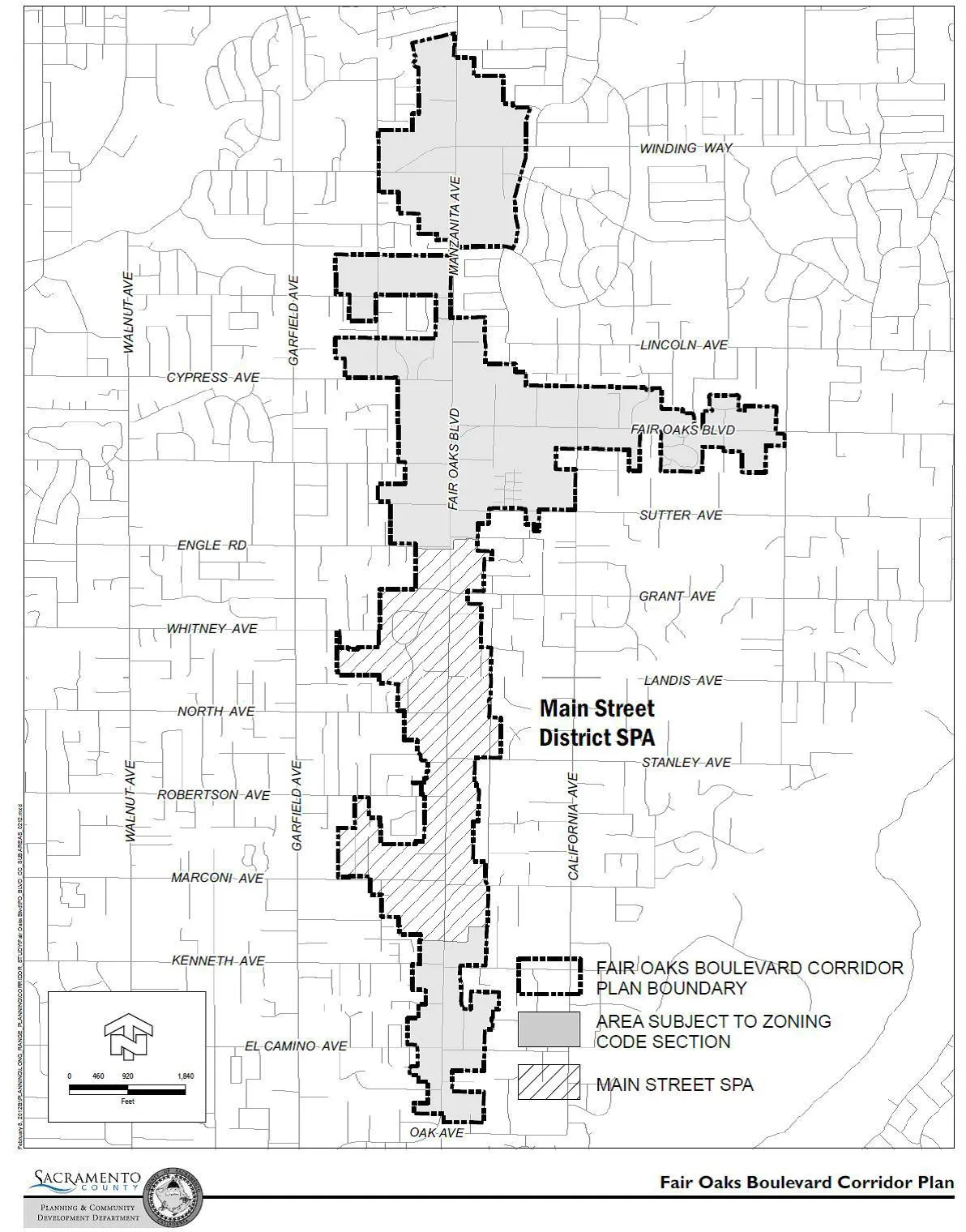
Figure 6-1: Fair Oaks Boulevard Corridor Plan Boundaries