

Arden Arcade CAP
Sacramento County Community Plans
Arden Arcade Community Action Plan An Appendix to the 1980 Arden Arcade Community Plan
Section titled “Sacramento County Community Plans Arden Arcade Community Action Plan An Appendix to the 1980 Arden Arcade Community Plan”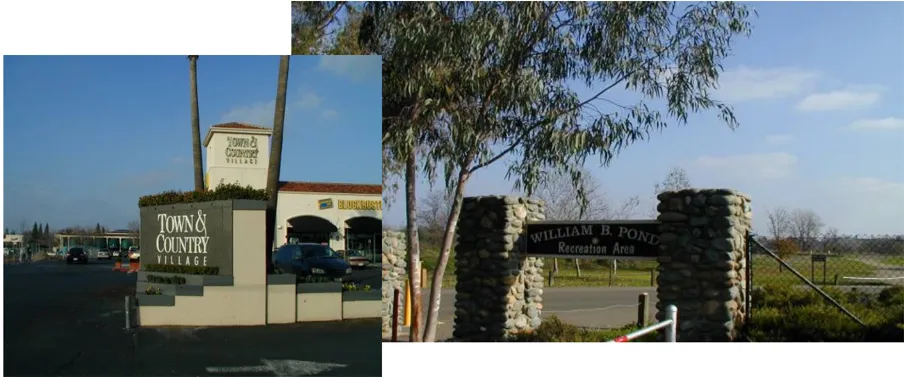
Adopted by Sacramento County Board of Supervisors June 13, 2006
Sacramento County Arden Arcade Community Council April 6, 2006
Municipal Services Agency, County of Sacramento Department of Neighborhood Services Department of Planning and Community Development
ACTIONS DEVELOPED BY:
Community Members on the following Teams:
- Arden Arcade Outreach Team
- Phase Two Solution Development Teams:
- Community Identity/Local Governance;
- Community-Based Services;
- Parks/Open Space/Natural Environment;
- Schools/Education;
- Transportation;
- Local Economy;
- Land Use; and
- Public Safety
- Phase Four Subject Matter Teams:
- Neighborhood Services;
- Transportation;
- Economic Development;
- Land Use/Code Enforcement; and
- Public Safety
Project Managers:
- Paul Lake, County Executive’s Office
- Cindy Storelli, Planning and Community Development Department
County Staff:
- Department of Planning and Community Development: _Robert Sherry, Director Larry Brooks, Charlie Dyer, Mindy Louis, Gilbert Lum, Richard Maddox, Dave Pevny, Corinna Sandmeier, Kohar Shirikian, Christine Smith, Tricia Stevens, and Molly Wright _
- Department of Neighborhood Services: Victor Morrison-Vega, Director Bobbe Dworkis
- Office of the County Executive: Marilyn Baca
- Department of Economic Development: Jim Pardun
- Department of Transportation: Jeff Clark, Dave Franke, Dan Shoeman
- Department of Human Assistance: David Mowery
- Department of Health and Human Services: Pat Mangan, Amelia Munding
- Sheriff’s Department: Merle Switzer
- Sacramento Housing and Redevelopment Agency: Cynthia Shallit
County Board of Supervisors
- Roger Dickinson, 1st District
- Illa Collin, 2nd District
- Susan Peters, 3rd District
- Roberta MacGlashan, 4th District
- Don Nottoli, 5th District
- Terry Schutten, County Executive
Arden Arcade Community Council
Bill Davis, Melinda Eppler, Trish Harrington, Eric Milstein, Woody Nelson, Paul Richardson, Ziggy Robeson, Joshua Wood, and Angelina Woodberry
EXECUTIVE SUMMARY
Section titled “EXECUTIVE SUMMARY”Purpose: The adopted Community Action Plan (CAP) is an appendix to the Arden Arcade Community Plan. This CAP covers more than just land use as is typical in a community plan. The purpose of doing an Action Plan was to increase community involvement in planning and service delivery. The actions contained in this CAP will result in guidance for many different agencies and departments within the County when adopting new plans and implementing existing ones.
Types of Actions: The CAP contains three types of actions.
- On-going actions are currently underway by the County. Typically, these actions are already in the work plan of the department, have a budget and staffing.
- Short-term actions are new programs or policies that will be implemented within a two-year time frame. Typically these actions are easy to implement, do not have significant costs and will be included in near-term work plans and budgets.
- Long-term actions are new programs or policies that will be implemented after two years. These actions are typically items that could be costly to implement or need further review and study to determine costs. They will be considered for future work plans and budgets.
Further Review and Revisions : The Community Council (or other appropriate authority) and the Board of Supervisors will review the Community Action Plan annually to determine the status of the action. Additionally, the long-term actions will be analyzed to determine if it is time to begin work on them. Items that were originally deferred will be reassessed to determine if it is time to develop actions to accomplish those items. The Community Council may choose to survey the community, either formally or informally to assess whether or not deferred items should be further addressed.
As part of the annual review, the hearing authority will determine if the actions need to be modified or eliminated due to changes in County policies or programs.
Policies Endorsed by the Community: The Arden Arcade community was invited to participate in the preparation of the Community Action Plan. The early phases of the process resulted in the identification of issues that were important to the community.
Goals: From these issues, participants were to consider the following goals in determining solutions to those issues:
Neighborhood Services Goals
Section titled “Neighborhood Services Goals”-
N1 - The County will be responsive to neighborhoods.
-
N2 - The County will more actively involve residents in the ongoing shaping of their community through different means of governance and community involvement.
Transportation Goals
Section titled “Transportation Goals”-
T1 - The County will continue to perform street beautification projects on streets in Arden Arcade and perform street tree maintenance.
-
T2 - The County will continue to pursue the implementation of the Transportation Master Plan in the General Plan.
-
T3 - The County shall investigate and, where appropriate, construct projects that encourage the use of non-auto modes.
-
T4 - The County will work with neighborhoods to identify locations where the installation of streetlights is desired.
Economic Development Goals
Section titled “Economic Development Goals”- E1 - To improve the economic development in Arden Arcade.
Land Use and Code Enforcement Goals
Section titled “Land Use and Code Enforcement Goals”-
L1 - To improve enforcement of land use regulations in Arden Arcade.
-
L2 - Identify policies and strategies for using land use planning and decisions to positively affect the quality of life in Arden Arcade.
-
L3 - The residents of Arden Arcade recognize the importance of tree canopies and their contributions to clean air and water, stormwater runoff reduction, energy conservation, improved public health, and increased property values. To this end, the preservation and expansion of the ‘urban forest’ made up of the trees and landscaping in public places within Arden Arcade shall be considered to the extent possible when making land use decisions.
Public Safety Goals
Section titled “Public Safety Goals”- P1 - To improve the safety and quality of life for the citizens of Arden Arcade.
Policies
Section titled “Policies”Policies: The actions contained in the Community Action Plan support these goals and implement the policies that were endorsed by the Arden Arcade community and the Board of Supervisors. These policies listed below resulted from the survey of the community. The questions from the survey are noted in Appendix A.
Neighborhood Services Policies
Section titled “Neighborhood Services Policies”N-1: County departments will maximize coordination and communication with neighborhood groups about issues and projects affecting neighborhoods. (Survey Question #30)
Transportation Policies
Section titled “Transportation Policies”-
T1: Improve street landscaping and tree maintenance. (Survey Question #6)
-
T2: Target street and road improvements to reduce congestion -provided however, that nothing in the Community Action Plan shall be construed in any way as providing for the addition of traffic lanes to any street, road, highway, thoroughfare, or intersection unless a proposal for addition of traffic lanes is vetted in the affected neighborhoods and community-at-large through public workshops, meetings and hearings, starting before substantial effort is undertaken to pursue implementation of such proposals, so as to provide early and meaningful opportunities for public review and input and identification of needed amendments to this Community Action Plan. (Survey Question #20)
-
T3: Make bicycling, walking and bus use more convenient and less expensive to encourage alternatives to the use of automobiles. (Survey Question #22)
-
T4: Improve street lighting in neighborhoods where desired by residents. (Survey Question #52)
-
T5: Create on-street bicycle lanes and off-street bicycle trails to increase bicycle safety near schools and on busy streets. (Survey Question #12)
-
T6: Construct sidewalks to increase pedestrian safety near schools and on busy streets. (Survey Question #13)
Economic Development Policies
Section titled “Economic Development Policies”-
E1: Encourage the retention of existing major retailers, such as Target and large car dealerships, in Arden-Arcade. (Survey Question #38)
-
E2: Encourage the continuing vitality of major retail corridors (such as Fulton Avenue) in Arden-Arcade. (Survey Question #39)
-
E3: Assist local businesses by making physical improvements such as planting shade trees, improving utilities and drainage and improving street landscaping in commercial areas. (Survey Question #40)
-
E4: Encourage the re-use of vacant/run-down strip malls to allow a mix of residential, retail and commercial development. (Survey Question #44)
Land Use and Code Enforcement Policies
Section titled “Land Use and Code Enforcement Policies”-
L1: Increase the enforcement of existing requirements for owners to maintain the appearance of their property. (Survey Question #4)
-
L2: Require improved landscaping for commercial parking areas, and give priority to improving enforcement of existing ordinances related to shade trees in parking lots and in commercial strips. (Survey Question #43)
-
L3: Where single-family housing exists in multifamily zones, initiate and investigate the feasibility of a community plan amendment and rezone to a special planning area (SPA) that would allow single-family by right and mixed use subject to discretionary review and to include design standards to insure compatibility with adjacent single-family neighborhoods. (Survey Question #2)
-
L4: Increase fines and fees for violations of County Codes. (Survey Question #17)
-
L5: Educate/assist owners to keep up property. (Survey Question #5)
-
L6: The County will work to create new and to adapt existing land use regulations and policies consistent with the Greenprint Regional Urban Forest Initiative passed and adopted by the Board of Supervisors on August 16, 2005.
-
L7: The County will investigate the feasibility of developing and awarding a blanket contract for removal of dead and dying trees that are on private property with the understanding that persons using this service will pay the costs of the service. (See Action N1-16)
-
L8: The County will work with neighbors, landlords, and other members of the public to develop lists of preferred street tree species.
Public Safety Policies
Section titled “Public Safety Policies”-
P1: Fully fund patrol services and community policing before funding more specialized services, such as High Tech Crimes and specialized narcotics units. (Survey Question #51)
-
P2: Increase enforcement to reduce speeding on neighborhood streets. (Survey Question #10)
BACKGROUND
Section titled “BACKGROUND”In December 2000, the Board of Supervisors began the process to prepare the community action plan for the community of Arden Arcade in Sacramento County using methods developed by Dr. Ed Weeks of the University of Oregon, a nationally recognized specialist in democratic process and citizen engagement. Central to the approach are five neighborhood involvement principles that guided the process and served as a measure of its success:
- The broadest possible opportunity for participation - Get as many people as possible to the table.
- Multiple avenues of participation - Give people as many different ways to participate as possible.
- Opportunity for constructive face-to-face discussion among citizens.
- Openness to any idea or issue that is of interest to any resident - No idea or concern is better or worse than any other.
- Not manipulative - No preconceived results.
The County and the community worked together to complete the process in four phases. Each of these phases involved members of the community and the County staff.
PHASE ONE: Setting the Agenda - Spring 2001
Section titled “PHASE ONE: Setting the Agenda - Spring 2001”Community members assisted staff in the preparation of a newsletter and conducting community workshops.
- Ten workshops were held in the community to determine what issues were most important to the residents of Arden Arcade, and which issues the community believed needed the most attention.
- A newsletter including a questionnaire asking two questions was mailed to every address in Arden Arcade.
- Over 1200 community members responded by attending a workshop or filling out a questionnaire.
- Thirty-two categories of issues were defined by the community:
- Community Physical Appearance and Quality
- Sense of Community
- Trees/Landscaping
- Responsiveness and Efficient Government Services
- Governance/Local Involvement
- Community Centers
- Public Safety
- Traffic Safety
- Street Lighting
- Traffic Management
- Transportation Options
- Better Road Maintenance
- Pedestrian/Bicycle Friendliness
- Parks, Recreation and Open Space
- Environmental Care
- Schools and Education
- Land Use
- Code Enforcement
- Residential Density
- Affordable Housing
- Drainage/Flood Control
- Parking
- Healthy and Viable Businesses
- Employment
- Libraries
- Social Services
- Health Care
- Cultural Enrichment
- Child Care
- Animal Welfare
- Utility Management and Costs
- Infrastructure
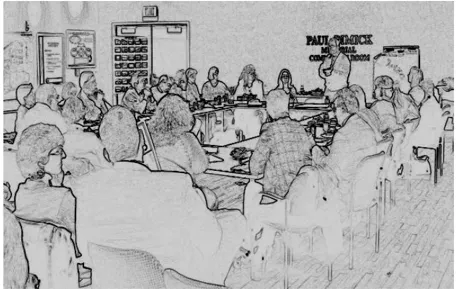
PHASE TWO: Developing Strategies - Fall 2001 - Fall 2002
Section titled “PHASE TWO: Developing Strategies - Fall 2001 - Fall 2002”Community members were then invited via another newsletter to the community to attend an open house where the results from the first phase were presented. Then, the community was invited to join with the County on teams that would be responsible for identifying policies, strategies and action items, both short-range and long-range, for the categories determined in Phase One.
- Eight solution development teams were formed to identify a strategic plan to address the thirty-two issues:
- Community Identity and Local Governance
- Public Safety
- Transportation
- Parks, Open Space and the Natural Environment
- Schools and Education
- Land Use
- Local Economy
- Community-Based Services
- One hundred community participants identified over 800 different implementation ideas.
PHASE THREE: Making Decisions - Winter 2003 - Spring 2004
Section titled “PHASE THREE: Making Decisions - Winter 2003 - Spring 2004”After each team met virtually weekly for 6 months, staff spent many months grouping the implementation ideas into basic policy choices. The community and the Board of Supervisors were given a chance to review and comment on these policy choices and ultimately, the choices were included in a newsletter and survey. For Phase Three, the community involvement was by responding to the survey contained in the newsletter.
- The implementation ideas were formed into 50 policy options 1 , approved by the Board of Supervisors.
- The members of the Arden Arcade Community were sent a survey containing the 50 policy options, and asked to rate their level of support for each. The community was also asked to make choices on funding options to pay for the ideas they were asked to rate in the survey.
- The members of the community returned almost 3400 completed surveys.
- The Board of Supervisors endorsed the 18 policies that received the strongest support by the community and directed staff to work with the community and use the past work to development specific implementation plans to carry out the endorsed policies.

PHASE FOUR: Taking Action - Spring of 2004 - Fall 2004
Section titled “PHASE FOUR: Taking Action - Spring of 2004 - Fall 2004”In the final phase, all community members who had participated on one of the eight teams in Phase Two and any community member who responded to the survey in Phase Three and included their address was invited to attend an open house where the results of the survey were presented to the attendees. Community members were also invited to join one of five teams to review the ideas generated in Phase Two and reconcile them with the policy options supported by the community and endorsed by the Board of Supervisors in Phase Three.
- Approximately 60 community members attended an open house to kick-off Phase Four.
- Five teams (Neighborhood Services; Transportation; Economic Development; Land Use and Code Enforcement; and Public Safety) were formed to assist staff with the process of determining which of the implementation ideas generated during Phase Two were consistent with the 18 policies that were supported by the 3400 community members and then endorsed by the Board of Supervisors during Phase Three.
- The draft community action plan was presented to the community at a second open house and then at a workshop held at the Board of Supervisors.
NEIGHBORHOOD SERVICES
Section titled “NEIGHBORHOOD SERVICES”This section of the Community Action Plan addresses issues and services around community governance and the County’s outreach to neighborhoods. Of the various policies that the community considered in the 2003 survey, one stood out with overwhelming support - that the County should increase neighborhood involvement. Through increased communication, outreach, and involvement, the County will meet this policy objective primarily through the Department of Neighborhood Services (DNS). These will include efforts to organize neighborhoods and put them in touch with each other, create mechanisms to keep community leaders and organized groups informed, and reach out to consult with them on large policy and specific project proposals.
Many of the ideas considered by community volunteers did not reach the level of strong support for inclusion in this community plan. Nonetheless, some of them are under consideration as part of countywide strategies to empower neighborhoods and strengthen community identity. For example, the Department of Transportation recently installed community identity signs at strategic entry points into Arden Arcade. While survey respondents did not support this program, because the County installed the signs in all other communities, it was consistent to do so in Arden Arcade. Another example is the creation of community councils to which the County could delegate decision-making authority. Although this idea met with a low level of support in the survey, the County is exploring it throughout the County, including Arden Arcade.
Neighborhood Services Goals, Policies and Actions
Section titled “Neighborhood Services Goals, Policies and Actions”Goal N1 - The County will be responsive to neighborhoods.
Goal N2 - The County will more actively involve residents in the ongoing shaping of their community through different means of governance and community involvement.
Policy N-1: County departments will maximize coordination and communication with neighborhood groups about issues and projects affecting neighborhoods. (76% support) (Survey Question #30) 2
| Neighborhood Services Actions | On- Going | Short- Term | Long- Term |
|---|---|---|---|
| N1-1: The Department of Neighborhood Services will identify all existing and newly created Neighborhood Associations in Arden Arcade and will maintain contact information with their designated representatives. | 3 | ||
| N1-2: The Department of Neighborhood Services will promote and facilitate neighborhood associations and/or homeowners association (including in rental communities) as a means to enhance communication with residents about neighborhood issues. | 4 | 5 | |
| N1-3: The Department of Neighborhood Services will facilitate creation of a coalition of neighborhood groups in Arden Arcade. The formation of this coalition will be solely dependent on the desire of neighborhood associations. The Department will provide assistance and support as needed and requested. The coalition could function as a voice for neighborhoods and as a conduit of information and review, and that will provide training, information and tools in order to effectively assist County personnel in making a better community. | 6 | 7 | |
| N1-4: The County will develop a means to notify neighborhood groups of various projects and issues and facilitate means for their review and comment. Examples would include: special use permit and rezone applications in their neighborhood; road maintenance projects in their neighborhood; requests for Letters of Public Convenience and Necessity related to alcohol sales license applications; special parking requests and permits; parking allocations in project applications; mixed use applications; infill designs and applications. | 8 | 9 | |
| N1-5: The Department of Neighborhood Services will work with the Department of Planning and Community development to notify neighborhood associations of code enforcement violations in their neighborhood. | 10 | 11 | |
| N1-6: The County will utilize the County’s web site to notify neighborhoods about various projects, such as: special use permit and rezone applications, along with schedule estimates for hearing dates; road maintenance schedules; requests for Letters of Public Convenience and Necessity related to alcohol sales license applications. | 12 | 13 | |
| N1-7: The Department of Neighborhood Services will assign a Service Area Manager to be physically housed in Arden- Arcade whose job is to serve as liaison between residents and County departments, and to coordinate a municipal services team. | 14 | 15 | |
| N1-8: The Department of Neighborhood Services will coordinate an annual community forum that will include representatives from all departments providing municipal services and provide an opportunity for residents to identify emerging issues. | X | 16 | |
| N1-9: The Department of Neighborhood Services will create and support a Neighborhood Action Partnership that provides a means for residents to identify properties needing priority attention for code compliance. | 17 | 18 | |
| N1-10: The County Dumping Response Team will pursue funding to pilot a surveillance program to catch and prosecute persons who dump illegally. | 19 | ||
| N1-11: The Department of Neighborhood Services will work with various County departments to develop and/or distribute information on programs available to neighborhoods and how to access them. Examples would include: code enforcement, transportation; animal care; Sheriff programs; Illegal dumping; Neighborhood Cleanup Program; Mistletoe removal and tree maintenance. | 20 | 21 | 22 |
| N1-12: The County will work with other agencies and residents to create associations or other structures that promote standardized and effective property management in rental communities. | 23 | ||
| N1-13: The Department of Neighborhood Services will work with other agencies to create and implement a community leadership-training program. | 24 | 25 | 26 |
| N1-14: Contingent upon sufficient funding, the Department of Neighborhood Services will develop a community newsletter to inform all households of key issues within the community. | 27 | 28 | 29 |
| N1-15: The Department of Neighborhood Services will coordinate with other agencies to mail home ownership program and assistance information to Arden Arcade residents who live in multifamily | 30 | ||
| N1-16: The Department of Neighborhood Services will explore with other County departments and outside agencies the feasibility of creating tree inspection and removal programs to rid neighborhoods of diseases trees. | 31 | ||
| N1-17: The Department of Neighborhood Services will explore with other County departments and outside agencies the feasibility of creating a low-cost graffiti removal program. | 32 | ||
| N1-18: The Department of Neighborhood Services and the Department of Planning and Community Development will explore with the Neighborhood Services Advisory Committee the creation of a Neighborhood Quality Accountability Board as an early diversion program for violators of blight control and illegal dumping ordinances. | 33 | 34 | |
| N1-19: The Department of Neighborhood Services will give annual awards recognizing excellent improvements in categories to be developed by the Community Council. | X |
Deferred Neighborhood Services Policies
Section titled “Deferred Neighborhood Services Policies”The following policies were deferred by the Board of Supervisors as they were supported, but at a lower level. Implementation ideas supported by these policies will be deferred to a later date and/or are part of other County studies that are currently on going.
- The County will more actively involve residents in the ongoing shaping of their community through different means of governance and community involvement.
- Increase access to more County social services for students and staff at schools. (63% support) (Survey Question #64)
- Assign more County staff by geographic areas. (59% support) (Survey Question #65)
- Assign County managers to coordinate services in geographic regions. (57% support) (Survey Question #66)
- Expand the responsibility of the Community Planning Advisory Council. (57% support) (Survey Question #27)
- Designate a budget that a local council can spend. (55% support) (Survey Question #29)
- Create a local community council that can make decisions. (52% support) (Survey Question #28)
Neighborhood Services Polices Not Supported
Section titled “Neighborhood Services Polices Not Supported”The Board of Supervisors did not recommend the following policies, as the community did not support them.
- Help establish a community identity through the use of banners and distinctive street signs. (36% support) (Survey Question #25)
- Encourage the development of a ‘town square’. (47% support) (Survey Question #24)
- Establish a community center in Arden-Arcade. (46% support) (Survey Question #23)
TRANSPORTATION
Section titled “TRANSPORTATION”The Transportation policies developed and strongly supported by the community survey in Phase Three of the Community Action Plan dealt mainly with the following:
- Improve the appearance of the community through the beautification of the neighborhoods.
- Reduce traffic congestion through road improvements and alternative modes of transportation including transit, bicycling and walking.
- Improve safety of pedestrians, bicyclists and motorists through speed enforcement, traffic management, lighting, bike lanes, sidewalks and ADA accessibility improvements.
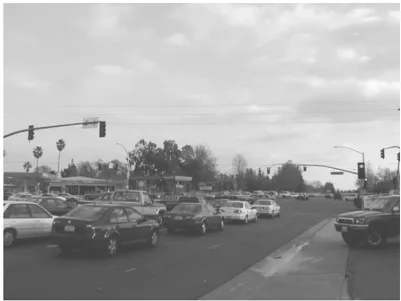
The outcome of the Phase Four process determined that many of the Phase Two strategies contained in the three solution sets have already been incorporated into existing County programs and processes. 35 Many of the pedestrian strategies are contained in the Sacramento County Pedestrian Master Plan, the accessibility strategies are contained in the Sacramento County ADA Transition Plan, and the bicycle strategies are contained in the Sacramento City/County Bikeway Master Plan. The roadway beautification projects for Watt Avenue and Fulton Avenue are included in the 7 Year Transportation Improvement Program. Traffic management (also known as traffic calming) strategies are included in the Neighborhood Traffic Management Program.
Regional Transit was also involved in the Phase Four process. Transit strategies including expanded light rail, enhanced bus service, bus rapid transit and neighborhood shuttles were forwarded to Regional Transit for feasibility. The County will continue to work with the Arden Arcade community and Regional Transit regarding the strategies that are under RT’s control.
Some of the strategies were forwarded to other teams in Phase Four for implementation. Speeding issues involving the California Highway Patrol and County Sheriff were forwarded to Public Safety. Land use strategies involving private development were forwarded to the Land Use team. Strategies involving revitalization and Traffic Management Associations (TMA’s) were forwarded to Economic Development. The Transportation Team also eliminated some of the strategies that were outside of the boundaries of the Arden Arcade community.
Funding is the key to implementation of the strategies. The ADA Transition Plan Capital Implementation Plan has prioritized roughly 2,300 intersections at a cost of $67 million dollars over a 15-20 year period to achieve programmatic accessibility throughout the unincorporated County. Roughly $13.6 million (or 20%) of those ADA improvements are located in the Arden Arcade community. The Pedestrian Master Plan estimates that roughly $18 million dollars is needed over the next 5 years for the highest ranking projects but also estimates that $420 million dollars is needed to address the entire set of pedestrian projects in unincorporated Sacramento County contained in the Pedestrian Master Plan. Roughly $2.6 million (or 15%) of the pedestrian improvements contained in the Pedestrian CIP are located in Arden Arcade and $75 million (or 18%) of the entire set of pedestrian projects are located in Arden Arcade. The City/County Bicycle Master Plan estimates that roughly 60 miles of County bike lanes and 5 miles of off-street trails are needed over the next ten years for bicycle improvements in Arden Arcade. The estimated rough cost for bicycle improvements is $68 million using $1 million per mile for bike lanes and $1.6 million per mile for off-street trails. The estimated total project cost for Fulton Avenue Enhancements Phase 2 is $5.2 million, Watt Avenue Enhancements Phase 1 is $3.8 million and Watt Avenue Enhancements Phase 2 is $8.1 million. The estimated cost of the Neighborhood Traffic Management Plan for Arden Arcade is not known at this time. The estimated cost of the Regional Transit strategies is also not known and is dependent on their feasibility as determined by Regional Transit.
Transportation Goals, Policies and Actions
Section titled “Transportation Goals, Policies and Actions”Goal T1 - The County will continue to perform street beautification projects on streets in Arden Arcade and perform street tree maintenance.
Policy T1: Improve street landscaping and tree maintenance. (75% support) (Survey Question #6)
| Transportation Actions | On- Going | Short- Term | Long- Term |
|---|---|---|---|
| T1-1: The Department of Transportation will continue to implement transportation projects identified in the 7 Year Transportation Improvement Program. | X | ||
| T1-2: The Department of Transportation will implement the recommendations included in the Pedestrian Master Plan. | X | ||
| T1-3: The Department of Transportation will implement the recommendations approved by the Board of Supervisors in the Neighborhood Traffic Management Program. | X | ||
| T1-4: The Department of Transportation will give priority to planting and maintaining street trees throughout Arden Arcade. This includes educating and encouraging homeowner tree planting and maintenance of Street Trees on private property immediately adjacent to the roadways and working through the Sacramento Tree Foundation and neighborhood associations or other related groups. | X |
Goal T2 - The County will continue to pursue the implementation of the Transportation Master Plan in the General Plan.
Policy T2: Target street and road improvements to reduce congestion -provided however, that nothing in the Community Action Plan shall be construed in any way as providing for the addition of traffic lanes to any street, road, highway, thoroughfare, or intersection unless a proposal for addition of traffic lanes is vetted in the affected neighborhoods and community-at-large through public workshops, meetings and hearings, starting before substantial effort is undertaken to pursue implementation of such proposals, so as to provide early and meaningful opportunities for public review and input and identification of needed amendments to this Community Action Plan. (73% support) (Survey Question #20)
| Transportation Actions | On- Going | Short- Term | Long- Term |
|---|---|---|---|
| T2-1: The Department of Transportation will continue to implement transportation projects identified in the 7 Year Transportation Improvement Program. | X | ||
| T2-2: The Department of Transportation will implement the recommendations included in the Pedestrian Master Plan. | X | ||
| T2-3: County construction contracts will specify that trucks should be covered and should use freeways rather than go through local communities. | X | ||
| T2-4: The Department of Transportation will conduct a comprehensive, in-depth traffic analysis to determine auto, truck and transit movements on Watt Avenue and Fair Oaks Boulevard. The study would include a license plate survey. | X | ||
| T2-5: The Department of Transportation should conduct a comprehensive, in-depth traffic analysis to determine auto, truck and transit movements on El Camino Avenue and Arden Way. The study would include a license plate survey. | X |
Goal T3 - The County shall investigate and, where appropriate, construct projects that encourage the use of non-auto modes.
Policy T3: Make bicycling, walking and bus use more convenient and less expensive to encourage alternatives to the use of automobiles. (72% support) (Survey Question #22)
Policy T4: (see next page)
Policy T5: Create on-street bicycle lanes and off-street bicycle trails to increase bicycle safety near schools and on busy streets. (74% support) (Survey Question #12)
Policy T6: Construct sidewalks to increase pedestrian safety near schools and on busy streets. (75% support) (Survey Question #13)
| Transportation Actions | On- Going | Short- Term | Long- Term |
|---|---|---|---|
| T3-1: The County of Sacramento will work with Regional Transit (RT) to improve mobility. | X | ||
| T3-2: The Department of Transportation will continue to implement transportation projects identified in the 7 Year Transportation Improvement Program. | X | ||
| T3-3: The Department of Transportation will implement the recommendations included in the Pedestrian Master Plan. | X | ||
| T3-4: The Department of Transportation will implement the recommendations approved by the Board of Supervisors in the Neighborhood Traffic Management Program. | X | ||
| T3-5: The Department of Transportation shall implement the adopted recommendation contained in the ADA Transition Plan. | 36 | ||
| T3-6: The Department of Transportation shall continue to implement the City/County Bicycle Master Plan. | 37 | ||
| T3-7: The Department of Transportation shall identify and sign all pedestrian and bicycle connections within Arden Arcade to the American River Parkway. | 38 | X |
Goal T4 - The County will work with neighborhoods to identify locations where the installation of streetlights is desired.
Policy T4: Improve street lighting in neighborhoods where desired by residents. (73% support) (Survey Question #52)
| Transportation Actions | On- Going | Short- Term | Long- Term |
|---|---|---|---|
| T4-1: The Department of Transportation will implement the recommendations included in the Pedestrian Master Plan. | X | ||
| T4-2: The Department of Transportation will continue to implement the current neighborhood street light installation program. | X |
Deferred Transportation Policies
Section titled “Deferred Transportation Policies”The following policies were deferred by the Board of Supervisors as they were supported, but at a lower level. Implementation ideas supported by these policies will be deferred to a later date and/or are part of other County studies that are currently on going.
- Use road devices to reduce ‘cut-thru’ traffic. (56.5% support) (Survey Question #9)
- Use road devices to reduce speeding. (57.5% support) (Survey Question #11)
Transportation Polices Not Supported
Section titled “Transportation Polices Not Supported”The Board of Supervisors did not recommend the following policies, as the community did not support them.
- Make driving a single-occupancy auto less convenient. (25.3% support) (Survey Question #21)
ECONOMIC DEVELOPMENT
Section titled “ECONOMIC DEVELOPMENT”The economic development policies that were endorsed by the Arden Arcade community focus on the retention of existing retailers, support for the continued vitality of retail corridors, re-use of vacant/run-down strip malls and assistance to local businesses in the form of physical improvements - planting trees and improving utilities, drainage and landscaping in commercial areas. The county’s General Plan update, which for the first time will contain an Economic Development Element, will provide policy direction to assist in the creation of specific commercial corridor strategies that will address the policies endorsed by the residents of Arden Arcade. A commercial corridor has been defined as ’an area five contiguous blocks or more in size located within a county transportation corridor containing a significant number of retail commercial businesses.” No particular mix of retail activity is required within the definition of a commercial corridor, provided the retail activity exists for five or more contiguous blocks within a transportation corridor.
Formed a little more than one year ago, the Arden Arcade Business Council, affiliated with t Sacramento Metro Chamber of Commerce, provides a forum for advocating and promoting the Arden Arcade business community. Meetings are held monthly. Involvement on the AABC offers businesses important benefits, inclu a united voice for the business community in the Arden Arcade district, business education programs, advocacy for Arden Arcade business and community issues, loc networking events and business forums, membership in the Metro Chamber, exc web pates for the AABC. The AABC has its own elected officers. The AABC also has its own unique projects. For example, the Computers for Kids Program provides refurbished computers to area students who cannot afford to have computers in their homes. The Biz Walk program is an annual event that involves face-to-face meetings with business owners at their places of business to discuss how things are going and what can be done to make them even better. Over the past year (2004) chamber membership in Arden Arcade has risen from 236 to 293, a 24% increase. 25% of all new Metro Chamber members are from Arden Arcade. ding al lusive
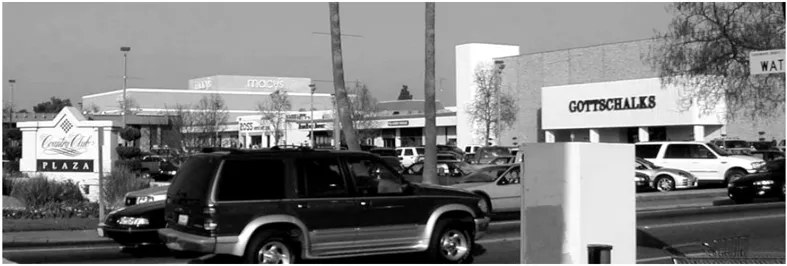
One policy that was not supported by the community was to encourage the location of additional major retailers. Not encouraging those types of businesses could be counterproductive to the policies that did receive support from the community.
Economic Development Goals, Policies and Actions
Section titled “Economic Development Goals, Policies and Actions”Goal E1 - To improve the economic development in Arden Arcade
Policy E1: Encourage the retention of existing major retailers, such as Target and large car dealerships, in Arden-Arcade. (71% support) (Survey Question #38)
Policy E2: Encourage the continuing vitality of major retail corridors (such as Fulton Avenue) in Arden-Arcade. (77% support) (Survey Question #39)
Policy E3: (see next page)
Policy E4: Encourage the re-use of vacant/run-down strip malls to allow a mix of residential, retail and commercial development. (80% support) (Survey Question #44)
| Economic Development Actions | On- Going | Short- Term | Long- Term |
|---|---|---|---|
| E1-1: Use existing economic development staff to act as liaisons between developers, business owners, residents and the county to assist Arden Arcade with zoning and permitting processes. When the position has been filled, coordinate services through the Neighborhood Services Area Manager. | X | ||
| E1-2: Support the newly formed Arden Arcade Business Council’s efforts (which draw on the larger resources of the Sacramento Metro Chamber) to assist in bringing small business services to Arden Arcade, identifying Arden Arcade businesses at risk and addressing their challenges. | X | ||
| E1-3: The County will support the Arden Arcade Business Council in its efforts to assist in the facilitation of business development and retention in Arden Arcade. The Council will market the assets and desirability of Arden Arcade as a place to do business and to shop. This partnership will create a business directory, develop a website of products and services available in Arden Arcade and possibly pursue grants for public and private funds. | 39 | ||
| E1-4: Underground utilities on Fulton Avenue. | 40 | ||
| E1-5: Establish a standard timetable for completion of zoning review so that land use entitlement processes become faster, more flexible and more time certain for business/commercial developers (after the Economic Development Element to the General Plan and the new General Plan itself have been approved). | X | ||
| E1-6: Strictly enforce existing codes and health and safety ordinances. | X | ||
| E1-7: Establish Special Planning Areas (SPA’s) for commercial corridors where more flexible zoning requirements will encourage infill and Smart Growth development. Use the newly adopted Design Guidelines, which include signage and development requirements, for commercial areas. | X | ||
| E1-8: Explore the possibility that the Arden Arcade Business Council will support linking area businesses to entrepreneurial training, business consulting, business outreach, small business loans and venture capital opportunities. | X | ||
| E1-9: Explore the creation of a business incubator. | X | ||
| E1-10: In cooperation with business and residential communities, have the county develop a specific Arden Arcade logo, colors, landscaping standards, etc. to be used as desired by business districts and individual business. These designs will be the umbrella over all Arden Arcade business districts, creating cohesive, unified marketing while allowing corridors to maintain their unique identities. | X | ||
| E1-11: Ensure compliance with new design standards and offer incentives for business to upgrade existing signs, landscaping, facades, etc. Require upgrades and maintenance on existing commercial buildings to meet high development standards. | X | ||
| E1-12: Explore the formation of PBID’s (Property Based Business Improvement Districts) on corridors that express interest. If property owners vote to support them, support initial efforts with county resources, possibly matching funds. | X | ||
| E1-13: Integrate diverse activities and mixed-use projects such as office, entertainment, public facilities, parks and residential uses in commercial areas. Encourage infill development through incentives for new construction, redevelopment and upgrades for infill, all consistent with the infill strategy for Arden Arcade adopted pursuant to Action L3-3. | X | ||
| E1-14: Make the entitlement process for Arden Arcade commercial property faster, more flexible and more time certain by establishing a team (developer, business person, neighborhood and county representatives) to review and update existing land use policies, zoning codes and procedures. | X | ||
| E1-15: Initiate and investigate the feasibility of amendments to the Arden Arcade Community Plan, dated November 6, 1980, to modify the objective in the 1980 community plan that refers to car dealerships to allow for the expansion and the improvement of the existing car dealerships within commercially zoned areas in the community . | X |
Policy E3: Assist local businesses by making physical improvements such as planting shade trees, improving utilities and drainage and improving street landscaping in commercial areas (77% support). (Survey Question #40)
| Economic Development Actions | On- Going | Short- Term | Long- Term |
|---|---|---|---|
| E3-1: Develop commercial corridor strategies to be consistent with the Economic Development Element in the General Plan. | X | ||
| E3-2: Place a priority on revitalization and investment in commercial corridors; consider redevelopment where feasible and supported by the residents in the surrounding neighborhoods. | X | ||
| E3-3: Support the formation of PBID’s (Property Based Business Improvement Districts) to partially fund corridor improvements. | X | ||
| E3-4: Pursue funding for commercial corridor landscaping, streetscaping, lighting, and pedestrian sidewalks. | X |
Deferred Economic Development Policies
Section titled “Deferred Economic Development Policies”The following policies were deferred by the Board of Supervisors as they were supported, but at a lower level. Implementation ideas supported by these policies will be deferred to a later date and/or are part of other County studies that are currently on going.
- Enforce design/appearance standards for businesses. (62% support) (Survey Question #26)
- Provide assistance to help small businesses. (55% support) (Survey Question #41)
Economic Development Polices Not Supported
Section titled “Economic Development Polices Not Supported”The Board of Supervisors did not recommend the following policies, as the community did not support them.
- Encourage the location of additional major retailers. (45% support) (Survey Question #37)
LAND USE AND CODE ENFORCEMENT
Section titled “LAND USE AND CODE ENFORCEMENT”Land Use and Code Enforcement covered a wide range of issues in Arden Arcade. A general sample of those issues included maintenance of property (both residential and commercial), parking issues, rezoning multiple family property to single family designations, providing information to the community on a variety of issues from code compliance to available programs assisting property owners and renters, drainage concerns, and the reuse of vacant or underutilized property.
Many of the concerns regarding property maintenance fall under the goal of improved enforcement of land use regulations. Implementation of those issues can be found under Policy L1 and L4 below. Parking concerns also appeared high as concerns in the community and are included in Policy L2.
The issue of rezoning property identified for multiple family uses to single family designation is a complicated action. There are many related factors that need to be considered when addressing this concern. The County Housing Element contains policies and guidelines that involve the retention of multiply family designations throughout the County in efforts to provide a wide range of housing opportunities for all segments of Sacramento County residents. Rezoning of vacant multiple family properties to single family zones would be considered as a major conflict to existing Housing Element Policies. However the rezoning of property already developed with a single family home, from a multiple family zone to a single family zone, probably would not constitute the same type of conflict. In order to continue to put forth the issue of such an action Policy L3 is included in the following section. However, an action directing the County to look at down zoning vacant multiple family zoned properties is not included in the actions proposed.
In an effort to increase efforts to provide a variety of information to community residents Policy L5 is included. This would be combined with a number of implementation actions found in the Neighborhood Services section as ways to increase and improve efforts to ‘get the word out’ on programs and services available to the community.
The reuse of vacant or underutilized property was transferred to the Economic Development section and goals and policies are found there outlining implementation actions for those issues.
Land Use and Code Enforcement Goals, Policies and Actions
Section titled “Land Use and Code Enforcement Goals, Policies and Actions”Goal L1 - To improve enforcement of land use regulations in Arden Arcade.
Goal L2 - Identify policies and strategies for using land use planning and decisions to positively affect the quality of life in Arden Arcade.
Goal L3 - The residents of Arden Arcade recognize the importance of tree canopies and their contributions to clean air and water, stormwater runoff reduction, energy conservation, improved public health, and increased property values. To this end, the preservation and expansion of the ‘urban forest’ made up of the trees and landscaping in public places within Arden Arcade shall be considered to the extent possible when making land use decisions.
Policy L1: Increase the enforcement of existing requirements for owners to maintain the appearance of their property. (80% support) (Survey Question #4)
| Land Use and Code Enforcement Actions | On- Going | Short- Term | Long- Term |
|---|---|---|---|
| L1-1: Assign two code enforcement officers exclusively to Arden-Arcade. | X | ||
| L1-2 Implement proactive Neighborhood Enhancement Team. | X | ||
| L1-3 Establish volunteer program to assist with the enforcement of codes in neighborhoods. | X | ||
| L1-4: Proactively enforce vehicle code enforcement in apartment and commercial parking lots. | X | ||
| L1-5: Implement cross training program in the County to train line staff including code enforcement activities. | X | ||
| L1-6: Develop an internet-based system that allows research and information on code enforcement cases in the County. | X | ||
| L1-7: Develop program to promote and encourage identification of run down properties and have volunteers assist in renovation. | X |
Policy L2: Require improved landscaping for commercial parking areas, and give priority to improving enforcement of existing ordinances related to shade trees in parking lots and in commercial strips. (70% support) (Survey Question #43)
| Land Use and Code Enforcement Actions | On- Going | Short- Term | Long- Term |
|---|---|---|---|
| L2-1: Propose a zoning code amendment to require pedestrian walkways in parking lots with landscaping for separation. | X | ||
| L2-2: Consider increased design review for commercial projects. | 41 | ||
| L2-3: Through the General Plan Update, improve the appearance of commercial uses and commercial corridors including review of landscaping in commercial areas. | 42 | 43 | |
| L2-4 Encourage new development, or property improvements to connect adjacent strip malls and commercial areas with internal driveways and pedestrian walkways. | 44 |
Policy L3: Where single-family housing exists in multifamily zones, initiate and investigate the feasibility of a community plan amendment and rezone to a special planning area (SPA) that would allow single-family by right and mixed use subject to discretionary review and to include design standards to insure compatibility with adjacent single-family neighborhoods. (65-70% support) (Survey Question #2)
| Land Use and Code Enforcement Actions | On- Going | Short- Term | Long- Term |
|---|---|---|---|
| L3-1: Initiate and investigate the feasibility of a community plan amendment and rezone to a special planning area (SPA) that would allow single-family by right and mixed use subject to discretionary review for the multiple family areas located on the north side of El Camino between Eastern and Mission Avenues. | 45 | ||
| L3-2: In addition to action L3-1 for areas along El Camino Avenue between Eastern and Mission, investigate the feasibility of a community plan amendment and rezone to a special planning area (SPA) that would allow single- family by right and mixed use subject to discretionary review in multiple family areas in Arden - Arcade where existing single-family homes are built. | 46 | ||
| L3-3: The County will assist the community to develop a community based infill strategy for Arden Arcade through early involvement of the public in the discussion of development possibilities on underutilized residential zoned areas and commercial zoned areas converted to mixed use or residential use. This infill strategy would also address the preservation of established residential neighborhoods and specific policy statements related to land divisions consistent with the General Plan, the Arden Arcade Community Plan and the existing zoning but potentially inconsistent with natural features and surrounding lotting patterns. | X |
Policy L4: Increase fines and fees for violations of County Codes. (69% support) (Survey Question #17)
| Land Use and Code Enforcement Actions | On- Going | Short- Term | Long- Term |
|---|---|---|---|
| L4-1: Develop an ordinance to administratively cite and fine code violators. | 47 | ||
| L4-2: Planning department will work with the Board of Supervisors to pursue funding to increase staffing for code enforcement. | X |
Policy L5: Educate/assist owners to keep up property. (67% support) (Survey Question #5)
| Land Use and Code Enforcement Actions | On- Going | Short- Term | Long- Term |
|---|---|---|---|
| L5-1: Deleted | |||
| L5-2: Provide information regarding zoning code and General Plan issues and updates through newsletters or fliers in cooperation with the Neighborhood Services Department. | 48 | ||
| L5-3: Planning Department, Economic Development Department, and SHRA will assess and coordinate to provide information regarding available opportunities to improve and/or market properties. | X |
Policy L6: The County will work to create new and to adapt existing land use regulations and policies consistent with the Greenprint Regional Urban Forest Initiative passed and adopted by the Board of Supervisors on August 16, 2005.
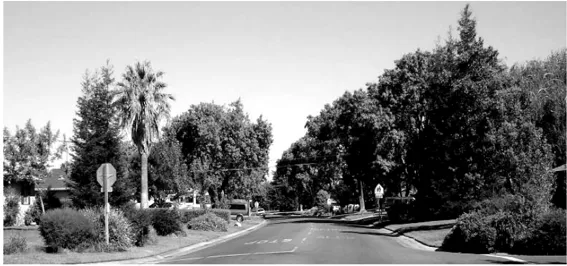
Policy L7: The County will investigate the feasibility of developing and awarding a blanket contract for removal of dead and dying trees that are on private property with the understanding that persons using this service will pay the costs of the service. (See Action N1-16)
Policy L8: The County will work with neighbors, landlords, and other members of the public to develop lists of preferred street tree species.
| Land Use and Code Enforcement Actions | On- Going | Short- Term | Long- Term |
|---|---|---|---|
| L8-1: Revise the ‘preferred street tree list’ in the Sacramento County Improvement Standards to reflect the adopted Pedestrian Design Guidelines. | X | ||
| L8-2: Work with the Department of Neighborhood Services to post information on the County’s website on how to contact the Department of Transportation’s Tree and Landscape Section for information on what trees to use in specific situations. | X |
Drainage Issues
Section titled “Drainage Issues”Drainage concerns appeared to be primarily technical in nature and were referred to the Department of Water Resources and were not included in the Phase Three survey. . The responses to those issues forwarded to Water Resources are listed in Appendix E.
Deferred Land Use and Code Enforcement Policies
Section titled “Deferred Land Use and Code Enforcement Policies”The following policies were deferred by the Board of Supervisors as they were supported, but at a lower level. Implementation ideas supported by these policies will be deferred to a later date and/or are part of other County studies that are currently on going.
- Help improve deteriorated housing. (63.2% support) (Survey Question #1)
- Increase legal requirements for owners to maintain the appearance of their property. (63.3% support) (Survey Question #3)
- Require new or remodeled housing to be consistent with the character of the surrounding neighborhood. (60.6% support) (Survey Question #7)
Land Use and Code Enforcement Polices Not Supported
Section titled “Land Use and Code Enforcement Polices Not Supported”The Board of Supervisors did not recommend the following policies, as the community did not support them.
- Restrict parking in residential neighborhoods. (44.9% support) (Survey Question #8)
- Increase housing affordable to middle-income families. (47.6% support) (Survey Question #18)
- Increase housing affordable to lower-income families. (28% support) (Survey Question #19)
- Increase parking required for new commercial development. (45% support) (Survey Question #42)
PUBLIC SAFETY
Section titled “PUBLIC SAFETY”The Sheriff will continue to work with the Board of Supervisors to insure that community policing and patrol services is fully funded. However, the Sheriff is restricted from diverting funding from specialized units such as High Tech Crimes or narcotics units. These units derive a majority of their funds from revenue sources that must be used for that specific purpose. If the Sheriff were to divert funding from these or similar specialized units it could foreseeably reduce the Sheriff’s overall budget and ability to deliver services.
Public Safety Goals, Policies and Actions
Section titled “Public Safety Goals, Policies and Actions”Goal P1 - To improve the safety and quality of life for the citizens of Arden Arcade.
Policy P1: Fully fund patrol services and community policing before funding more specialized services, such as High Tech Crimes and specialized narcotics units. (60% support) (Survey Question #51)
| Public Safety Actions | On- Going | Short- Term | Long- Term |
|---|---|---|---|
| P1-1: One Problem Oriented Police officer (community policing) position has been restored to bring the number to two POP officers currently assigned to North Central Division, which serves the Arden Arcade area. | X | ||
| P1-2: Additional one-time funding in the amount of $44,000.00 made available by the Board of Supervisors to the North Central Division for overtime for POP projects. | X | ||
| P1-3: Additional one time funding in the amount of $250,000.00 to be shared by all five divisions in the unincorporated areas for specialized POP projects. | X |
Policy P2: Increase enforcement to reduce speeding on neighborhood streets. (76% support). (Survey Question #10)
The Sheriff’s Department relies upon the California Highway Patrol for enforcement of laws relating to traffic in the unincorporated areas of the county. The Sheriff’s Department helps to facilitate the exchange of information from the community to representatives of the CHP during public meetings and through personal contacts with its members.
Additional Recommendations:
Section titled “Additional Recommendations:”During Phase Two of the Community Action Plan process, the public safety solution development team generated many implementation ideas. The community and resulting committees developed several excellent ideas to improve public safety. Many of these ideas are either already underway, now in the process of implementation, or the Sheriff’s Department will explore the viability to complete. The Sheriff’s Department recommends that all community-based organizations collaborate with the North Central Division on a regular basis to ensure that non-crime related information and activities is distributed to the community through each perspective organization. It is also recommended that each perspective organization is responsible to finance the cost of marketing such information.
| Public Safety Actions - Additional Recommendations | On- Going | Short- Term | Long- Term |
|---|---|---|---|
| Use the existing Sheriff’s Department Crime Prevention Specialist to market neighborhood watch through mailers, North Central Division Zone Meetings, Neighborhood Associations, local newspapers, and community calendars. Neighborhood residents and the Crime Prevention Specialist share a responsibility to bring more neighborhood watch groups on line in this effort. | X | ||
| The crime prevention specialist has several networking vehicles to advertise upcoming non-crime related information and activities such as flyers, zone meetings, Neighborhood Watch meetings, and special presentations. | X | ||
| Current community collaborations (Arden Arcade Community Alliance, Fulton Avenue Assoc., Arden Arcade Business Council and Alliance for Excellence) should be utilized to enhance the availability of non-crime related information and activities to the community through their perspective marketing vehicles. | X | ||
| Use existing services provided by the sheriff’s department to market and implement neighborhood watch and support special activities through events such as recognition ceremonies, zone meetings, and National Night Out. | X | ||
| Utilize crime prevention officer, neighborhood watch coordinators, and POP officers to network, provide community presentations, school presentations, neighborhood watch meetings and school presentations. | X | ||
| Use existing VIPS, (Volunteers in partnership with the sheriff’s department), SCRC, (Sheriff’s community reserve corps), and CERT, (Community Emergency Response Team). Utilize the ongoing training schedules in place. | X | ||
| If specific neighborhoods within the Arden Arcade area desire additional law enforcement services than what the Sheriff’s Department is currently able to provide an alternative is available. Several neighborhood Associations have contracted for additional patrol services with the Sheriff’s Department through the ‘Off-Duty’ program. Currently Sierra Oaks Vista Home Owners Association takes advantage of this program. | X | ||
| Establish a timetable and research the cost, availability, and the permit process of installing an electronic reader board at the Marconi Stationhouse, (corner of Fulton Ave and Marconi Ave), to display information on community meetings and other activities. Augment the current Sheriff Department budget to finance the cost involved. | X | ||
| Sheriff’s department Crime Prevention Specialist actively encourages the homeowners association, park and recreation, San Juan Unified School District, public libraries, Arden Arcade Community Alliance, Fulton Avenue Association, and the Arden Arcade Business Council to distribute information regarding community activities through each agency’s perspective marketing network. Each agency will fund their respective costs associated with this task. | X | ||
| The Sheriff’s Department to request funding for an additional crime prevention specialist to work exclusively with Safe Schools as well as the re-funding of the School Resource Officers (SRO’s), which have been lost to budget cuts. In order to do this there would have to be a partnership between the sheriff’s department and the SJUSD. Augmentation would need to be made to the SSD budget as well as the SJUSD budget to support this long-term goal. | X |
OTHER COUNTY SERVICES
Section titled “OTHER COUNTY SERVICES”This section of the Community Action Plan addresses the various services that the County provides to all residents in the County, including Arden Arcade.
- Improve animal control and animal protection. (53% support) (Survey Question #58)
- Provide more Drug and Alcohol, mental health and health care programs. (49% support) (Survey Question #59)
- Locate social services in Arden Arcade to better serve Arden Arcade residents. (44% support) (Survey Question #60)
- Help people pay for the health and social services they need but cannot afford. (43% support) (Survey Question #61)
- Help low-income people pay for childcare. (42% support) (Survey Question #62)
None of the following policy options related to other County services reached a strong level of support in the survey responses. As a result, none of the ideas related to these services will be included in the Community Action Plan. Notwithstanding this, staff has forwarded the survey results and the various ideas related to these programs to the County’s various departments.
Examples include:
- Encourage the Department of Health and Human Services to Promote / educate responsible alcohol use & dangers of alcohol consumption, especially at college, high school levels.
- Produce informative resource directory of social services in Arden Arcadeperhaps in the local phone directory to include different language editions
- Create local alcohol and drug resource guide to include different language editions.
- Ask the Department of Animal Care and Regulation to hold classes and demonstrations at local schools, pet stores, and malls that promote responsible pet ownership.
- Provide literature door to door to residents regarding animal welfare, responsibility, regulations etc.
- Encourage social service departments to establish satellite information offices at malls, libraries, and colleges where residents can get information and pickup applications for various social services programs.
- Extend county positions to provide services to school population (both students and family). Health resources, PHN positions, mental health positions, social work, sheriff positions, etc. County use their resources to keep children health and in school. Includes building code and safety enforcement issues.
- Encourage the County to actively canvass youth and low-income residents about their social services needs, for the purpose of planning for programs in Arden Arcade.
NON-COUNTY SERVICES
Section titled “NON-COUNTY SERVICES”This section of the Community Action Plan addresses services that the County does not provide. Many of the ideas considered during the Community Planning Process involved programs not within the purview of Sacramento County as a provider of services. These included community parks, libraries, and schools.
- Improve park facilities and recreation programs. (62% support) (Survey Question #53)
- Encourage the four park districts in Arden Arcade to consolidate into one district. (46% support) (Survey Question #54)
- Increase the hours at the Arcade and Arden Dimick libraries. (63% support) (Survey Question #56)
- Improve school facilities. (73% support) (Survey Question #63)
- Support the performing and visual arts in Arden Arcade. (49% support) (Survey Question #55)
- Make arts programs accessible to more people in Arden Arcade. (48% support) (Survey Question #57)
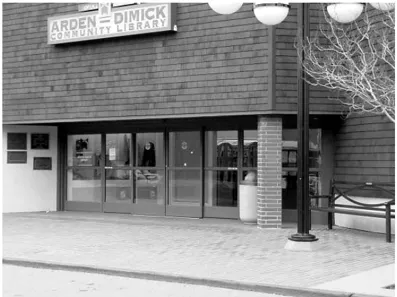
Staff has forwarded the survey results and the various ideas related to these programs to the appropriate districts. Examples include:
- Respondents did not support consolidating the four park districts into fewer districts.
- Agencies working with residents, community groups and organizations develop strategies and objectives for meeting recreation & park needs and interest in their communities.
- Agencies working with user groups (ex. Swim teams) organize and coordinate their programs and services to meet regional needs.
- Some agencies (Example: Mission Oaks Recreation and Park District) provide regional specialized services (Ex. Senior population services) to the entire Arden-Arcade community.
- Agencies currently cooperate with other public agencies through joint powers agreements.
- Agencies currently use advisory groups, organizations and individuals to identify the needs and interests at their neighborhoods and communities.
- Bring facilities up to national standards of service.
Libraries
Section titled “Libraries”- Respondents strongly supported increasing hours at local libraries, but did not indicate a willingness to increase financing to do so.
Schools
Section titled “Schools”- Respondents strongly supported improving school facilities, but did not indicate a willingness to increase financing to do so.
- Respondents supported continuing social services programs that support children succeeding in schools.
- Provide learning opportunities that are available to all (free or low-cost with transportation and childcare provided).
- Extend county positions to provide services to school population (both students and family). Health resources, PHN positions, mental health positions, social work, sheriff positions, etc. County use their resources to keep children health and in school. Includes building code and safety enforcement issues.
- Peer mentoring for safety in the schools, big brother, and big sister.
- Adult mentoring for safety issues with at risk children.
FINANCING OPTIONS
Section titled “FINANCING OPTIONS”The community was asked to indicate their support for a series of funding options to pay for new programs or efforts that were supported. Overall, new taxes and/or increased taxes were not supported. The community did support using existing County funds and new federal or state money, or in the case of code violations, increased fines. 49 The use of existing County funds or the use of new federal and state monies will be looked at on a case-by-case basis as the new programs and efforts are implemented pursuant to this action plan.
For a complete list of the financing policies, see Appendix A.
APPENDIX ‘A’ - PHASE THREE POLICY OPTIONS
Section titled “APPENDIX ‘A’ - PHASE THREE POLICY OPTIONS”Part One - Neighborhoods
Section titled “Part One - Neighborhoods”Housing and Neighborhood Appearance
Section titled “Housing and Neighborhood Appearance”- Help improve deteriorated housing.
- Where single-family housing exists in multifamily zones, change the zoning to single-family zoning.
- Increase legal requirements for owners to maintain the appearance of their property.
- Increase the enforcement of existing requirements for owners to maintain the appearance of their property.
- Educate and assist owners to keep up their property.
- Improve street landscaping and tree maintenance.
- Require new or remodeled housing to be consistent with the character of the surrounding neighborhood.
- Restrict parking in residential neighborhoods.
Neighborhood Street Safety
Section titled “Neighborhood Street Safety”- Use speed bumps, ‘round-abouts,’ and other devices to increase street safety by reducing ‘cut-through’ traffic.
- Increase enforcement to reduce speeding on neighborhood streets.
- Use speed bumps, ‘round-abouts,’ and other devices to reduce speeding on neighborhood streets.
- Create on-street bicycle lanes and off-street bicycle trails to increase bicycle safety near schools and on busy streets.
- Construct sidewalks to increase pedestrian safety near schools and on busy streets.
Financing
Section titled “Financing”To improve the appearance of your neighborhood, how much would you favor each of the following ways to pay for new programs and efforts:
- Make these a priority for existing County funds.
- Ask voters to increase County sales or utility taxes.
- Ask voters to create a special taxing district of property owners in your neighborhood.
- Increase fines for violations of County codes.
Part Two - Community
Section titled “Part Two - Community”Housing
Section titled “Housing”-
Increase the availability of housing affordable to middle income families.
-
Increase the availability of housing affordable to lower income families.
Transportation
Section titled “Transportation”- Target street and road improvements to reduce congestion.
- Make driving a single occupancy automobile less convenient to encourage the use of car-pooling and alternatives to the use of automobiles.
- Make bicycling, walking, and bus use more convenient and less expensive to encourage alternatives to the use of automobiles.
Sense of Community
Section titled “Sense of Community”- Establish a community center in Arden Arcade that would provide space for community groups, recreation, and social activities and would also house some local government services.
- Encourage the development of a ‘town square’ that would include commercial, entertainment, and civic activities.
- Help establish a community identity through the use of banners and distinctive street signs.
- Develop and enforce design and appearance standards for local businesses.
Local Input and Control
Section titled “Local Input and Control”- Expand the responsibility of the Community Planning Advisory council to include advising the county on local land use, public services, transportation, and other local issues.
- Create a local community council that can make decisions (subject to appeal to the County Board of Supervisors) on land use, services, transportation, and other issues that are local in scope.
- Designate an annual budget that a local community council can spend on Arden Arcade services and projects.
- Increase County coordination and communication with neighborhood groups about issues and projects affecting neighborhoods.
Financing
Section titled “Financing”To improve your community, how much would you favor each of the following ways to pay for new programs and efforts:
- Make these a priority for existing County funds.
- Look for and use new federal or state money.
- Ask voters to increase County sales or utility taxes.
- Ask voters to create a special taxing district of property owners in your community.
- Commit future improvements in property taxes through redevelopment.
- Increase user fees where possible.
Part Three - Local Businesses and the Economy
Section titled “Part Three - Local Businesses and the Economy”Local Economy
Section titled “Local Economy”- Encourage the location of additional major retailers, such as Home Depot, in Arden Arcade.
- Encourage the retention of existing major retailers, such as Target, and large car dealerships, in Arden Arcade.
- Encourage the continuing vitality of the major retail corridors (such as Fulton Avenue) in Arden Arcade.
- Assist local businesses by making physical improvements such as planting shade trees, improving utilities and drainage, and improving street landscaping in commercial areas.
- Provide financial, marketing, and technical assistance to help small businesses in Arden Arcade.
- Increase the amount of parking required in new commercial developments.
- Require improved landscaping for parking areas in new commercial development.
- Encourage the re-use of vacant or run-down strip malls to allow a mix of residential, retail, and commercial development.
Financing
Section titled “Financing”To improve your community, how much would you favor each of the following ways to pay for new programs and efforts:
- Make these a priority for existing County funds.
- Look for and use new federal or state money.
- Ask voters to increase County sales or utility taxes.
- Ask voters to create a special taxing district of property owners in your community.
- Ask business owners in the community to tax themselves more.
- Commit future improvements in property taxes through redevelopment.
Part Four - Services
Section titled “Part Four - Services”Public Safety
Section titled “Public Safety”- Fully fund patrol services and community policing before funding more specialized services, (such as high tech crimes and special narcotics units).
- Improve street lighting in neighborhoods where improved street lighting is desired by residents.
- Improve park facilities and recreation programs.
- Encourage the four park districts in Arden Arcade to consolidate into one district.
Arts and Culture
Section titled “Arts and Culture”- Support the performing and visual arts in Arden Arcade.
- Increase the hours at the Arcade and Arden-Dimick libraries.
- Make arts programs accessible to more people in Arden Arcade.
Animal Control
Section titled “Animal Control”- Improve animal control and animal protection.
Human Services
Section titled “Human Services”- Provide more drug and alcohol counseling, mental health treatment, and health care programs for those who need them.
- Locate social services in Arden Arcade to better serve Arden Arcade residents.
- Help people pay for the health and social services they need but cannot afford.
- Help low income people pay for childcare.
Schools
Section titled “Schools”- Improve school facilities
- Increase access to more county social services for students and staff at schools to help children succeed in school.
General County Services
Section titled “General County Services”- Assign more county staff by geographic areas so that they are more aware of Arden-Arcade issues.
- Assign county managers to coordinate municipal services in geographic regions, including Arden Arcade.
Financing
Section titled “Financing”To improve your community, how much would you favor each of the following ways to pay for new programs and efforts:
- Make these a priority for existing County funds.
- Look for and use new federal or state money.
- Ask voters to increase County sales or utility taxes.
- Ask voters to create a special taxing district of property owners in your community.
- Commit future improvements in property taxes through redevelopment.
- Increase user fees where possible.
APPENDIX ‘B’ - Examples of Items Contained in the Sacramento County Pedestrian Master Plan
Section titled “APPENDIX ‘B’ - Examples of Items Contained in the Sacramento County Pedestrian Master Plan”The Sacramento County Pedestrian Master Plan includes many design guideline strategies that will implement some of the Phase Two implementation ideas as follows:
Ideas supported by Policy #1: Improve street landscaping and tree maintenance
Section titled “Ideas supported by Policy #1: Improve street landscaping and tree maintenance”- Sight Distance and On-Street Parking Restrictions : Limit street trees and vehicles parked near crosswalks to avoid sight distance problems. Limb tree canopy to 14 feet.
- Sidewalk Buffer Design : Recommended buffer width is 6’, minimum buffer width is 5’. Street trees shall be planted in the buffer no closer than 30’ on center.
Ideas supported by Policy #2: Target street and road improvements to reduce congestion.
Section titled “Ideas supported by Policy #2: Target street and road improvements to reduce congestion.”- Grades and Cross Slopes : Maximum cross slope is 2%.
- Intersection Corner Radii: Avoid large turning radius (greater than 25’ measured at the face of curb.)
Ideas supported by Policy #3: Make bicycling, walking and bus use more convenient and less expensive to encourage alternatives to the use of the automobile.
Section titled “Ideas supported by Policy #3: Make bicycling, walking and bus use more convenient and less expensive to encourage alternatives to the use of the automobile.”- Vehicle speeds : More discretion in setting speed limits based on residential density and pedestrian and bicycle safety; visual narrowing by street trees in median and landscape buffers between curb and sidewalk and reducing lane widths.
- Intersection design : Reduce crossing distances at intersections, provide curb extensions, pedestrian refuge islands and other measures to improve pedestrian safety at intersections.
- Pedestrian Issues on Limited Access Freeways : County to coordinate with Caltrans to ensure that pedestrian access is considered in the design of overpasses, underpasses and interchanges.
- Policies for Sidewalk and Pedestrian Walkway Installation : Pedestrian walkways shall be provided on both sides of the street in urban and transitioning suburban areas of the County
- Pedestrian Accommodation in Rural Areas : Multipurpose shoulders used in rural areas. Separated paths shall be a minimum of 5’ wide.
- Sidewalks next to Soundwalls : Minimum distance from edge of sidewalk to soundwall shall be 5’ on new construction and 1’ on retrofit projects.
- Curbs : Type 2 vertical curbs are required except for residential streets.
- Surface Treatments : Concrete is preferred but asphalt is appropriate in some locations.
- Pedestrian Accommodations at Transit Stops: Streets within .25 mile of transit stops should have continuous sidewalks, high-visibility crosswalks and other enhanced crossing measures.
- Pedestrian Crossing Distances: Pedestrian refuge islands should be used in new construction if crossing distance exceeds 60’
- Intersection Corner Radii: Avoid large turning radius (greater than 25’ measured at the face of curb.)
- Curb Extensions: Provide on arterials with on-street parking.
- Median Refuge Islands: Consider in new construction on arterial and larger streets with minimum 10’ length and minimum 4’ wide.
- Crosswalks: Crosswalk markings should be designed and installed per the County’s Traffic Signal and Striping Design Guidelines and the County of Sacramento Traffic Manual.
- Crosswalk Design and Placement at Controlled Intersections: Marked crosswalks shall be provided at street approaches to signalized intersections. Crosswalks may be considered at all-way stops at parks, schools, transit stops and similar uses. Crosswalks are typically 9’ wide. High visibility crosswalks using ladder-style markings shall be installed in certain locations; school crossing guard, 1/4 mile of transit stations, clarify confusing locations and high volume pedestrian crossings.
- Midblock Crossings: Midblock crossings shall be considered at locations that already experience a high pedestrian volume. Additional measures (traffic signals, pedestrian signals, etc.) will be required if; speed limit exceeds 40mph, four or more traffic lanes with ADT of 12,000 or greater and no raised median, four or more traffic lanes with an ADT of 15,000 or greater with a raised median.
- Crossing Barriers: Median barriers shall be accompanied by other treatments to accommodate pedestrian crossings.
- Midblock Signals: Minimize pedestrian wait time. Provide Pedestrian push buttons on refuge islands.
- Dual Left-Turn Lanes: Median refuge islands should be a component of new construction where crossing distance exceeds 60’.
- Separate Right Turn Lanes: Crosswalks placed towards the approach end of the island so that pedestrians are visible.
- Driveway Design: Consolidate driveway entrances to improve conditions for pedestrians. Conventional driveways are preferred over access points that resemble street intersections. At locations with landscape buffers, driveways shall transition from the landscape buffer to the street.
- Grade Separated Crossings: Grade separated crossings should be visible, serve clear origin and destination points, require minimal out-of direction travel, be provided in locations where at-grade crossings are undesirable, have visual appeal and meet accessibility guidelines.
- Pedestrian Signal Timing: Recommends 4 ft/sec for the clearance calculations based on the distance across the traveled way. Standard 7-second walk indication should be increased to 10 seconds near schools and senior centers. More clearance time should be on a case-by-case basis with warrants for its application based on the demographics of the users consistent with the MUTCD recommendation.
- Pedestrian Signals: Pedestrian signal warrants are provided in the MUTCD.
- Pedestrian Warning Signs: Warning signs to be placed in advance of pedestrian crossings at schools, bus stops, recreation areas, commercial areas and other pedestrian attractors.
- Current Policies for Pedestrian Facility Maintenance: Damaged curb, gutter and sidewalk added to scheduled priority list if there is a vertical displacement of 3/4” or more, horizontal misalignment of 1-1/4” or more or standing water of more than 1” deep for a distance of more than 10’.
Ideas supported by Policy #4: Improve street lighting in neighborhoods where desired by residents.
Section titled “Ideas supported by Policy #4: Improve street lighting in neighborhoods where desired by residents.”- Lighting : Provide additional lighting along sidewalks and walkways with higher volumes of nighttime pedestrian activity, specifically in commercial pedestrian districts, in high-density residential areas, and near colleges and universities. Additional lighting will require the formation of a lighting assessment district.
- Midblock Crossing Illumination: Lighting shall be included at midblock crossings.
Ideas supported by Policy #6: Construct sidewalks to increase pedestrian safety near schools and on busy streets.
Section titled “Ideas supported by Policy #6: Construct sidewalks to increase pedestrian safety near schools and on busy streets.”- Policies for Sidewalk and Pedestrian Walkway Installation : Pedestrian walkways shall be provided on both sides of the street in urban and transitioning suburban areas of the County.
- Meandering Sidewalks : Meandering sidewalks are generally not recommended.
- Sidewalk width : Separated sidewalks shall be a minimum of 5 feet wide. If there is no buffer strip, the sidewalk shall be 6 feet wide exclusive of the curb. Sidewalks shall be 8’ wide along school frontages, at universities, near hospitals and in commercial centers.
- Sidewalks next to Soundwalls : Minimum distance from edge of sidewalk to soundwall shall be 5’ on new construction and 1’ on retrofit projects.
- Sidewalk Buffer Design : Recommended buffer width is 6’, minimum buffer width is 5’. Street trees shall be planted in the buffer no closer than 30’ on center.
APPENDIX ‘C’ - Examples of Items Contained in the Sacramento County Neighborhood Traffic Management Plan
Section titled “APPENDIX ‘C’ - Examples of Items Contained in the Sacramento County Neighborhood Traffic Management Plan”The Sacramento County Neighborhood Traffic Management Plan includes many strategies that will implement some of the Phase Two implementation ideas as follows:
- A workbook of neighborhood traffic management devices
- The Neighborhood Traffic Management Program could be scheduled with upcoming road maintenance projects so that construction occurs at roughly the same time. However, the two programs would most likely install improvements as separate contracts. The Neighborhood Service Area Manager would coordinate this.
- Raised crosswalks
APPENDIX ‘D’- Status of Transportation Ideas
Section titled “APPENDIX ‘D’- Status of Transportation Ideas”Some of the implementation ideas that were generated during Phase Two have already been completed or currently underway. The following is a list of those projects.
Already Completed:
Section titled “Already Completed:”- Downgrade the functional classification of the following roadway segments from Thoroughfare to Arterial:
- Watt Avenue, from Fair Oaks Boulevard to Arden Way
- Fair Oaks Boulevard, from Monroe to Eastern Avenue
- Downgrade the functional classification of the following road segments from Arterial to Collector:
- American River Drive, from the Sacramento City Limits to Watt Avenue
- La Riviera Drive, from Watt Avenue to Folsom Boulevard
- Mahew Road, from Folsom Boulevard to Jackson Highway
- Eliminate the ‘Urban Interchange’ designation at Watt Avenue and Fair Oaks Boulevard intersection.
- Complete Watt Avenue Bridge Widening, N/O U.S. 50 to Fair Oaks Boulevard
Currently Underway:
Section titled “Currently Underway:”-
Provide bike lanes on the Arden Arcade roadway system that are clearly delineated from auto lanes and free of debris. debris, ensure bike lane markings are visible and that traffic signal equipment is operational.
County maintains bikeways including sweeping bike lanes to keep them free of operational. -
Install, where appropriate, additional signage, flashing warning lights preceding mid-block crossings and other pedestrian improvements described under the pedestrian strategies.
Already part of the Pedestrian Master Plan -
Increase bicycle routes allowing older students to continue an option other than auto use.
Part of the continued implementation of the 2010 Sacramento City/County Bikeway Master Plan -
Continue to implement Neighborhood Speed Control Program (NSCP), Neighborhood Speed Watch Program (NSWP), Neighborhood Speed Awareness Program (NSAP) and the CAN Goes To School Program (CAN GTS) Care About Neighborhoods (CAN) Program
-
Develop a more comprehensive traffic-calming program to deal with problems such as speeding, illegal passing, and cut-through traffic in Arden Arcade. Replace the Countywide Speed Control Program (CSCP) with a Neighborhood Traffic Management Program (NTMP)
-
Implement Watt Ave. Enhancements, S.R. 16 to Capitol City Freeway, Phase 1 & 2.
Both projects will implement elements of the Watt Avenue Beautification Master Plan including landscape and streetscape enhancements, sidewalks, bikeway improvements, safety lighting, bus stop/shelter improvements and other enhancements to improve access to transit facilities. The project has been approved for Federal funding from the Transportation Enhancement Activities Program (TEA). -
Implement North Watt Avenue Enhancements, Antelope Road to Capitol City Freeway.
Proposed improvements include installation of landscaping, streetscape, and frontage improvements for ADA compliance, architectural enhancements, street lighting, sidewalks, transit access improvements, and bicycle facilities. The project has been approved for Federal funding from the Transportation Enhancement Activities Program (TEA). -
Separate the Watt Avenue vehicular traffic from Light Rail
-
Review contractor’s traffic control plan (TCP) prior to construction.
-
Review hours of work on the major streets.
-
Advertise upcoming road work in the local newspapers
-
Moratorium on work during the holidays (Thanksgiving thru News Years Day).
-
Develop a trench cut program that requires the payment of trench cut fees or a trench cut warranty by the utility.
-
Coordinate trench cuts before scheduled roadway reconstruction or maintenance work.
-
Develop a shared database that tracks all County design and construction projects. Allow for combination of projects on same roadway.
-
Develop a 3-year trench cut moratorium on newly paved streets.
-
Fines for encroachment permit violations.
APPENDIX ‘E’- Drainage Issues
Section titled “APPENDIX ‘E’- Drainage Issues”At the end of Phase Three, the Board directed staff to refer drainage ideas to the Department of Water Resources because many of the ideas were very technical in nature or were already underway or planned. Comments on the specific implementation ideas are listed herein. Following those comments is a list of the already underway and/or planned projects during the last five years in the Arden Arcade community.
-
Identify and report sites repeatedly flooded & areas where improvements are needed old/bad inlets, pipes, and other facilities.
County Drainage currently tracks areas that flood during storm events and lists areas that are in need of improvements. The drainage Division has engineers inspecting all drain inlets and laterals in the Arden Arcade area to find repairs and maintenance work that need to be completed. With minor additional cost, the County can keep a list of repeat flooded areas and proposed improvement projects that are specific to the Arden Arcade Area. -
Identify areas appropriate for detention uses.
Adding detention basins within the community is not recommended because of the extremely low cost to benefit ratio that detention basins would provide to the community. The watershed is essentially built out. Past studies have already shown that regional detention would not provide significant benefits to the watershed as a whole in reducing flood levels. The location of the Arden Arcade Community relative to the Sacramento and American Rivers makes it vulnerable to flooding from backups caused by high river levels, this are not solvable with upstream detention. -
Annual creek clean-up projects
The County currently provides annual creek cleaning and sponsors a community creek-cleaning event every year during the Annual Creek Week celebration. -
Have Neighborhood Associations identify drainage concerns (including channels and creeks) and coordinate information between residence & Local Government.
The local Arden Arcade planning advisory council can work with county drainage to help identify and prioritize projects. -
Dredge channels & creeks to remove silt.
The County does not dredge the channels and creeks any longer. Many environmental concerns and federal and state regulation prohibit dredging of the creeks. Silt is removed mechanically from concrete lined portions of the creeks. -
Park & School coordination for detention sites.
The local park and school districts board must approve the use of these sites for detention, provided that they demonstrate a significant benefit. The Board may have influence on County-dependant park districts to use park sites for detention. However, in past discussions with park and school districts, significant maintenance and liability issues, as well as high costs prevented the idea from being pursued further. Also, see the response to item No. 63 above. -
Increase frequency of maintenance & leaf removal.
Increased frequency of cleaning can be done at an additional cost. Removing leaves from the street is done annually by the County Department of Transportation. -
County Board of Supervisors mandates locations for detention basins.
Such a mandate would need to be based on a demonstrable benefit from regional detention. Refer to Item 63. Local onsite detention has been required by the Board on a case-by-case basis for some new infill projects to mitigate project impacts only, not to solve larger drainage issues. -
County purchase property that floods frequently.
The County has been purchasing or elevation homes through Federal Hazard Mitigation Grant and Flood Mitigation Assistance Grant programs since 1995. This program requires that the worst and most frequently flooded properties be approached first and that the property owner is a willing participant. We welcome any interested property owners to contact Water Resources to determine if they may be a candidate for elevation or buyout. -
Prepare overlay maps showing frequently flooded sites, code enforcement problems sites, parks, and schools, as potential for Local Government purchase and detention basins.
See response to items 62 and 63. -
Increase diameter of main drain lines and parallel pipes.
Four significant projects will be constructed in 2005 that will increase the diameter of many drainage main line pipes in the Arden Arcade area. A total of 10,000 feet of drainage mainline pipe will be replaced in 2005. The new pipe sizes range from 54 inches to 24 inches in diameter. These pipes will be much bigger in diameter than the pipes they are replacing. -
Semi-annually staff will walk creeks and channels to inspect for needed improvements/clean-ups.
Each year a pre-season inspection is conducted to determined location for needed maintenance for the coming season. Frequently cleaned locations are already noted and are part of the regular cleaning schedule. Through the winter, creeks and channels are inspected after storm events at known choke points and inlet/outlet locations -
Establish a ‘Drainage Hot Line’ to report issues to Local Government.
The County currently has a drainage hotline - 875-RAIN (7246) -
Create a central site to receive and coordinate all Arden Arcade drainage comments/complaints.
A link to the Water Resources website can be provided to the Arden Arcade Council and residents. In addition a new function is being programmed into the drainage service request system used by Water Resources. It will allow all complaints of flooding within Arden Arcade to be listed exclusive from drainage complaints from other parts of the County to help in identifying local community priorities. -
Identify creeks for beautification efforts, including landscaping, removal of debris, and expansion of waterways where possible.
The County currently removes debris from the creeks. The limited channel width and lack of significant adjacent space along the creeks in the Arden Arcade area severely limits the opportunity for beautification efforts that including adding vegetation. Creek expansion efforts can require a significant and costly land purchase that may not be a justifiable use of County drainage maintenance funds. Federal permitting and environmental process may also prohibit expansion of waterways unless part of a larger federal flood control project. -
Identify areas of potential sewage problems (lower elevation parcels) and install back-fill valves.
This is a request for the sewer department to address. -
Identify ‘choke’ points and open them.
See response to Items 62, 72 and 73. -
Increase pumping plant capacity at American River.
The pumping capacity of the drainage pumping plant at the American River was increased after the 1995 storm events. To increase pumping capacity and reliability several other improvements were made to the pumping plant. The opening and closing of gravity outlet gates was automated, a large trash rack was installed to prevent pumps from being clogged with debris, and diesel generators were installed in 2004 to provide backup power to the plant in the event that SMUD power is out of service.
Arden Arcade Drainage Projects 1999 - 2004
Section titled “Arden Arcade Drainage Projects 1999 - 2004”The following is a list of drainage projects that were funded in the Arden Arcade Community during the last five years.
- Generator Set: Winding Way Pump Stations on Arcade Creek
- Kadema Pump Station Generator: Kadema Drive
- Crocker Mills Storm Drain: Crocker Road, Mills Road area
- Wulff Lane/Charlotte Storm Drain: Wullf Lane, Charlotte Lane at Chicken Ranch Slough
- Howe Avenue Pump Station Low Flow Pump and Electrical Upgrades: Ethan Way at American River
- Wilhaggin Pump Station Generator: Crondall Drive, Wilhaggin Drive at American River
- Hazelwood/Ravenwood Storm Drain and Detention Basin: Hazelwood Avenue, Ravenwood Avenue, Wrendale Way, Greenwood Avenue area
- Flood Wall at Kincaid Way
- 2837 Latham Dr. Minor Drainage Improvements
- Fair Oaks Blvd/Kevington Court Storm Drain
- 2150 Marconi Ave. Minor Drainage Improvements
- Arden area Minor Drainage Improvement Project: Miscellaneous locations
- 4521 Hazelwood Ave
- Howe Avenue Pump Station Automated Trash Rake: Ethan Way at American River
- 2837 Gunn Rd. Minor Drainage Improvement
- Park Place/Olympus Storm Drain: Olympus Drive, Thor Way, Park Place Drive area
- 2515 Cottage Way Minor Drainage Improvements
- 2150 Watt Ave @ Maryal Dr. Minor Drainage Impr.
- Maryal-Lusk Minor drainage Imp. Project
- 2372 Wyda Way Minor Drainage Impr.
- 1440 Watt Ave. Minor Drainage Impr.
- 4601 North Park Dr. Minor Drainage Impr.
- Marilona-Kings Way Minor Drainage Impr.
- 2691 Creekside Ln. Drainage Project
- Arden Creek Rd. Minor Drainage Impr.
- 3509 El Camino Ave. Minor Drainage Impr.
- Maryal Dr. Waterline Relocation (conflict with drainage)
- 831 La Goleta Way Minor Drainage Impr
- Bertis Drive Storm Drain: Bertis Drive, Robertson Avenue, Sandhurst Court, Leta Lane area
- 2412 Pennland Dr. Minor Drainage Impr.
- 3497 Edison Ave. Minor Drainage Impr.
- 1181 Fulton Ave.
- Morse and Avalon Dr. DI Improvement Project
- American River Dr: Watt to Kingsford
- 4601 Ravenwood
- 621 Wilhaggin Minor Drainage Impr.
- Sierra Oaks Drain Inlet Improvement Project: Sierra Oaks Ave (various)
- Mission Ave. Drain Inlet Improvement Project: Mission Ave (various)
- Howe Avenue Pump Station Backup Generators: Ethan Way at American River
Footnotes
Section titled “Footnotes”-
See Appendix A for a complete list of the policy options from Phase Three. ↩
-
Upon approval of CAP, DNS will implement action groups for implementation. DNS will work with departments to coordinate on projects and improve opportunities for neighborhood contribution. ↩
-
Neighborhood registry is in place. SAM is visiting/attending neighborhood association meetings. Edistribution lists created for each community to enhance community news. ↩
-
NSAC created with monthly meetings. Draft Neighborhood Association Guide Book created. DNS will outreach to neighborhood watch groups and promote DNS services to assist in creating NA. ↩
-
Contact/assistance to be made with all interested persons expressing interest in NA. Add Neighborhood Assistance Guide book to website. Set up booth/table at community events to promote DNS services. ↩
-
Assist in planning AACA Neighborhood workshop. Recruit additional community members for NSAC ↩
-
Survey existing NA for interest. Develop work group to create coalition or utilize existing forums. ↩
-
E-distribution list created for Community Planning Council agenda. Developing capacity to update community websites and other outreach methods to give early communication on projects. ↩
-
Provide hard copy to libraries. Letters will be mailed to non-email listed NA informing them that copies are at library and available on website. Investigate ordinance change to post sites that have applied for planning project or use permit. Post on community websites. ↩
-
Discussion with Code Enforcement on data needs. ↩
-
Work with MIS staff to develop data reports by community to post on website, and keep maintained. ↩
-
Projects listed on DNS site and can be sorted by community. ↩
-
Post on community websites. ↩
-
Completed ↩
-
Take proposal and costs to Board of Supervisors to establish a service center. ↩
-
Dependent on budget. ↩
-
Attendance at NA meetings provides opportunity for addressing code compliance issues. ↩
-
Pending scope of CC and NA coalition may use these forums. ↩
-
Grant pilot in other County communities where there is the highest impact. ↩
-
Incorporated into County website. ↩
-
Collect information and collate. Provide binder to libraries. ↩
-
Develop media where there are gaps. ↩
-
Attend Rental Housing Improvement Program (RHIP) meetings, look for partnership opportunities with the Rental Housing Association, and promote MIDs. Present this action to RHIP. ↩
-
Community Council training provided to council members and open to any one interested in attending. E-distribution notices re: leadership training opportunities. ↩
-
Speaker Bureau will be developed; presentations to neighborhood groups. ↩
-
Research costs of leadership training program. ↩
-
DNS will keep District 3 Supervisor informed and key issues can be posted in Inside Arden column. ↩
-
DNS will look at other existing sources to distribute information. Community Council reports provided at Arden Library, e-distribution of news, website posting. ↩
-
Contingent upon funds, newsletter will be developed and distributed. ↩
-
Will introduce Action to SHRA and research ↩
-
Will begin initial discussions with Sac Tree Foundation, DERA, Park Districts. ↩
-
Will research and coordinate with existing Countywide efforts. ↩
-
Will discuss concept with Code Enforcement/NRT and get background research ↩
-
Will coordinate presentation to NSAC members and begin dialogue. ↩
-
See Appendix D ↩
-
The Board of Supervisors adopted the ADA Transition Plan on January 25, 2005. ↩
-
The Bicycle Master Plan will be updated in 2006. ↩
-
The Bicycle Master Plan will include recommendations for signage for the American River Bike Trail. ↩
-
Except for pursuing grants. ↩
-
Could take longer than two years. ↩
-
Commercial Design Guidelines have been drafted and are in the process of being adopted by the County. ↩
-
The County will study 1 to 3 commercial corridors in the first round of corridor studies. It is unknown at this time if any of these corridors will be within the Arden Arcade community. ↩
-
The Corridors program will be on going to eventually cover many other corridors in the County. ↩
-
Connections between properties and pedestrian connections will be addressed in the Commercial Design Guidelines. ↩
-
This action may be in conflict with the General Plan. ↩
-
This action may be in conflict with the General Plan. ↩
-
This refers to a process under the Nuisance Code Chapter 16.18 that allows for a hearing process. As this time the Planning Department is not pursuing this matter. ↩
-
DNS sends out information related to the General Plan update to E-distribution lists. ↩
-
Actions specific to the increased fines are located in the Land Use and Code Enforcement section of this report. ↩